
How Smart Wojtech Replaced Google Drive With ZimaBoard 2


Smart Wojtech’s ZimaBoard 2 project starts with a familiar problem: a growing archive of YouTube footage, project files, and personal data spread across external drives and cloud storage. The solution is not simply buying a larger disk, but creating one private home server that can be reached from the devices already used every day.
Thanks to Smart Wojtech for documenting his experience in the original ZimaBoard 2 NAS video. His setup is useful because it treats the board as a practical storage and services machine rather than as a specification sheet. The real question is whether a compact server can replace the daily habits built around Google Drive.
Collaboration disclosure: Smart Wojtech states that he received the ZimaBoard 2 from the manufacturer for testing, while the company did not control the video’s content or his opinion. Hardware bundles, software versions, interface details, storage compatibility, and cloud-service features may change after publication.
The result: ZimaBoard 2 is not a one-click cloud replacement for every workload. Its advantage is giving one household a quiet x86 server with direct storage, fast networking, and room for services that can remain under the owner’s control. That makes it a strong fit for a personal file hub, media archive, backup target, and small home-lab platform.
The most important shift is architectural. Instead of treating storage as an account rented from a provider, the home server becomes a local service with its own disks, identity, network address, and backup plan. Cloud access can still be added later, but the primary copy and the way files are organized no longer depend on a single subscription.
Why Google Drive Starts to Feel Too Small
Cloud storage is convenient when the main goal is opening a document from another device. It becomes less comfortable when the library contains large video files, repeated project exports, raw footage, and long-lived archives. Upload time, recurring capacity limits, and the need to keep another copy can make a cloud folder feel more like a temporary transfer point than a dependable media library.

A home server changes the cost and access model. The owner pays for hardware and electricity instead of renting all capacity indefinitely, then decides how files are shared and which applications can use them. That does not make the system maintenance-free. Drives can fail, remote access needs protection, and a second backup is still necessary. The benefit is control over those decisions.
What ZimaBoard 2 Contributes to the Build
The ZimaBoard 2 - Mini Home Server fits this use case because it combines a compact x86 platform with dual 2.5GbE networking, SATA storage connectivity, and PCIe expansion. Those interfaces matter more for a home NAS than raw benchmark numbers: the board needs to move files reliably, connect to storage, and leave room for the next service.

That balance also makes the board easier to assign a clear role. It can be a file server first, then gain a media service, a download tool, a development container, or a lightweight virtual machine. A single-purpose starting point is safer than installing everything immediately, because storage layout, memory pressure, and backup requirements become visible before the server turns into an unmaintainable stack.
ZimaOS Turns Hardware Into a Usable Storage System
Hardware alone does not replace Google Drive. The everyday experience depends on whether the operating system makes disks, shared folders, applications, and remote access understandable. ZimaOS provides the management layer that turns the board and its drives into a service users can operate without treating every task as a command-line exercise.
The first useful test is not a benchmark. It is whether a user can create storage, organize a project folder, connect a computer, and find the same files again from a phone. If those actions are clear, the server begins to feel like a personal cloud rather than a bare Linux box. The official ZimaOS platform is designed around that kind of guided home-server workflow.

There is still a boundary between a friendly interface and a complete data-protection strategy. A storage pool is not automatically a backup, and a mirrored disk is not protection from accidental deletion or ransomware. A reliable replacement for cloud storage should include a second copy, a recovery test, and a plan for accessing files if the main board is offline.
One File Hub for Mac, Phone, and Creator Workflows
Smart Wojtech’s use case is especially relevant to creators because video work produces large files that do not fit comfortably into a scattered drive routine. A central share can hold footage, project assets, exports, thumbnails, and published archives while keeping the working folder structure consistent across machines.

Phone access solves a different problem. It is useful for reviewing files, uploading photos, or checking whether a transfer finished, but it should not be confused with editing every large project directly over a remote connection. Network speed, upload bandwidth, file locking, and application compatibility still determine which tasks belong on the server and which should stay local.
The practical rule is to separate active work from archive storage. Keep current editing assets on the fastest local or directly attached volume, then use the NAS as the shared source, backup destination, and long-term library. That arrangement reduces contention and makes it easier to recover when a workstation drive needs to be replaced.
Docker and Virtual Machines Add a Second Layer
A personal NAS becomes more valuable when it can host services beside file shares. Containers can add media management, automation, monitoring, or development tools without replacing the base system. Virtual machines can provide a more isolated environment for experiments that need their own operating system or network configuration.
The trade-off is resource contention. File transfers, indexing, transcoding, databases, and virtual machines all compete for CPU, memory, storage I/O, and network bandwidth. Start with one additional service, observe its resource use, and then decide whether the board has enough headroom for another workload. This is where a compact server differs from an unlimited cloud plan: capacity is visible, finite, and yours to manage.

For readers planning a broader deployment, the related ZimaBoard 2 local AI assistant setup shows how the same platform can support a service layer around local AI workloads. A separate local AI server build guide also helps explain why storage, runtime, and application services should be planned together.
Smart Wojtech also explores OpenClaw in his OpenClaw workflow on ZimaBoard, offering a hands-on example of how the same home-server platform can be extended beyond storage.
Local AI boundary: OpenClaw itself can run locally on a ZimaBoard, but that does not automatically mean the AI model is running locally. The application can call cloud-hosted model providers such as OpenAI or Anthropic, in which case model inference depends on those external services. A fully local setup requires pairing OpenClaw with a locally hosted model runtime, such as Ollama, and a model that fits the available CPU, memory, and storage resources. Model availability and performance will vary with the specific ZimaBoard configuration and workload.
What a Google Drive Replacement Still Needs
The phrase “replace Google Drive” can hide several different requirements. If it means keeping a private copy of large files at home, ZimaBoard 2 and ZimaOS are a sensible foundation. If it means perfect collaboration, global availability, automatic version history, and zero maintenance, a home server will not reproduce every cloud feature by itself.
Remote access is the clearest example. Opening a file while away from home requires a secure route into the network, strong accounts, updates, and a recovery path. Exposing a management panel directly to the internet is not an acceptable shortcut. Use the platform’s supported remote-access method, keep administration restricted, and test access from outside the home before relying on it.
Backups are the other non-negotiable. The NAS should have a second copy on another device or location, and important project folders should be restorable without guesswork. If a file exists only on the ZimaBoard 2, it is storage—not a backup. That distinction is what keeps a private cloud from becoming a single point of failure.
Who Should Make the Switch?
This setup makes sense for a creator, family, or home-lab user who wants a central file hub, has enough local network capacity to use it, and is willing to maintain disks and backups. It is especially attractive when large files make cloud storage expensive or inconvenient, and when the owner wants services that can grow beyond simple synchronization.
It is less suitable for someone who wants to forget about infrastructure entirely. A home server introduces responsibility: updates, account security, drive health, remote-access decisions, and recovery testing. The reward is that those decisions stay visible and adjustable instead of being hidden inside a subscription.
Smart Wojtech’s build demonstrates the most useful role for ZimaBoard 2: a quiet, expandable home server that puts files, applications, and future workflows under one roof. It does not eliminate the need for backups or maintenance, but it can turn a scattered Google Drive-and-external-disk routine into a system the owner actually controls. For more setup ideas, join the ZimaSpace Discord community.

Recommended products

Zima Campaign Hub
More to Read
OCP Global Summit 2026: What Open Infrastructure Means for Home Servers
OCP Global Summit 2026 puts AI infrastructure in focus. Explore what its theme means for home server users, from workload planning and local AI...
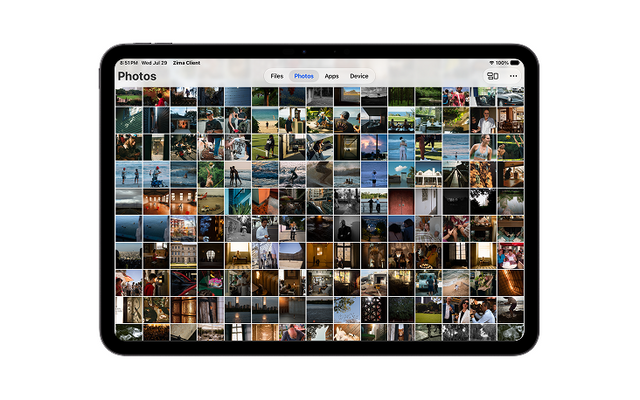
Best Photo Management Software for NAS in 2026: 10 Tools Compared
Compare 10 NAS photo managers by folder handling, mobile backup, search, sharing, privacy, and maintenance to choose a library for your home server.
Self-Hosting Day 2026: Why September 25 Belongs to the Self-Hosting Community
Discover what Self-Hosting Day 2026 is, why September 25 matters, what people self-host, and how to share your own server story.


