
Plex Failure Domains: How Dependencies Shape Outages


Plex outages become easier to diagnose when storage, networking, identity, runtime, and companion services are treated as separate failure domains.
The server can be healthy while one dependency is unavailable, and different users may see different symptoms from the same underlying failure. Map the minimum path for local playback, remote playback, state writes, and management. Then test each dependency boundary rather than treating “Plex is down” as one undifferentiated event.
Storage Failure Removes the Media or State Path
Media storage and app-data storage are different dependencies. Losing a media mount breaks access to the affected files, while losing the state path can prevent the server from starting or writing safely.
Storage reachability can fail while the host itself remains online when a dropped network media mount occurs.
Monitor media and app-data mounts separately. When one disappears, keep the fix inside that storage boundary before restarting unrelated services.
Network Failures Split Local and Remote Symptoms
LAN playback can remain healthy while the public route, VPN, proxy, or ISP path fails. Treating those as separate service paths prevents a WAN problem from triggering unnecessary storage or database changes.
Plex can fail remotely when VPN routing behavior sends return traffic down the wrong path even though the server is otherwise healthy.
Test one local and one external client during the same incident. If local playback remains stable, preserve the LAN path while diagnosing the edge route.
Container Dependencies Can Fail in Sequence
A running Plex container does not prove its mounts, proxy, DNS, or companion services are ready. Startup order and health dependencies can make an apparently healthy runtime expose an unusable service path.
Service relationships matter more than container count when multi-container dependency patterns determine which services must become ready together.
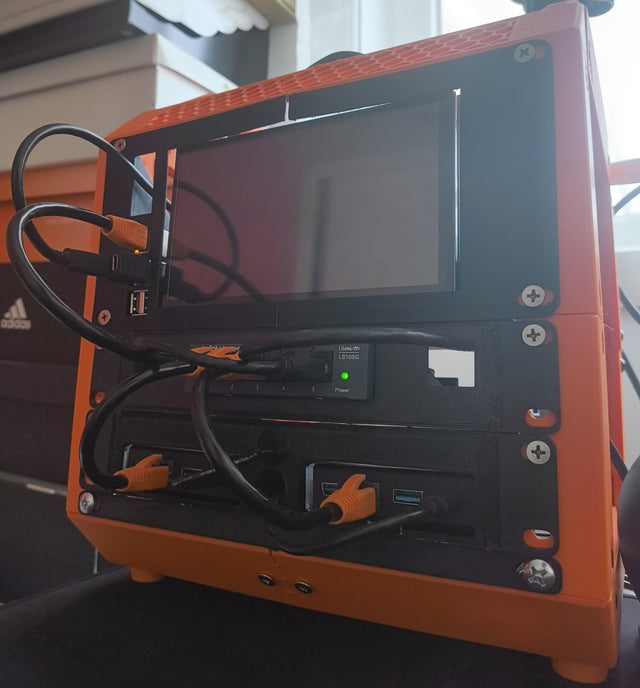
Define a readiness check for every dependency Plex truly needs and a degraded mode for those it does not. Stop one noncritical service deliberately and confirm Plex behaves as designed. A visible home media-server topology makes hard dependencies and optional services easier to separate before testing degraded modes.

Identity Services Affect New Sessions Differently
Existing sessions may continue through an identity or internet disturbance while new logins and account switches fail. Recovery planning should therefore distinguish current playback from new session creation.
Prepared Plex access without internet can keep playback available even when identity-related internet functions are unavailable.
Write a simple matrix for existing local sessions, new local sessions, and remote sessions under each outage type. That matrix becomes the practical map of Plex failure domains.

Recommended products

Tech & AI HUB
More to Read
How Does Time-Series Downsampling Affect Smart Home Anomaly Detection?
See how bucket width, aggregation, anti-aliasing, missing data, event duration, and multiscale retention change smart home anomaly recall.
How Does an Occupancy Grid Combine Weak Smart Home Signals?
Learn how spatial cells, sensor models, log-odds updates, decay, correlated evidence, and thresholds turn weak home signals into occupancy estimates.
How Does Photometric Normalization Affect Private Face Clustering?
See how illumination correction changes face crops, embeddings, cluster distances, thresholds, over-normalization, and private photo-search evaluation.


