
How Many Tokens Can Fit in a Local LLM KV Cache?


KV-cache token capacity equals available cache memory divided by per-token key-and-value bytes, then reduced by batching, fragmentation, and runtime reserves.
In a home-server workflow, tokens in kv cache can change both interactive behavior and background resource use. The visible effect appears only after the request crosses several processing stages, so one average number can hide where the delay, quality loss, or failure began. Separating transport, compute, storage, and application state makes the relationship testable under otherwise identical conditions.
The Direct Effect of Tokens in KV cache
The direct effect begins when layers, attention dimensions, and precision determine bytes per token. That step changes what the next component receives, so the observed result cannot be assigned to the final interface or model alone. Holding the input and workload constant makes this early transformation visible.
The attention memory model provides a concrete way to interpret this stage: layers, attention dimensions, and precision determine bytes per token. Its practical value is separating the changed variable from later buffering, scheduling, storage, or rendering effects that can produce a similar symptom.
Once the first stage changes, each concurrent sequence owns or shares cache blocks. The consequence may appear as latency, accuracy, energy, capacity, or perceived smoothness depending on the article question, but the causal path still starts before the final output is shown.
How Queues, Caches, and State Modify It
Queues, caches, and retained state modify it because each concurrent sequence owns or shares cache blocks. Concurrent AI, storage, media, or automation jobs can therefore amplify an effect that looks small in a single-request benchmark. Tail behavior matters more than an idle-system average.
The KV-cache bytes mechanism connects the shared-resource layer to the result: each concurrent sequence owns or shares cache blocks. Measuring this layer separately prevents throughput, cache hits, acknowledgements, or optimistic status updates from being mistaken for completed user-visible work.
The interaction continues because paged allocation reduces waste but not tensor size. This is why two home servers with the same headline hardware or network rate can behave differently when queue depth, data layout, cache state, or policy differs.
The Boundary Beyond the Headline Metric
The title variable sets one boundary, not the entire ceiling. In this case, maximum model context may exceed what concurrency can sustain. Another bottleneck can set the ceiling before a change to tokens in kv cache becomes measurable.
The serving capacity relationship helps distinguish the expected mechanism from a competing explanation. A controlled test must keep source data, hardware, concurrency, cache state, and software versions fixed while changing only the title variable. This dependency should remain visible in a repeatable home-server test.
The failure boundary is reached when maximum model context may exceed what concurrency can sustain. Beyond that point, more aggressive tuning can add cost, risk, or instability without improving the outcome promised by the title.

FAQ About Tokens in KV cache
What Sets the Minimum for Tokens in KV cache?
The minimum comes from layers, attention dimensions, and precision determine bytes per token. Add the peak requirement from each concurrent sequence owns or shares cache blocks, then reserve headroom for the operating system, other services, degradation, and measurement uncertainty.
When Does the Tokens in KV cache Estimate Increase?
The estimate increases when concurrency, context, event rate, retention, or recovery work grows. It can fall when compression, batching, caching, or incremental processing reduces the measured unit cost. The result must be evaluated separately from adjacent pipeline stages.
Which Tokens in KV cache Metric Should Be Recorded First?
Start with free bytes, bytes per token, batch, fragmentation. A count or capacity number without its denominator, time window, precision, replication, and latency objective cannot support a useful threshold decision. This distinction becomes more important under concurrent household workloads.
Run a Controlled Tokens in KV cache Test
Create a representative workload and record free bytes, bytes per token, batch, fragmentation before changing tokens in kv cache. Run cold and warm trials, include realistic concurrency, and preserve the same data, versions, hardware, and user-visible success criterion across every comparison.
Use the related mechanism in tokens in kv cache to define the expected direction before testing. Change one variable at a time, record median and tail behavior, and keep the failed or degraded case so the result includes its operational boundary.
Adopt the change only when the measured benefit persists across repeated trials and the stated boundary remains acceptable. If another stage dominates, leave tokens in kv cache unchanged and test that competing bottleneck instead of inferring causality from correlation.

Recommended products

Tech & AI HUB
More to Read
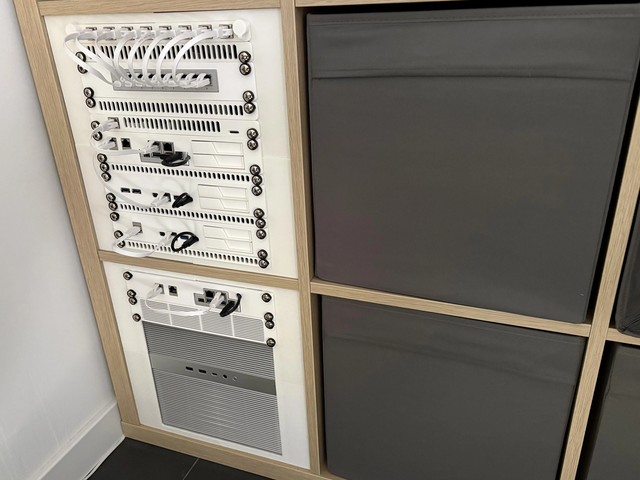
How Much Network Bandwidth Is Needed to Load Model Weights From a NAS?
A mechanism-first explanation of bandwidth for nas model loading, its shared-resource tradeoffs, three query-fanout FAQs, and a practical verification protocol.
How Much NVMe Write Endurance Does One Million New Embeddings Consume?
A mechanism-first explanation of nvme endurance for one million embeddings, its shared-resource tradeoffs, three query-fanout FAQs, and a practical verification
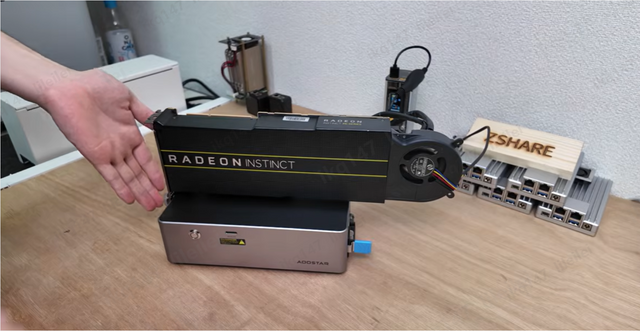
How Much RAM Is Needed to Keep Two Local LLMs Ready at the Same Time?
A mechanism-first explanation of ram for two resident llms, its shared-resource tradeoffs, three query-fanout FAQs, and a practical verification protocol.


