
What Happens When a Home AI Server Keeps Many Models Warm?


Keeping many home AI models warm reduces cold starts but converts shared memory into persistent weight, runtime, cache, and workspace commitments.
A household server may keep separate models ready for chat, embeddings, speech, vision, image generation, coding, and automation. Each warm process appears idle between requests, yet its weights and runtime context remain resident so the next call can start quickly. The combined footprint reduces the memory available for long contexts, concurrent users, temporary tensors, and non-AI services. Once capacity becomes tight, the system begins evicting, offloading, or refusing work, turning an attempt to remove cold starts into a different source of latency instability.
Every Warm Model Occupies a Persistent Memory Baseline
A resident model keeps its weights in GPU memory, unified memory, or system RAM. The serving process may also retain libraries, execution contexts, compiled kernels, and allocator pools.
WarmServe treats model prewarming as a placement problem because preparing one model can interfere with the memory and startup path of others.
Compute utilization can be near zero while memory remains committed. An idle dashboard therefore does not mean the device has enough capacity for another warm model.
Combined Residency Reduces Context and Concurrency Headroom
Model weights are only the fixed baseline. Active prompts still need KV cache, activations, and temporary workspaces on top of the warm models already present.
MuxServe colocates models according to model popularity and resource behavior instead of assuming every model should remain fully independent and resident.
A server that can hold three idle models may fail when one user submits a long context or several users become active. Safe residency planning must reserve the dynamic peak, not only fit the weight files.
ZimaSpace’s guide to accelerator memory contention explains why separate services can collide before any one process reaches its own configured limit.
Separate Runtimes Duplicate State That Models Could Share
One container per model can simplify upgrades and failure isolation, but each process may load its own accelerator context, framework libraries, allocator reserve, tokenizer assets, and shared model components.
Cost-efficient multi-model serving uses dynamic memory allocation to reduce waste from static per-model reservations.
A unified inference server can reduce duplication and coordinate residency, but it also creates compatibility and failure-domain trade-offs. The correct boundary depends on model families, security, and runtime support.

Eviction Converts Memory Pressure Into First-Request Delay
When a new model or request needs more space, the runtime may unload an inactive model. The next call to that model must reload weights and rebuild execution state.
ZimaSpace documents the resulting latency spike when a previously warm model is no longer resident.
If several models alternate under insufficient memory, the server can enter a thrashing pattern: every request evicts the model needed by the next request.
Longer keep-alive periods make sense only when the reuse probability is high enough to justify the occupied memory.
Warm Models Can Interfere Even Before Eviction
Resident processes may retain fragmented allocator blocks, consume memory bandwidth during simultaneous requests, and reduce the batch or KV capacity available to active services.
AlpaServe uses statistical multiplexing to place models around bursty demand rather than dedicating capacity for every individual peak.
A warm model also has an opportunity cost: memory reserved for an occasionally used image model cannot simultaneously support more chat users or a longer context.
Residency Should Follow Demand and Recovery Cost
Classify models by request frequency, latency sensitivity, load time, memory footprint, and acceptable fallback. Keep small, frequently used voice or chat models resident and allow rare models to load on demand.
WarmServe uses evict-aware placement so prewarming decisions account for the interference they create.
Measure model-specific cold starts, warm hit rate, resident bytes, active memory peaks, eviction count, and model-switch frequency. Apply separate idle timeouts rather than one global keep-alive value.
The target is not zero cold starts. It is a stable mix in which the models that need immediate response remain warm without causing repeated eviction or reducing the capacity required by active household workloads.

Recommended products

Tech & AI HUB
More to Read
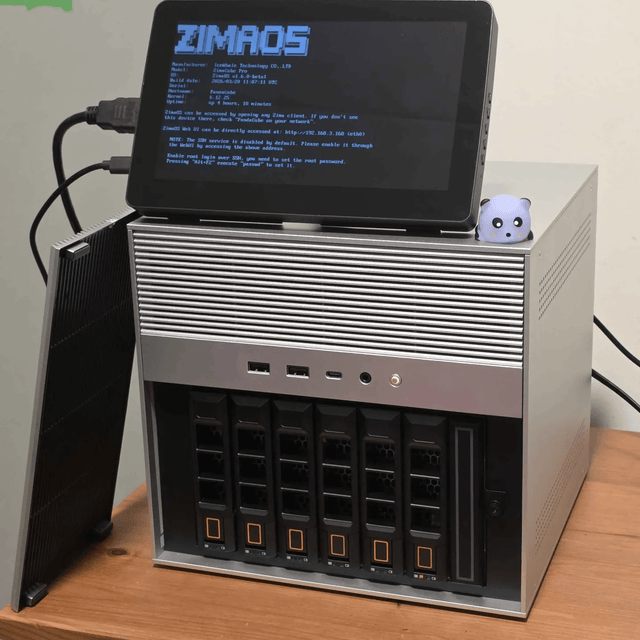
What Is Embedding Drift, and When Does a Private Search Index Need Rebuilding?
Decode model, preprocessing, corpus, and query drift; distinguish monitoring from incompatibility; and decide when a private index needs rebuilding.

What Is Tokenizer Compatibility, and Why Can It Break Model Switching?
Decode vocabulary identity, special-token semantics, chat templates, cached tokens, adapters, and compatibility checks for local model switching.
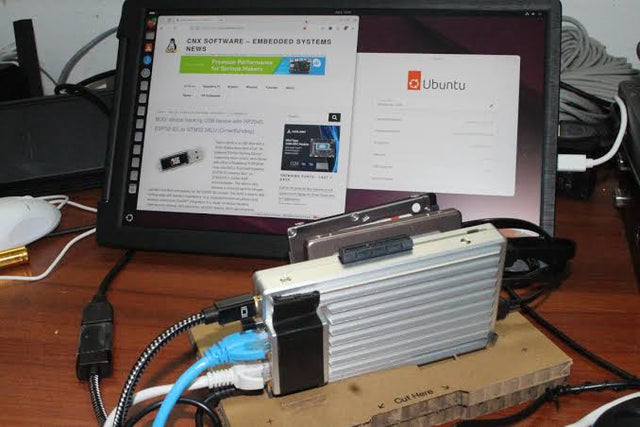
What Is Model Residency, and When Should a Local AI Service Keep Weights Loaded?
Decode weight residency, cache levels, cold starts, eviction, multiplexing, memory pressure, and when a home AI service should stay warm.


