
Can You Pass One USB Controller to a VM Without Losing Host Ports?


Yes, but only when the ports you want belong to a controller that can be isolated from the host. PCI passthrough assigns the entire USB controller, not one connector, so every port wired to that controller moves with it.
The labels on the case are not a reliable map. Front, rear, and internal headers may share one controller, while a single rear panel can contain ports from two controllers. That distinction determines the safe configuration, validation method, and rollback point.
Map controllers, ports, and IOMMU groups
List PCI USB controllers and their IOMMU groups, then plug a harmless device into each physical port and watch which controller receives it. Save the map before changing drivers.
An IOMMU group is the minimum safe assignment boundary on most systems. If the target controller shares a group with storage, networking, or the only host USB controller, passthrough risks removing more than intended.
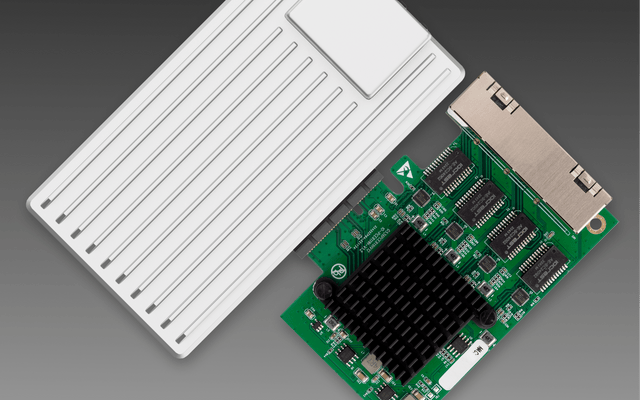
The cleanest fix for an inseparable layout is a dedicated PCIe USB card. Choose a card whose controller does not share an unsafe group and whose power budget fits attached devices.
Decide from host-survival signals
Keep SSH or another non-USB management path active. Confirm the host's keyboard, boot media, UPS cable, and installer input are not attached to the controller being reassigned.
Bind only the target PCI function to VFIO and reboot. The host should retain the remaining controller and the VM should enumerate all ports on the passed device.
Use the table below before attaching irreplaceable hardware.
| Observed state | Verdict | Next action |
|---|---|---|
| Dedicated controller and clean group | Pass through | Host keeps other controllers |
| Controller shares critical device group | Do not pass | Add a separate USB card |
| Port ownership unknown | Map first | No production devices yet |
Pass the controller with a rollback path
Record the original driver and boot parameters, then change one controller at a time. Avoid ACS override as a first response because it can make groups appear separate without changing the underlying hardware isolation.
Attach the PCI device to the VM and enable the required machine and IOMMU options. Test hot-plug, sustained transfers, VM reset, and host reboot.
ZimaSpace's ZimaCube hardware review shows why expansion layout matters.
The community VFIO passthrough guide explains IOMMU grouping and device isolation.

Retest every physical port
After boot, test every host port and every VM-owned port with storage and a low-risk HID device. Verify the host remains reachable if the VM is stopped or crashes.
Repeat after a cold power cycle because firmware can reorder devices or change initialization. Keep a console recovery method that does not depend on the passed controller.
Proceed only when the target controller has a safe group and the host retains management and critical USB devices. Stop if storage, network, UPS, or all host input disappears with the target function.

Recommended products

Support & Tips
More to Read
Can You Replace a Noisy Mini PC Fan Without Changing Thermal Control?
Yes—if the replacement matches the electrical interface, airflow, and feedback signals; connector fit alone does not preserve thermal control.
Can a Home Server Resume Services in Dependency Order After UPS Recovery?
Yes—use explicit boot dependencies and readiness checks; restart policies alone do not guarantee services become usable in the right order.
Can You Use Wake-on-LAN After a Complete Power Loss?
Sometimes—WOL needs standby power and firmware/NIC state to recover after AC returns; it cannot wake a machine while power is absent.


