
Which NAS Apps Actually Improve Speed, Backup, and Media?


Most NAS apps do not make a NAS faster by themselves. They improve the system only when they remove a real bottleneck: slow local transfers, unreliable backups, messy media libraries, weak remote access, poor app isolation, or services that keep fighting for the same disks.
The best NAS app stack is usually smaller than people think. Start with file sharing, versioned backup, media management, Docker control, and monitoring. Add photo AI, remote access, automation, or local AI only after the basic storage workflow is stable.
The App Store Is Not the Speed Upgrade
A NAS app cannot break through a 1GbE network limit, a slow hard drive pool, weak CPU, poor SMB setup, or overloaded RAM. If file transfers are slow, the first question is not which app to install. The first question is where the bottleneck sits.
For local file work, the biggest speed factors are usually the LAN path, SMB or NFS settings, drive layout, SSD use, and whether the NAS is busy with background jobs. A discussion around 10GbE NAS performance troubleshooting shows the practical reality: even with faster networking, performance still depends on storage, configuration, clients, and workload.
| Problem | Can an App Help? | Real Bottleneck to Check |
| Local file copy is slow | Sometimes | SMB settings, 1GbE limit, drive speed, RAID layout |
| NAS dashboard feels slow | Sometimes | RAM, CPU, disk I/O, too many containers |
| Media buffers on TV | Yes, if configured well | Direct Play, transcoding, subtitles, client support |
| Backups take too long | Yes | Incremental backup, retention, schedule, network path |
| Remote access is slow | Sometimes | Upload speed, VPN path, tunnel route, remote client |
The right app reduces friction. It does not replace the need for a clean network, healthy drives, enough memory, and a realistic workload plan.
Start With the Bottleneck Before Installing Anything
Speed complaints usually fall into three groups: file transfer feels slow, apps respond slowly, or media playback stutters. Each one has a different fix.
If file transfers are slow, test direct SMB access on the local network before changing apps. If the NAS UI or containers feel slow, check CPU, RAM, and disk I/O. If media playback stutters, confirm whether the file is Direct Playing or being transcoded. These are different problems, and installing more apps can make them harder to diagnose.
A useful rule is simple: change one layer at a time. Measure a file copy, then check services, then check disk activity, then check network. Do not install five new apps and then try to guess which one helped or hurt.
Speed Apps Usually Reduce Friction, Not Physics
The most useful “speed” apps are often not accelerators. They are control tools. Docker helps isolate services. Monitoring helps find what is busy. SSD app volumes can make databases and thumbnails more responsive. A clean SMB setup can make local access faster than routing files through remote services.
Docker is a good example. Docker does not make the NAS faster by itself. It makes services easier to isolate, stop, update, migrate, and back up. That can keep the NAS cleaner, but too many containers can also create constant disk writes, permission issues, and background load.
| App / Feature Type | Actually Helps With | Does Not Fix |
| Docker / Compose | App isolation and cleaner service control | Weak CPU, slow disks, bad network path |
| Monitoring | Finding CPU, RAM, disk, or network bottlenecks | Performance by itself |
| SSD app volume | Databases, thumbnails, metadata, small files | Large sequential HDD transfer limits |
| Direct SMB access | Local file transfer simplicity | Remote internet speed |
| VPN or tunnel | Safer remote access | LAN throughput ceiling |
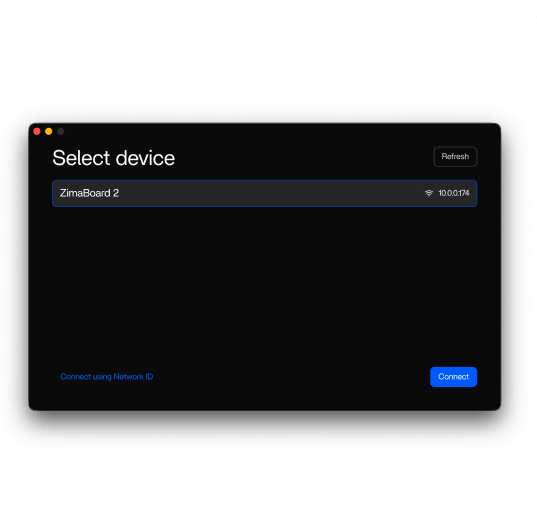
For ZimaSpace users, a compact personal server such as ZimaBoard 2 personal server is best used with a small, controlled app stack first. Add more services only when you know the current system is stable.
Backup Apps Are Worth It Only When They Add Recovery
A backup app is useful only if it helps you recover from deletion, corruption, ransomware, failed drives, or a bad sync. If it only copies the newest version from one folder to another, it may be convenient, but it is not enough.
Good NAS backup apps add versioning, retention rules, encryption, scheduling, restore testing, and offsite copies. That is why backup tools should be judged by recovery outcome, not by how many destinations they support. A comparison of Restic backup alternatives is useful because it frames backup tools around deduplication, encryption, repository design, and restore behavior instead of simple file copying.
| Need | Useful App Type | Why It Matters |
| Deleted file recovery | Versioned backup | Keeps older file states |
| Ransomware protection | Snapshots, immutable backup, or offline copy | Prevents the newest bad version from replacing everything |
| Cloud disaster recovery | Encrypted offsite backup | Protects against theft, fire, and local drive failure |
| Fast local restore | USB drive or second NAS backup | Avoids downloading everything from the cloud |
| Multi-device file movement | Sync app | Useful for access, but not enough as the only backup |
The practical setup is usually layered: snapshots or versioning for quick rollback, a local backup for fast restore, and an offsite encrypted copy for disaster recovery. RAID can help with drive failure, but it is still not a backup plan.
Sync Apps Are Useful, but They Are Not a Backup Plan
Sync improves access. Backup improves recovery. A sync app is useful when you want files to move between laptop, desktop, phone, and NAS without manual copying. It is not enough when you need to recover from accidental deletion, overwrites, corrupted files, or ransomware.
The problem is that sync is obedient. If a bad file, deleted folder, or encrypted ransomware copy syncs everywhere, every device may now hold the same bad state. Versioning can reduce that risk, but the safer design is to pair sync with a real backup workflow.
Use sync for working files, phone photo intake, project folders, and multi-device convenience. Use backup for recovery, retention, and offsite protection. A good NAS setup often needs both, but they should not be confused.
Media Apps Matter When They Remove Library Work
Media apps are useful when they do more than open a file. Their value is library organization, metadata, cover art, watch history, user access, remote streaming, client compatibility, and easier playback across TV, phone, tablet, and browser.
If you only watch files from one computer over SMB, a full media server may not matter. If your family watches from multiple devices, a media app can turn folders into a real library. The app becomes more valuable when the NAS is not just storage, but the center of a home media workflow.
| Media Need | App Type That Helps |
| Movies and TV library | Plex, Jellyfin, or Emby-style media server |
| Free and open-source media control | Jellyfin-style server |
| Polished client ecosystem | Plex-style platform |
| Phone photo backup and browsing | Immich-style photo app |
| Music library | Dedicated music server or media server music library |
| 4K playback | Direct Play first, transcoding only when needed |
For 4K playback, app choice is only half the answer. Hardware and file format matter. If you are planning a media-heavy NAS, review media server hardware for 4K streaming before assuming that one app can solve every playback issue.
Transcoding Is the Real Media Bottleneck
A NAS can read a movie file fast enough and still struggle to stream it smoothly. The reason is usually transcoding. If the client device supports the video, audio, subtitles, and container, the file can Direct Play with low CPU usage. If not, the server may need to convert the stream on the fly.
The best media app is the one that lets your files Direct Play most of the time. The worst setup is forcing a low-power NAS to transcode every movie because the file format, subtitle type, or playback device was not planned.
For one local TV, Direct Play may be enough. For remote streaming, multiple users, 4K files, subtitles, and mixed devices, hardware transcoding support becomes much more important. That is when media app choice, CPU capability, GPU support, and client devices need to be planned together.
Photo Apps Are Not the Same as Movie Servers
Photo apps solve a different problem from movie servers. They help with phone backup, timeline browsing, thumbnails, albums, face recognition, object search, sharing, and large image libraries. That workload creates many small files, database writes, thumbnail jobs, and AI indexing tasks.
This is why a photo app can feel heavy on a NAS even when movie playback feels fine. Video streaming often reads large files sequentially. Photo management touches metadata, thumbnails, databases, and machine learning processes. A reported Immich machine learning performance issue shows why photo AI workloads should be treated as real compute and storage tasks, not just another gallery app.
If your photo library is small, an HDD pool may be acceptable. If you have years of phone photos, many users, local AI indexing, and constant uploads, put the app database and thumbnails on faster storage when possible. For larger local AI and media workflows, a system like ZimaCube 2 AI NAS fits better than a minimal file-only NAS.
Docker Makes Apps Easier to Control
Docker is not a speed app, backup app, or media app. It is the layer that makes other apps easier to install, isolate, update, move, stop, and back up. For NAS users, that matters because apps should not turn the storage system into a fragile pile of unknown services.
The benefit is control. A container can be stopped without rebuilding the whole NAS. Volumes can be mapped clearly. App data can be separated from media folders. Updates can be tested with less risk. But Docker also introduces mistakes: wrong permissions, messy volumes, uncontrolled logs, and too many services fighting for disk I/O.
A Docker Transmission permission issue is a useful reminder that containerized apps still need correct folder ownership, permissions, and volume planning. Docker gives structure, but it does not remove the need to understand where app data lives.
If you are new to containerized NAS apps, start with a simple app workflow before building a large stack. A guide like CasaOS Docker guide for self-hosted NAS apps is a better starting point than installing many containers at once.
The Best Starter Stack Is Smaller Than Most People Think
A good starter stack should match the main job of the NAS. Backup-first users need recovery tools before media apps. Media-first users need library structure and Direct Play planning before automation. Self-hosters need Docker, monitoring, and backups before public-facing services.
| User Type | First Apps to Install | Wait Until Later |
| Backup-first user | File sharing, versioned backup, offsite backup, monitoring | Media automation, large Docker stack |
| Media user | Jellyfin or Plex, clean folder structure, metadata storage | Heavy transcoding and automation before testing Direct Play |
| Photo user | Photo backup, gallery app, database on faster storage if possible | Large AI indexing before backup is safe |
| Self-hosting user | Docker, backup, monitoring, reverse proxy or VPN | Too many public-facing apps |
| AI NAS user | Docker, local AI interface, backup, monitoring | Large RAG indexing before storage and backup are planned |
The right stack is not the longest list. It is the shortest set of apps that makes the NAS faster to use, safer to recover, and easier to enjoy.
When an App Makes the NAS Worse
An app makes the NAS worse when it adds constant disk activity, broken permissions, exposed ports, failed backups, background scans, or a dashboard you never use. This happens more often than beginners expect because every app has storage, memory, network, and maintenance cost.
Watch for warning signs after installing any NAS app. CPU stays high. RAM runs low. HDDs never sleep. Containers restart repeatedly. Backup windows become longer. Media scans never finish. The NAS becomes noisy at idle. A remote access app exposes more than intended. These are not small details; they are signals that the app stack is outgrowing the hardware or the configuration.
| Warning Sign | Likely Cause | First Fix |
| NAS feels slow after installing apps | Too many containers or background jobs | Stop non-essential services and check CPU/RAM |
| Hard drives never sleep | Logs, scans, sync, or databases keep writing | Move app data to SSD or reduce background tasks |
| Media playback stutters | Forced transcoding | Test Direct Play and client compatibility |
| Backups are unreliable | Sync-only workflow or bad retention plan | Add versioned backup and test restore |
| Docker app cannot access files | Permissions or volume mapping issue | Fix ownership, paths, and container user settings |
A good NAS app should remove work from your life. If it adds constant maintenance, hidden risk, or slowdowns you cannot explain, it is not improving the NAS.
Final Takeaway
The best NAS apps are not the most famous ones. They are the ones that solve a real bottleneck. Speed apps should help you find or reduce friction. Backup apps should improve recovery. Media apps should organize libraries and avoid playback problems. Docker should make services easier to control, not harder to understand.
For ZimaSpace users, the strongest NAS app setup is a clean stack: file sharing, versioned backup, Docker for controlled apps, Jellyfin or Plex for media, Immich if photos matter, and monitoring so you know when the system is doing too much.
Install fewer apps, configure them better, and back them up properly. That is how a NAS becomes faster, safer, and more useful without turning into a maintenance project.
FAQ
Which NAS app actually improves speed?
No single app can make slow hardware fast. The apps that help most are monitoring tools, Docker for cleaner service control, SSD-backed app storage, and direct local file access through SMB or NFS. Real speed still depends on network, drives, CPU, RAM, and workload.
Is Docker good for NAS apps?
Yes, if it is managed carefully. Docker helps isolate, update, move, and stop apps. It also makes app data easier to organize when volumes are mapped clearly. But too many containers, bad permissions, and messy logs can slow down or complicate a NAS.
What is the best NAS app for backup?
The best backup app is the one that supports versioning, retention, encryption, restore testing, and offsite copies. The name matters less than whether the app can recover deleted, corrupted, encrypted, or overwritten files.
Is file sync the same as backup?
No. Sync keeps files available across devices, but it may also sync deletions, overwrites, or corrupted files. Backup keeps recoverable versions. A strong NAS setup often uses both sync and versioned backup.
Plex or Jellyfin for NAS media?
Plex is known for a polished client ecosystem. Jellyfin is popular for free, open-source, local control. The bigger question is whether your files can Direct Play. If the NAS must transcode everything, hardware matters as much as app choice.
Is Immich worth running on a NAS?
Yes, if you want a local photo library with phone backup, thumbnails, search, albums, and AI features. But Immich can be heavier than a simple media folder because it uses a database, thumbnails, and machine learning jobs.
Can too many NAS apps slow down the system?
Yes. Too many apps can consume RAM, keep drives awake, write logs constantly, scan media all day, or create disk I/O spikes. Start with the apps you actually need and add more only after the current stack is stable.

Recommended products

Support & Tips
More to Read

How to Turn Existing NAS Folders Into a Searchable Photo Library Without Moving Your Originals
Learn how to index existing NAS photo folders with ZimaOS Photos, Immich, or PhotoPrism while preserving original files, metadata, and recovery options.
NAS Share Shows Old Files After Storage Replacement: Checks and Fixes
Compare local storage with the active share and a clean client. Repair only the layer proven stale, then verify the result survives reconnect and...
Mini PC Cooling Maintenance Guide for Fans, Vents, and Thermal Baselines
Use repeatable idle and load readings. Clean external airflow first, confirm fan behavior, and open the chassis only when evidence survives a controlled retest.


