
Proxmox vs Docker Home Server for Beginners Who Want Room to Grow


Docker is usually the simpler starting point when a beginner wants to run several Linux-based applications on one home server. Proxmox becomes more useful when growth means separate operating systems, stronger workload boundaries, virtual machines, or infrastructure-level recovery. They are not direct replacements, and a growing server can eventually use both.
They Solve Different Layers of a Home Server
Proxmox manages the server as infrastructure. It runs virtual machines and system containers, assigns storage and network resources, and provides a central interface for controlling several isolated environments. Each virtual machine can have its own operating system and kernel.
Docker manages applications inside an operating system. Containers package services and their dependencies while sharing the host kernel. This generally makes them faster to create and easier to reproduce than complete virtual machines, but it does not provide the same isolation boundary.
The useful decision is therefore not which platform is universally better. It is which layer the beginner needs to manage. A detailed comparison of virtualization and container layering shows why Docker can run inside a Proxmox virtual machine when both infrastructure control and convenient application deployment are required.
Start With Docker When Growth Means More Apps
Docker fits a first server built around services such as media management, dashboards, file utilities, monitoring, or home automation. A Compose file can describe multiple services, networks, and storage mounts, making the application stack easier to recreate after an update or migration.
This path keeps the first learning boundary relatively small. The beginner mainly needs to understand the host operating system, container images, ports, environment variables, permissions, and persistent storage. A list of self-hosted apps for a home server can help define whether this application-first approach covers the planned workload.
Persistent data needs separate attention because rebuilding a container does not automatically recover its databases or configuration. Official guidance for persistent container volumes distinguishes disposable application images from the data that must be backed up and tested independently.
Choose Proxmox When Growth Means More Boundaries
Proxmox becomes the stronger starting layer when the server will host different operating systems, risky experiments, network appliances, or services that should not share one host environment. A failed application update can then remain inside its virtual machine rather than affecting every service on the server.
It also gives beginners a clearer route toward additional virtual machines, segmented networks, storage pools, and another physical node. That flexibility introduces more concepts at the beginning, including virtual disks, bridges, guest resources, storage allocation, and the difference between host-level and guest-level backups.
Integrated virtual machine and container backups can capture guest configuration and data as a unit. However, a successful snapshot or guest backup does not remove the need for application-aware database backups, off-device copies, and actual restore testing.
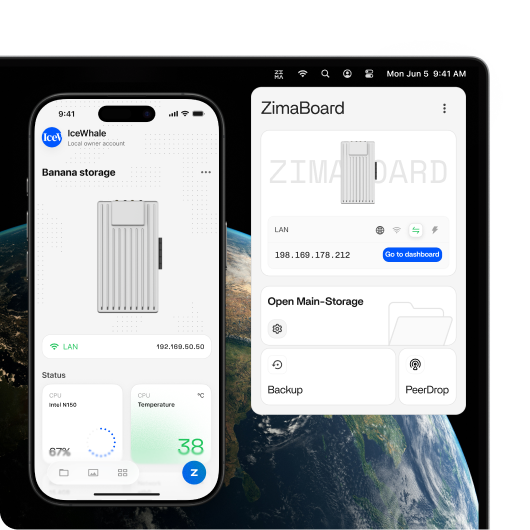
A system such as the ZimaCube 2 Personal Cloud NAS can provide a flexible base when the plan includes storage-heavy services, containers, virtualized workloads, and later expansion. The platform choice should still follow the workloads rather than the maximum number of features the hardware can expose.
Which Growth Path Fits Your First Server?
The following model classifies growth by what will actually increase: applications, operating environments, isolation requirements, or physical infrastructure.
| Expected Growth | Docker First | Proxmox First | Beginner Meaning |
|---|---|---|---|
| More Linux applications | Strong fit | Possible but adds another layer | Start with containers if one host OS is enough |
| Multiple operating systems | Not its primary role | Strong fit | Use virtual machines when guests need separate kernels |
| Isolated testing | Good for application-level testing | Better for complete environment isolation | Match the boundary to the risk of the experiment |
| Simpler application deployment | Strong fit | Usually paired with a guest environment | Compose reduces repeated application setup |
| Infrastructure snapshots and guests | Requires separate host and data planning | Built around VM and system-container management | Proxmox makes the infrastructure layer more visible |
| Both types of growth | Run inside a Proxmox virtual machine | Manage the VM and physical resources | Add the second layer only when the workload justifies it |
This table is not a performance ranking. A simple Docker host can be more dependable than a poorly understood virtualization stack, while Proxmox can prevent a growing collection of unrelated services from becoming one fragile host. Operational knowledge matters as much as feature count.
Beginners should choose the smallest architecture that preserves their next likely upgrade. Before installing either platform, define storage ownership, backup destinations, network access, and recovery steps through a basic home server OS setup. Those decisions are harder to correct later than the application interface.
FAQ
Can Docker run inside Proxmox?
Yes. A common layered design runs Proxmox on the physical server and Docker inside a Linux virtual machine. Proxmox manages the guest, storage, and virtual network, while Docker manages the applications inside that guest.
Is Docker easier than Proxmox for a beginner?
Docker is usually easier when the goal is to run several Linux applications on one existing operating system. Proxmox requires additional virtualization, storage, networking, and guest-management concepts, but those concepts become useful when the server needs stronger boundaries.
Should a first home server use both platforms immediately?
Not necessarily. Starting with both creates two configuration and troubleshooting layers. Use Docker alone for an application-focused server, choose Proxmox when virtual machines are already part of the plan, and combine them after both requirements are real.
Final Takeaway
Start with Docker when room to grow means adding more containerized applications to one Linux server. Start with Proxmox when growth means multiple operating systems, stronger isolation, or broader infrastructure control. If both needs develop, running Docker inside a Proxmox virtual machine creates a practical upgrade path without treating the two platforms as interchangeable.

Recommended products

Product Comparisons
More to Read
LXC vs Docker on Proxmox for App Updates and Rollbacks
Docker gives app-level version control; LXC gives guest-level rollback. The better fit follows the smallest state unit you can restore safely.
Docker vs LXC Security Boundaries for Privileged Home Services
Docker fits narrowly packaged apps; LXC fits fuller Linux services, but neither replaces a VM when shared-kernel risk is unacceptable.

Turnkey NAS OS vs Modular Linux for a First-Time Builder
Choose turnkey NAS software for guided storage operations; choose modular Linux when learning and explicit control justify more ownership.


