
Proxmox LXC vs VM for a Docker Host With USB or GPU Passthrough: Which Is Easier to Operate?


Choose a Proxmox LXC container for the Docker host when Linux device nodes can be exposed safely, the host owns the required GPU or USB drivers, and low overhead or GPU sharing matters. Choose a VM when the guest must own the driver stack, a PCI device should be isolated through IOMMU, or Docker and its hardware access must remain independent from the Proxmox host. USB serial devices often fit either route; exclusive GPU passthrough usually favors a VM.
Define “Passthrough” Before Comparing LXC and a VM
LXC and KVM do not hand hardware to workloads in the same way. An LXC container shares the Proxmox kernel, so it normally receives permission to access host-created device nodes such as `/dev/dri`, `/dev/ttyUSB0`, or `/dev/bus/usb`. The host still detects the hardware and loads the kernel driver.
A VM runs its own kernel. Proxmox can emulate a USB device, attach a selected USB device or port, or assign a PCI device through VFIO and IOMMU. The guest then loads its own driver and treats the assigned hardware more like a directly installed device.
The current ZimaSpace Proxmox NAS setup guide introduces both guest types. This article narrows the decision to a Docker host whose containers need USB dongles, serial adapters, media GPUs, or compute accelerators.
| Decision axis | Docker inside Proxmox LXC | Docker inside a VM |
|---|---|---|
| Kernel | Shares the Proxmox host kernel | Runs an independent guest kernel |
| USB access | Exposes host device nodes and permissions | Attaches selected USB device or port to guest |
| GPU access | Usually shares host-loaded driver and render devices | Can receive an exclusive PCI device through VFIO |
| Resource overhead | Lower memory and storage overhead | Additional guest OS memory and disk |
| Isolation | More host coupling and a shared kernel boundary | Stronger driver and kernel separation |
| Portability | Depends on compatible host devices, drivers, IDs, and mappings | Guest driver state travels with VM, but physical PCI mappings remain host-specific |
| GPU sharing | Several containers may use the same host render device when supported | Whole-device passthrough normally dedicates the device to one VM |
| Best fit | Media, serial USB, and shared Linux GPU services | Exclusive accelerators, proprietary drivers, stronger isolation, mixed guest OS needs |
USB Devices Favor LXC When They Behave Like Stable Linux Device Nodes
USB serial adapters, Zigbee coordinators, UPS interfaces, Coral USB accelerators, and similar devices can work well in LXC when Proxmox exposes the device node and maps the correct ownership. The Docker container inside LXC then receives that device from its Linux host environment.
A practical explanation of USB access inside Proxmox LXC shows the underlying pattern: mounting the device is not enough unless the container is also allowed to access it.
Use stable paths such as `/dev/serial/by-id` when the application supports them. Bus numbers and `/dev/ttyUSB0` assignments can change after reboot or reconnection. The LXC route becomes fragile when each host update requires manual cgroup, UID, GID, or device-path repair.
A VM Is Cleaner When USB Ownership Must Be Self-Contained
A VM can receive a USB device by vendor and product ID or by a physical port, then load the device driver inside its own operating system. This is useful when the device needs a vendor package, a different kernel version, or an application stack that should not depend on Proxmox host libraries.
The VM also creates a clearer diagnostic boundary. If the guest loses the USB device, the administrator can inspect the hypervisor attachment and then the guest driver separately. In LXC, the host driver, device node, permissions, container mapping, Docker runtime, and application all participate in one chain.
The tradeoff is reconnection behavior. Some USB devices reset, change identity, or disappear during guest restart. Test unplug, host reboot, guest reboot, and application recovery instead of assuming that a successful first attachment proves stable operation.

Shared GPU Access Usually Favors LXC
For Intel or AMD render devices and supported NVIDIA workloads, LXC can expose the host GPU device nodes to several Linux services. The GPU remains managed by the Proxmox host driver, allowing multiple containers to use hardware transcoding or compute without assigning the whole PCI device to one guest.
XDA’s recent Proxmox example explains how LXC can share the host-managed GPU rather than dedicating it through VM passthrough. The same operational model can suit Jellyfin, Plex, Frigate, or multiple Docker services when driver and permission requirements align.
Sharing creates version coupling. The host kernel driver, user-space libraries inside LXC, Docker runtime integration, and application packages must remain compatible. A Proxmox kernel or driver upgrade can therefore affect every container using the GPU at once.
Exclusive GPU Passthrough Usually Favors a VM
A VM is the stronger option when one workload needs direct ownership of a discrete GPU, a proprietary guest driver, Windows support, CUDA isolation, or a kernel stack that should not be installed on Proxmox. VFIO assignment separates the device from the host and presents it to the guest.
Proxmox’s PCI model is designed around assigning a physical PCI device to a KVM guest. A Level1Techs Docker discussion captures the practical consequence: a VM normally consumes the passed-through GPU exclusively, whereas LXC can share host device access among services.
This choice can reverse when the GPU supports mediated devices or SR-IOV, but consumer GPUs and home-server platforms do not provide a universal sharing path. Verify IOMMU groups, reset behavior, firmware, display initialization, and whether the host needs that GPU before designing around exclusive passthrough.
Docker Inside LXC Adds a Nested Management Layer
LXC already provides operating-system-level isolation, and Docker adds another container runtime inside it. This can be efficient, but it introduces nested namespaces, cgroups, storage drivers, capabilities, and mount behavior. Some Docker features require nesting options or additional permissions in the Proxmox container.
A VM presents Docker with a conventional Linux host. Docker documentation, kernel modules, firewall behavior, and storage drivers are easier to interpret because the guest owns its kernel configuration. The cost is a complete guest OS, reserved memory, virtual disk management, and another patching layer.
Do not choose LXC only to save a few hundred megabytes if the required configuration forces a privileged container, broad device permissions, and undocumented host modifications. The lightweight option loses value when every upgrade depends on remembering exceptions that the VM would contain inside the guest.
Isolation and Security Can Reverse the Performance Winner
LXC shares the host kernel, so a misconfigured privileged container or overly broad device mapping can expose more of the Proxmox node than intended. Unprivileged LXC, narrow device permissions, read-only mounts, and minimal capabilities improve the boundary, but the architecture remains more coupled than a full VM.
A VM provides a separate kernel and can isolate proprietary GPU stacks, Docker networking, firewall modules, and experimental software from the Proxmox base. That separation is valuable when the Docker host runs third-party images, public services, local AI packages, or frequent driver experiments.
The VM is not automatically secure. PCI passthrough, shared storage mounts, management credentials, and bridged networking still create attack and failure paths. Choose it when the independent kernel and driver boundary actually simplifies the threat and maintenance model.
Backups and Migration Favor Different Kinds of Simplicity
LXC backups are compact and quick because the guest does not contain a full virtual hardware stack. However, restoring hardware access on another Proxmox node requires matching device nodes, groups, drivers, and permissions. The container filesystem can migrate while the physical-device contract does not.
A VM backup contains the guest operating system and driver configuration, making application recovery more self-contained. USB attachments and PCI addresses still need remapping on the destination, and a passed-through GPU can prevent live migration because the physical device is tied to one node.
The ZimaSpace Proxmox backup workflow covers guest protection. For this comparison, a recovery is complete only when Docker starts and the USB or GPU-dependent application can see the replacement device.
Use a Device-Recovery Test Before Choosing the Guest Type
- List every USB and PCI device the Docker applications require.
- Decide whether each device should be shared with the host or owned by one guest.
- Test the host driver, device node, UID/GID mapping, and Docker permissions for LXC.
- Test IOMMU grouping, guest driver installation, and reset behavior for a VM.
- Reboot the Proxmox host and confirm device attachment returns automatically.
- Restore the guest from backup and recreate the hardware mapping from documentation.
- Repeat on another compatible node if migration or hardware replacement matters.
Measure application behavior rather than only guest overhead. Hardware transcoding stability, USB reconnection, driver updates, host maintenance, and recovery time usually matter more than a small CPU difference between LXC and KVM.
Which Proxmox Guest Fits the Docker Host?
Choose LXC When
Choose LXC when all workloads are Linux-based, the host can own the drivers, USB devices expose stable nodes, and a GPU should be shared among several services. Keep the container unprivileged where possible and document every device and group mapping.
Choose a VM When
Choose a VM when the Docker host needs exclusive PCI GPU ownership, proprietary or experimental drivers, stronger kernel isolation, or easier portability of the complete software stack. Reserve enough RAM and storage for the guest and test device reset after reboot.
Split the Workloads When
Run lightweight media and USB services in LXC while placing exclusive GPU compute, Windows-dependent tools, or untrusted Docker stacks in a VM. A Proxmox-capable platform can support both, but each physical device should have one documented ownership model.
FAQs
Can Docker Run Reliably Inside an Unprivileged LXC?
Yes for many workloads, but nesting, storage drivers, mounts, networking, and device access may require additional configuration. Test the exact Docker features and avoid switching to a privileged container merely to bypass an unexplained permission problem.
Can One GPU Be Used by Both an LXC and a VM?
Not through ordinary whole-device VFIO passthrough at the same time. LXC may share a host-managed render device, while a VM normally needs the device detached from the host. SR-IOV or mediated-device support can change this on specific hardware.
Which Option Is Better for a USB Zigbee Coordinator?
Either can work. LXC is efficient when a stable serial-by-ID path and permissions are reliable. A VM is cleaner when the coordinator’s software stack or driver should remain independent from the Proxmox host.
Final Verdict
Use LXC for a Docker host when USB and GPU resources can be shared through the Proxmox host’s Linux driver stack and low overhead matters. Use a VM when hardware should belong to the guest, drivers must be isolated, or recovery should preserve a self-contained operating system. Choose by device ownership and restore behavior, not by the assumption that containers are always simpler.

Recommended products

Product Comparisons
More to Read
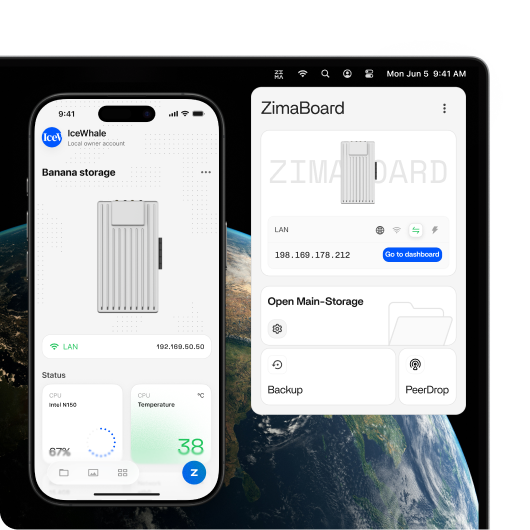
LXC vs Docker on Proxmox for App Updates and Rollbacks
Docker gives app-level version control; LXC gives guest-level rollback. The better fit follows the smallest state unit you can restore safely.
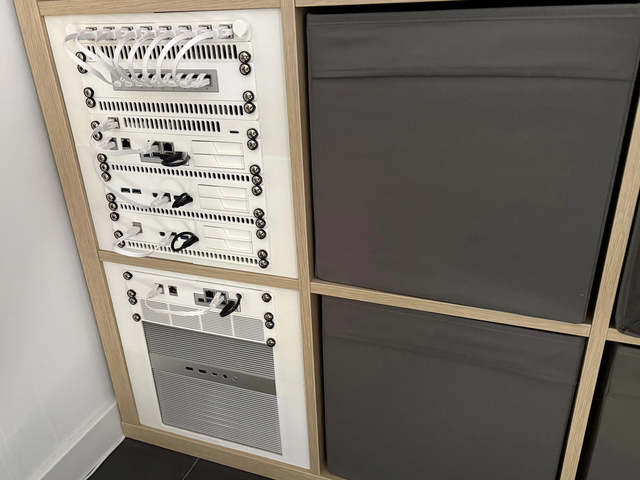
Docker vs LXC Security Boundaries for Privileged Home Services
Docker fits narrowly packaged apps; LXC fits fuller Linux services, but neither replaces a VM when shared-kernel risk is unacceptable.
Turnkey NAS OS vs Modular Linux for a First-Time Builder
Choose turnkey NAS software for guided storage operations; choose modular Linux when learning and explicit control justify more ownership.


