
Personal AI Lab vs Subscription AI Tools: Which Is Better for Long-Term Learning?


Subscription AI tools are better if your main goal is to learn faster with the strongest hosted models, polished interfaces, web research, coding help, and low setup effort. A personal AI lab is better if your goal is to learn how AI systems actually work: local deployment, Docker, self-hosted interfaces, private RAG, model storage, automation, and data control.
The real decision is not just monthly fees versus hardware cost. It is what kind of learning you want to build over time. For most long-term learners, the strongest path is hybrid: use cloud subscriptions for frontier reasoning and fast applied learning, then use a personal AI lab to practice infrastructure, privacy, local data workflows, and repeatable experiments.
The Short Answer: Subscriptions Teach Usage, Personal Labs Teach Systems
Choose subscription AI tools if you want immediate results. They are better for learning a subject, debugging code, writing, research, brainstorming, document analysis, and testing ideas without managing hardware.
Choose a personal AI lab if you want hands-on technical depth. A local lab forces you to learn deployment, model limits, storage, networking, containers, embeddings, vector databases, RAG, backups, and troubleshooting.
The best long-term choice is often not either-or. Subscriptions help you learn with AI. A personal lab helps you learn AI systems. A hybrid stack gives you both.
What You Actually Learn from Subscription AI Tools
Subscription AI tools teach application-level fluency. You learn how to ask better questions, compare outputs, structure research, turn rough notes into working drafts, debug code, and build repeatable workflows around high-quality hosted models.
That matters because many learning goals are not infrastructure goals. If you are learning Python, finance, biology, writing, design, or product strategy, a strong subscription tool lets you focus on the subject instead of spending your study time fixing model downloads or container issues.
Official plan pages also show why subscription AI tools for applied learning remain attractive: paid tiers often bundle stronger models, more usage, research features, coding tools, memory, agents, and larger context. That convenience is hard for a small local lab to match.
What You Actually Learn from a Personal AI Lab
A personal AI lab teaches a different skill set. Instead of only learning how to prompt a model, you learn how the system is assembled: model runtime, local UI, storage, permissions, containers, APIs, embeddings, vector search, and service reliability.
That is valuable if your long-term goal is AI engineering, local automation, private RAG, self-hosted apps, or infrastructure literacy. Open WebUI’s Quick Start shows how self-hosted AI interfaces for local models can be deployed with Docker and connected to local or remote model providers, which is exactly the kind of hands-on work a subscription hides from you.
The tradeoff is friction. A personal lab teaches more infrastructure because it makes you own more infrastructure. That includes updates, storage layout, backups, resource limits, and debugging when something breaks.
Cost Over Time: Monthly Fees vs Hardware Ownership
Subscription tools are easier to start because the upfront cost is low. You pay monthly, get access immediately, and avoid hardware planning. For light users, this can be the cheaper and smarter path.
A personal AI lab has the opposite cost curve. You pay more upfront for hardware, storage, and setup time, then your marginal cost for local experiments can become lower. That matters if you run repeated tests, local automations, private document workflows, or long-running self-hosted services.
The important point is that monthly AI subscription cost is only one part of the comparison. Long-term cost should also include hardware, power, maintenance, storage expansion, time spent troubleshooting, and the learning value of owning the stack.
Privacy and Control: Private AI vs Public AI
Privacy is one of the clearest differences between the two paths. Hosted AI tools are convenient, but your data handling depends on provider policies, account settings, retention rules, and the service’s infrastructure.
A personal AI lab gives you more control over where files live, who can access them, and which documents are used for local search or RAG. AI21’s explanation of private AI vs public AI is useful here because it frames the tradeoff as control and deployment environment, not just model quality.
That does not mean local AI is automatically safe. A personal lab still needs permissions, backups, secure remote access, and disciplined data handling. Private infrastructure gives you control, but you must manage that control well.
Capability Gap: Frontier Models vs Local Experimentation
Subscription tools usually win when the task needs frontier reasoning, polished multimodal features, very large context, web research, or the newest hosted models. They let you learn with advanced AI before you understand how the infrastructure works.
A personal AI lab wins when the task needs repeatability, privacy, local data, custom workflows, or system experimentation. You can test open-weight models, build small agents, connect local files, run embeddings, and understand why model size, memory, storage, and latency matter.
For long-term learning, the capability gap is not a reason to ignore local labs. It is a reason to give each side the right job. Use hosted tools for the hardest reasoning tasks. Use the personal lab to learn deployment and data architecture.
Personal AI Lab vs Subscription AI Tools Fit Table
Use this table as a buying matrix. Start with what you want to learn, then choose the setup that teaches that skill best.
| Decision factor | Subscription AI tools | Personal AI lab | Better choice |
|---|---|---|---|
| Fastest start | Ready immediately | Requires setup | Subscription |
| Frontier reasoning | Strong hosted models | Limited by local hardware | Subscription |
| Learning AI systems | Mostly abstracted away | Hands-on deployment | Personal lab |
| Privacy | Depends on provider policy | Data can stay local | Personal lab |
| Long-term cost | Recurring monthly fees | Upfront hardware plus maintenance | Depends on usage |
| Rate limits | Possible | Mostly under your control | Personal lab |
| Hardware burden | None | You manage server, storage, and updates | Subscription |
| RAG learning | Usually tool-driven | You build embeddings, vector DB, and storage | Personal lab |
| Coding productivity | Excellent immediately | Useful but model-dependent | Subscription or hybrid |
| Automation experiments | API cost or limits may matter | Local loops can be repeated | Personal lab |
| Sensitive documents | Requires provider trust | Local-first workflow possible | Personal lab |
| Multimodal frontier features | Stronger cloud tools | Local support varies | Subscription |
| Long-term skill depth | Prompting and workflow design | Infrastructure and architecture | Hybrid |
| Best overall path | Cloud for frontier tasks | Local for systems practice | Hybrid |
The table shows why this is not a simple cost comparison. A subscription buys convenience and model access. A personal lab buys hands-on control and systems knowledge.
When a Hybrid Learning Stack Makes More Sense
A hybrid stack makes sense when you want both productivity and technical depth. You can keep one subscription for difficult reasoning, research, coding, and multimodal work, while using your personal lab for local deployment, private documents, RAG, automation, and storage practice.
This also prevents overbuilding too early. Beginners can start with subscriptions and a small local server, then expand only when they know what they actually want to learn. Qdrant’s Ollama guide shows how private RAG over local documents can become a practical learning project once you are ready to move beyond prompting into embeddings and vector search.
The hybrid approach also keeps expectations realistic. A local lab does not need to beat frontier cloud models to be valuable. It only needs to teach the parts of AI that hosted tools hide.
Where ZimaBoard 2 and ZimaCube 2 Pro Fit This Decision
The useful product pattern is layered. A compact server is better for learning local services and experiments. A NAS is better for long-term data, model libraries, private RAG files, backups, and shared learning material.
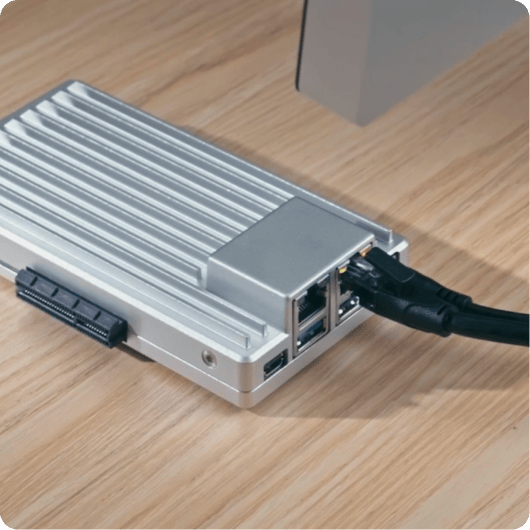
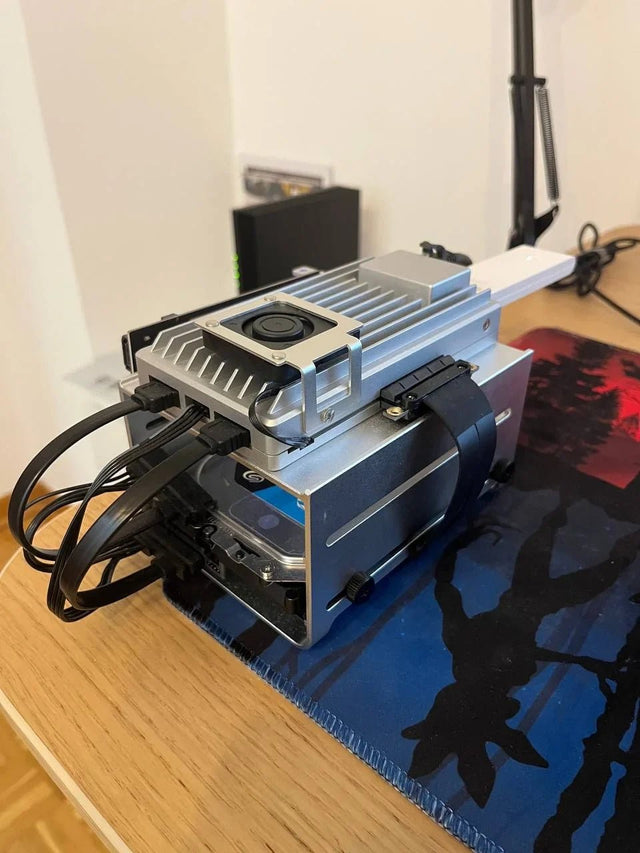
A ZimaBoard 2 single board server fits the compact personal lab path. The verified 1664 configuration gives learners 16GB RAM, 64GB eMMC, Intel N150, dual 2.5G Ethernet, SATA, and PCIe expansion, making it better suited to Docker apps, self-hosted tools, local interfaces, automation, and lightweight lab services than to heavy GPU inference.
A ZimaCube 2 Pro NAS fits the data-layer path. Its verified Pro configuration includes i5-1235U, 16GB RAM, 256GB storage, 6-bay NAS expansion, dual 2.5GbE, 10GbE, and faster SSD expansion paths, which makes it more relevant to private RAG datasets, model libraries, backups, shared notes, media, and self-hosted services.
The boundary is important. ZimaBoard 2 should not be treated as a frontier AI replacement or heavy inference workstation. ZimaCube 2 Pro should not be treated as a dedicated GPU workstation. They make more sense as local learning infrastructure that complements subscription AI tools.
FAQ
Is a personal AI lab cheaper than AI subscriptions?
It can be cheaper for heavy long-term experimenters, but not always. A local lab has upfront hardware cost, power use, storage expansion, maintenance, and setup time. For light users, a subscription may remain cheaper and easier.
Can a personal AI lab replace ChatGPT, Claude, or Gemini?
Not completely. A personal lab is better for privacy, local RAG, automation, self-hosting, and systems learning. Subscription tools are still stronger for frontier reasoning, polished multimodal features, web research, and low-friction productivity.
What should beginners choose first?
Beginners who want to learn a subject faster should start with a subscription tool. Beginners who want to learn AI infrastructure should start with a small personal lab. The strongest long-term path is usually hybrid: cloud for frontier tasks, local lab for systems practice.
The right long-term setup depends on what you want to learn. Choose subscription AI tools if you want immediate AI-powered productivity. Build a personal AI lab if you want to understand deployment, data, RAG, automation, and control. Use both if you want the most balanced learning path.

Recommended products

Product Comparisons
More to Read
WireGuard Server vs Mesh VPN for Devices Behind CGNAT
Use mesh VPN for low-friction roaming devices; use a WireGuard relay when you want to own routing, keys, and the public endpoint.
10GbE NAS on Gigabit Clients: Upgrade the Server or Endpoints First?
Upgrade the endpoint path for one slow workstation; upgrade the NAS uplink first when several gigabit clients saturate it together.
1GbE vs 2.5GbE for a Home Server: Which Workloads Cross the Line?
Keep 1GbE for light services and single streams; move to 2.5GbE when recurring transfers or combined clients sustain more than about 100 MB/s.


