
Used Server vs Mini PC vs NAS: Which Is Better for a Home Lab?


A used server, a mini PC, and a NAS can all become the center of a home lab, but they are not the same kind of machine. A used server is strongest when you want enterprise-style learning, expansion, and lots of VM headroom. A mini PC is strongest when you want quiet, low-power compute. A NAS is strongest when storage, backups, media, and shared data matter most.
The wrong choice usually happens when people buy for specs instead of workload. A rack server may look like the best value per core, but it can be loud and expensive to run. A mini PC may be efficient, but storage expansion is limited. A NAS may be easy for storage, but it is not automatically the best compute box.
Start With the Workload, Not the Hardware
The first question is not “which box is best?” The first question is what you want the home lab to do. A lab for learning virtualization has different needs from a lab for family backups, media storage, Docker apps, Home Assistant, Kubernetes, networking, or local AI experiments.
If your workload is mostly compute, you need CPU, RAM, and virtualization flexibility. If your workload is mostly storage, you need drive bays, snapshots, backups, and reliable file sharing. If your workload is mostly always-on home services, noise and power may matter more than raw performance.
| Main Goal | Best Starting Point |
| Learn enterprise infrastructure | Used server |
| Run quiet Docker apps | Mini PC |
| Store photos and backups | NAS |
| Run many VMs | Used server or strong mini PC |
| Build a media library | NAS + compute if needed |
| Run Home Assistant | Mini PC or small server |
| Build a private cloud | NAS |
| Try local AI workflows | Compute node + NAS storage |
| Learn Kubernetes | Used server or mini PC cluster |
Misconception: the best home lab hardware is not the most powerful hardware. It is the hardware that matches the workload.
Used Servers Are Best for Power, Expansion, and Enterprise Learning
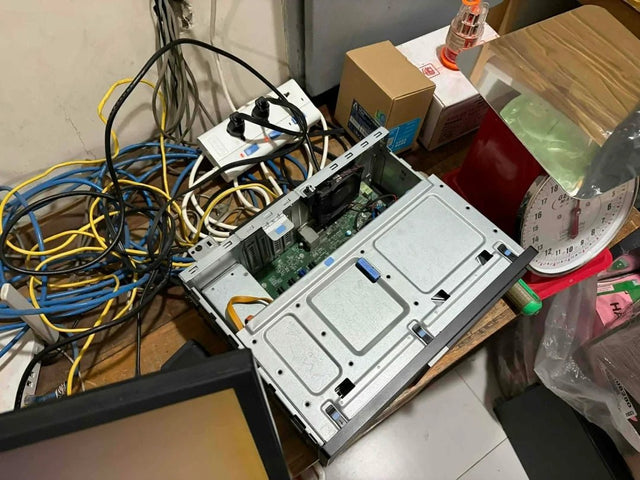
A used enterprise server is attractive because it gives you a lot of hardware for the money: multiple CPU cores, large RAM capacity, ECC memory support, PCIe slots, remote management, drive bays, RAID controllers, and sometimes redundant power supplies.
That is why used servers are popular for people who want to learn real infrastructure. If your goal is Proxmox, ESXi-style workflows, VM clusters, network labs, storage experiments, databases, 10GbE, HBAs, or GPU projects, a used server gives you room to experiment.
Dell’s PowerEdge R730/R730xd technical guide shows why enterprise systems are different from small consumer boxes: the platform is designed around high memory capacity, I/O, storage options, PCIe expansion, RAID, and iDRAC management. That makes enterprise server expansion and remote management the real appeal of used rack hardware.
| Used Server Strength | Why It Matters |
| Many CPU cores | More VMs and services |
| Large RAM capacity | Better virtualization lab |
| ECC memory support | More enterprise-like learning |
| IPMI / iDRAC / iLO | Remote management practice |
| PCIe slots | Add HBA, 10GbE, GPU, or storage cards |
| Drive bays | More storage experiments |
| Redundant components | Learn enterprise design patterns |
A used server is best when the learning value matters as much as the services you run.
The Hidden Cost of Used Servers Is Power, Noise, and Space
The biggest mistake with used servers is only comparing purchase price. A used rack server can be cheap to buy, but expensive to live with. It may idle far above a mini PC, push a lot of heat into the room, and make fan noise that is unacceptable in a bedroom, apartment, or office.
Rack depth and physical placement also matter. A 2U rack server that looks affordable online may need a proper shelf, rack, basement corner, garage, or dedicated lab space. If it sits near your desk, the noise may decide the hardware choice for you.
| Hidden Cost | Why It Matters at Home |
| Idle power | Runs 24/7 |
| Fan noise | Hard to live with |
| Heat | Raises room temperature |
| Rack size | Needs space |
| Old hardware | More maintenance risk |
| Firmware updates | More complexity |
| Replacement parts | May be model-specific or used |
Misconception: cheap to buy does not mean cheap to run.
Mini PCs Are Best for Quiet Low-Power Compute
Mini PCs have become popular in home labs because they are quiet, compact, efficient, and still powerful enough for many daily services. For Docker apps, Home Assistant, Pi-hole, reverse proxy, dashboards, lightweight VMs, development tools, and small databases, a modern mini PC is often enough.
The low-power advantage is not theoretical. Intel lists the N100 as a 4-core processor with a 6W TDP, which is why many N100-class systems are used for always-on lightweight services. That makes low-power mini PC compute attractive when the machine will sit on all day.
| Mini PC Strength | Why It Helps |
| Low power | Cheaper 24/7 operation |
| Quiet design | Fits apartment, office, or desk setup |
| Small footprint | Easy placement |
| Modern CPU | Good for Docker and apps |
| NVMe storage | Fast app storage |
| Easy scaling | Add another node later |
A mini PC is often the best first home lab compute node.
Mini PCs Struggle When Storage Becomes the Main Job
The mini PC’s biggest weakness is storage. Many models have one or two internal SSD slots, limited SATA, little PCIe expansion, no 3.5-inch bays, and no clean hot-swap drive design. That is fine for apps, but awkward for multi-drive storage.
You can attach external drives or USB enclosures, and some users do build storage this way. But for long-term backup, media archives, RAID/ZFS pools, or important shared files, USB-attached multi-drive storage adds complexity and potential failure points.
| Storage Need | Mini PC Problem |
| Multiple HDDs | Usually no internal bays |
| RAID/ZFS pool | External USB is awkward |
| Hot-swap drives | Usually not available |
| Large media archive | Needs external storage |
| Backup target | Less clean than NAS |
| 10GbE + storage | Limited expansion |
| Long-term drive cooling | Not designed for HDD bays |
Misconception: if a mini PC can run NAS software, it does not automatically become a good NAS.
NAS Is Best When Storage, Backup, and Shared Data Matter Most
A NAS is not just a box with disks. It is the storage foundation of the lab. The value comes from drive bays, file sharing, permissions, snapshots, storage pools, backups, media libraries, and multi-device access.
TrueNAS documentation reflects this storage-first focus: datasets, permissions, snapshots, shares, quotas, and replication are core storage management concepts. That is why NAS storage management and snapshots matter more than CPU specs when the main job is protecting and organizing data.
| NAS Strength | Why It Matters |
| Drive bays | Real storage growth |
| RAID/ZFS options | Drive-failure resilience |
| Snapshots | Recover from mistakes |
| SMB/NFS shares | Multi-device access |
| Backup tools | Protect PCs and servers |
| Media storage | Central library |
| Permissions | Safer shared access |
If your home lab stores family photos, backups, work files, media, project archives, or private cloud data, storage design should come before compute bragging rights.
NAS Is Not Automatically the Best Compute Box
A NAS can often run apps, containers, media services, and light automation. But it is still storage-first hardware. Many NAS systems have weaker CPUs, fixed RAM limits, fewer expansion options, and app ecosystems that may be less flexible than a general-purpose server.
For file sharing, backups, snapshots, and media storage, a NAS is strong. For many VMs, Kubernetes learning, heavy databases, large local AI inference, or GPU workloads, a mini PC, workstation, or used server is usually a better compute node.
| Compute Task | NAS Fit |
| File sharing | Strong |
| Backup jobs | Strong |
| Plex/Jellyfin direct play | Good |
| Light Docker apps | Maybe |
| Heavy transcoding | Depends on hardware |
| Many VMs | Usually weaker |
| Kubernetes lab | Not ideal |
| Large databases | Better elsewhere |
| Local AI inference | Usually limited |
Misconception: a NAS with apps is still a storage-first machine.
Virtualization Changes the Hardware Decision
If your home lab is mostly about VMs and containers, the compute platform matters. Proxmox VE is popular because it brings virtual machines and containers into one web-managed environment, making it easier to test Linux services, Windows VMs, networking, storage, and backup workflows on the same host.
Proxmox describes its platform around KVM for virtual machines and LXC for containers, which is why virtual machines and containers for home lab often become the reason to choose a used server or a stronger mini PC rather than a storage-first NAS.
| Virtualization Need | Better Fit |
| Many full VMs | Used server |
| A few light VMs | Mini PC |
| Linux containers | Mini PC or used server |
| Enterprise lab practice | Used server |
| Quiet always-on services | Mini PC |
| Storage-first apps | NAS |
If the lab is for learning infrastructure, choose the machine that gives you the best virtualization experience. If the lab is for protecting files, choose the machine that gives you the best storage experience.
The Best Home Lab Is Often Split: Compute Node + Storage Node
The cleanest home lab often separates the machine that runs apps from the machine that protects data. A mini PC or used server can run Docker, VMs, Home Assistant, databases, dashboards, and automation. A NAS can store files, media, backups, datasets, and shared folders.
This split makes upgrades easier. You can reinstall the compute node without touching the data. You can expand storage without rebuilding every app. If one layer fails, the other layer is easier to recover or replace.
| Layer | Good Hardware |
| Compute | Mini PC or used server |
| Storage | NAS |
| Backups | NAS + external/offsite |
| Media library | NAS |
| Apps | Mini PC |
| Heavy VMs | Used server |
| Light services | Mini PC |
| Data protection | NAS |
For many homes, a quiet compute node plus a dedicated NAS is more practical than one oversized machine trying to do everything.
Avoid the Everything-on-One-Box Trap
All-in-one home labs are tempting. One machine costs less, uses fewer cables, and feels simpler. For learning, that can be a good start. But when the same box handles apps, storage, backups, media, and experiments, one mistake can affect everything.
If the machine goes down, apps and storage go down together. If an OS update breaks the host, the file server may disappear. If a storage experiment goes wrong, your application stack may be affected. The more important your data becomes, the more valuable separation becomes.
| All-in-One Benefit | All-in-One Risk |
| Lower hardware cost | Single point of failure |
| Simpler wiring | Harder maintenance |
| One dashboard | Storage and apps fail together |
| Less space | Upgrades are harder |
| Good for learning | Riskier for important data |
Misconception: fewer boxes always means simpler operation. Sometimes separation makes the lab easier to repair.
Storage Migration and Backup Should Not Be an Afterthought
Home labs change over time. You may start with a mini PC, add external drives, move to a NAS, then later separate compute and storage. That migration path is normal, but data movement is where many users create risk.
A NAS migration is not the same as backup. The ZimaSpace NAS data migration protection guide makes the key point clearly: migration moves data, while backup protects data across failure scenarios. Before you reorganize a lab, you need an independent recovery path.
| Migration Risk | Safer Practice |
| Moving files without backup | Create an independent copy first |
| Changing file systems | Verify data before deleting old copy |
| Moving app data | Export configs and databases |
| Changing permissions | Test user access after migration |
| Replacing the storage box | Keep old disks untouched until verified |
| Assuming sync equals backup | Use snapshots and separate backups |
If the lab stores anything important, the storage plan should include recovery before the hardware plan includes upgrades.
3-2-1 Backup Still Matters in a Home Lab
RAID, ZFS, snapshots, and NAS features are useful, but they do not replace backup. A home lab can fail through disk failure, accidental deletion, ransomware, bad updates, theft, fire, flood, or user error. Storage redundancy only covers part of that risk.
The ZimaOS guide to 3-2-1 backup on ZimaOS follows the familiar rule: keep at least three copies, use two types of media, and keep one copy offsite. That logic applies whether your lab starts with a used server, mini PC, or NAS.
| Layer | What It Protects Against |
| RAID / mirror | Single drive failure |
| Snapshot | Accidental change or deletion |
| Local backup | Device or volume failure |
| External drive | NAS or server failure |
| Offsite copy | Theft, fire, flood, disaster |
| Restore test | Confirms recovery actually works |
Misconception: a home lab is not safe because it has more hardware. It is safer only when backup and restore are designed into the system.
Choose by Common Home Lab Scenario
Most decisions become easier when you map the hardware to a real scenario. If you want to learn virtualization deeply, a used server or strong mini PC makes sense. If you want a quiet apartment lab, a mini PC wins. If the goal is family data, backups, and media, a NAS should come first.
| Scenario | Better Choice |
| Learning Proxmox deeply | Used server or strong mini PC |
| Quiet apartment lab | Mini PC |
| Family photo backup | NAS |
| Plex/Jellyfin library storage | NAS |
| Plex/Jellyfin transcoding | Mini PC + NAS or strong NAS |
| Home Assistant | Mini PC |
| Many VMs / lab AD | Used server |
| Docker apps | Mini PC |
| Kubernetes learning | Mini PC cluster or used server |
| Private cloud | NAS |
| Local AI documents/RAG | NAS + compute node |
| Cheap experimentation | Used mini PC |
The right answer is not always one device. For many labs, compute and storage should grow separately.
Budget Must Include Drives, Power, Noise, and Time
Home lab budget is not just the price of the box. Drives, RAM, network cards, SSDs, backup disks, electricity, replacement parts, and your own time all count. A cheap used server may cost more over a year than a mini PC once power and noise are included.
A NAS may look expensive because drives add up quickly, but storage is often the most valuable part of the lab. A mini PC may look cheap, but if you later need multi-drive storage, the external storage plan becomes the hidden cost.
| Cost Area | Used Server | Mini PC | NAS |
| Purchase price | Low to medium | Low to medium | Medium to high |
| Electricity | High | Low | Low to medium |
| Noise | High | Low | Low to medium |
| Drives | Depends | External needed | Major cost |
| Expansion | Strong | Weak | Fixed or medium |
| Maintenance time | High | Medium | Low to medium |
| Learning value | High | Medium | Storage-focused |
Misconception: the cheapest home lab is not always the cheapest purchase. It is the setup you can afford to run, cool, hear, maintain, and back up.
Practical Recommendation by User Type
A beginner who wants Docker, Home Assistant, dashboards, and a few services should usually start with a mini PC or compact personal server. A storage-first user should start with a NAS. An enterprise learner can justify a used server if they have the space, power budget, and noise tolerance.
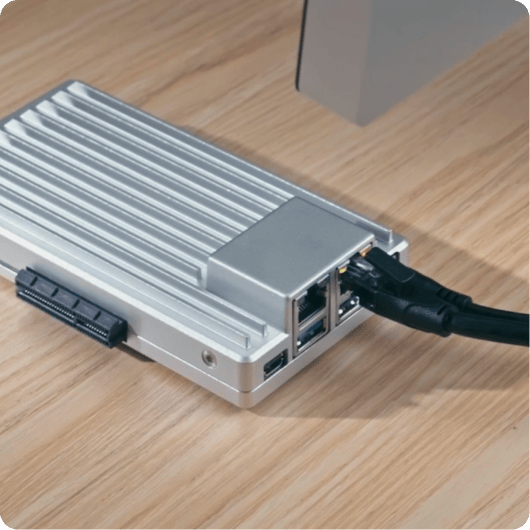
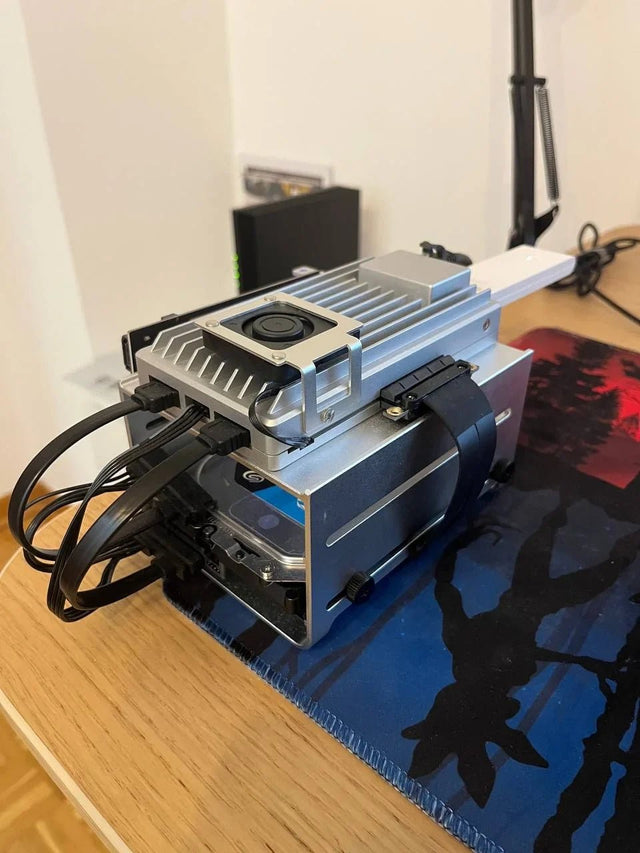
For a balanced ZimaSpace-style setup, a ZimaBoard 2 personal server can act as a compact compute node for lightweight services, while a ZimaCube 2 NAS fits the storage side: backups, media, private cloud files, project archives, and long-term data protection.
| User Type | Best Starting Point |
| Beginner homelab | Mini PC or compact personal server |
| Storage-first user | NAS |
| Enterprise IT learner | Used server |
| Quiet apartment user | Mini PC or NAS |
| Media library builder | NAS |
| Docker/self-hosting user | Mini PC or small server |
| VM-heavy learner | Used server |
| Private data + local AI | NAS + compute node |
The product category matters more than the brand: use compute hardware for compute, and storage hardware for storage.
Decision Checklist
| Question | Used Server | Mini PC | NAS |
| Need many VMs? | Strong | Medium | Weak |
| Need quiet 24/7 use? | Weak | Strong | Strong |
| Need large storage? | Strong if bays | Weak | Strong |
| Need low power? | Weak | Strong | Medium |
| Need enterprise learning? | Strong | Medium | Weak |
| Need simple backups? | Medium | Weak | Strong |
| Need Docker apps? | Strong | Strong | Medium |
| Need media archive? | Medium | Weak | Strong |
| Need expansion cards? | Strong | Weak | Medium |
| Need beginner-friendly setup? | Weak | Medium | Strong |
Final Takeaway
A used server, mini PC, and NAS can all be good home lab hardware, but they are good for different reasons. A used server is the best learning and expansion platform if you can tolerate power, noise, and size. A mini PC is the best quiet compute node for Docker, Home Assistant, and light VMs. A NAS is the best storage foundation for backups, media, shared files, and private data.
For many people, the best long-term setup is not one box. It is a small compute node paired with a dedicated NAS: apps on the mini PC or server, data on the NAS, and backups outside both.
FAQ
Is a used server better than a mini PC for a home lab?
A used server is better if you need many VMs, lots of RAM, PCIe expansion, drive bays, or enterprise learning. A mini PC is better if you want quiet, low-power, always-on services at home.
Can a mini PC be used as a NAS?
Yes, but it is usually not ideal for long-term multi-drive storage. Mini PCs often lack internal drive bays, SATA ports, hot-swap support, and clean drive cooling. They are better as compute nodes paired with a NAS.
Is a NAS enough for a home lab?
A NAS is enough if your main needs are storage, backups, media, and shared folders. If you want many VMs, heavy containers, Kubernetes, databases, or local AI inference, you may want a separate compute node.
Should beginners start with a used enterprise server?
Only if the goal is enterprise infrastructure learning and you can tolerate noise, power draw, and physical size. For most beginners, a mini PC or compact personal server is easier to live with.
What is the best setup for Docker apps and backups?
A common setup is mini PC for Docker apps plus NAS for storage and backups. This keeps compute flexible while keeping important data on storage-focused hardware.
Is all-in-one home lab hardware a bad idea?
Not always. It is fine for learning and early experiments. The risk grows when the same box holds important storage, apps, backups, and experiments. If it fails, everything fails together.
Do I still need backup if my NAS uses RAID or ZFS?
Yes. RAID and ZFS features help with some failures, but they do not replace backup. You still need separate copies and ideally an offsite path using a 3-2-1-style strategy.
Which is best for local AI in a home lab?
Local AI usually benefits from a split design: compute hardware for models and tools, plus NAS storage for documents, embeddings, model files, outputs, and backups.

Recommended products

Product Comparisons
More to Read
WireGuard Server vs Mesh VPN for Devices Behind CGNAT
Use mesh VPN for low-friction roaming devices; use a WireGuard relay when you want to own routing, keys, and the public endpoint.
10GbE NAS on Gigabit Clients: Upgrade the Server or Endpoints First?
Upgrade the endpoint path for one slow workstation; upgrade the NAS uplink first when several gigabit clients saturate it together.
1GbE vs 2.5GbE for a Home Server: Which Workloads Cross the Line?
Keep 1GbE for light services and single streams; move to 2.5GbE when recurring transfers or combined clients sustain more than about 100 MB/s.


