
Mini PC vs Single-Board Server vs NAS for Jellyfin


A mini PC is usually the compute-first choice for Jellyfin, a NAS is the storage-first choice, and a single-board server wins when low power and a focused role matter most.
These are not identical products. The comparison is really about where compute, storage, expansion, and recovery live. Start with the workload and decide whether one box or a split topology has the smallest failure and maintenance burden.
Gate the candidates by Jellyfin workload
List direct-play clients, concurrent transcodes, HDR tone mapping, subtitles, remote users, and library growth. A mini PC often offers the strongest hardware-video path per watt. A NAS can be sufficient when clients Direct Play and storage management dominates. A single-board server needs a verified codec and expansion path before it is trusted with heavier conversion.
Axis: Compute and transcoding
Choose a mini PC when mixed clients and hardware acceleration are the main risk. Choose a single-board server when the workload is light, codecs are compatible, and silent low-power operation matters. Choose a NAS when its processor and video engine pass the measured streams; do not assume the chassis label guarantees transcode capacity.
Axis: Storage and recovery
A NAS wins when drive bays, filesystem management, and independent storage growth are the primary decision. A mini PC or board can host Jellyfin while media lives on a separate NAS, which reduces coupling but adds a network path. Keep the database and cache on fast persistent storage and back them up independently of the media pool.

Axis: Power, noise, and expansion
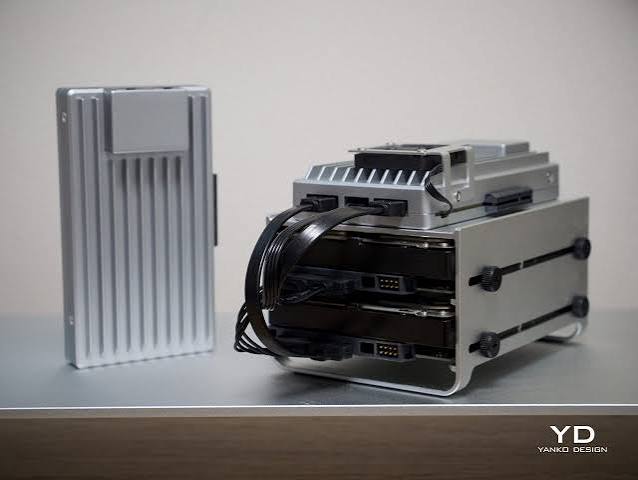
Compare idle draw, sustained transcode draw, drive noise, PCIe or bay expansion, and replacement availability. A similar form-factor comparison shows why the right answer depends on whether compute or storage is the first constraint.
Conditional verdict and the split option
Choose a mini PC when transcoding and efficiency are the gate; choose a NAS when storage and recovery management are the gate; choose a single-board server when light workloads, low power, and a constrained footprint are the gate. Choose the split option when no single device passes both the compute and storage tests. Choose neither until the actual client mix and backup path are tested.

Recommended products

Product Comparisons
More to Read
ZFS vs Btrfs vs ext4 for a Jellyfin Media Volume: Which Fits Better?
Choose a Jellyfin media filesystem by recovery model: ZFS for pool integrity, Btrfs for Linux-native CoW, or ext4 for lower operational complexity.
Built-In Jellyfin Backups vs File-Level Backups: Which Should You Use?
Use built-in Jellyfin backups for convenient app-state recovery; use stopped file-level backups when recovery must include wider host and deployment state.
Jellyfin With Kodi vs Standalone Jellyfin Clients: Which Fits Better?
Choose Kodi for a customizable TV-first workflow with more client state; choose standalone Jellyfin clients for simpler multi-device, server-driven use.


