
All-NVMe vs Hybrid NAS for a Bedroom Office: Noise Under Real Workloads


All-NVMe is the safer choice when unpredictable seek noise is unacceptable beside a bed or desk. A hybrid NAS is the better value when most capacity is cold and HDD activity can be consolidated into planned windows.
Silence is not guaranteed by removing hard drives. NVMe devices produce heat, controllers need airflow, and compact systems may answer sustained writes with a faster, higher-pitched fan. Compare the complete acoustic pattern—idle, wake-up, random access, sustained transfer, and post-task cooling—not the drive label.
Define the room and the workload before comparing noise
Measure from the chair and pillow, not from the chassis. Record the room's quiet baseline, the NAS location, enclosure surfaces, and whether low-frequency vibration travels through a desk or shelf.
Replay the jobs that actually happen at night: photo indexing, backups, media scans, downloads, scrubs, and snapshot replication. HDD seeks are intermittent and distinctive, while NVMe heat can extend fan noise after the I/O finishes.
If the NAS can move to a closet with suitable cooling and cabling, location may solve the problem more cheaply than all-flash storage. Treat relocation as a legitimate third option before paying a large capacity premium.
Compare acoustic behavior across real states
| Workload state | All-NVMe NAS | Hybrid NAS |
|---|---|---|
| True idle | No seek noise; fan and coil noise remain | Can be very quiet if HDDs spin down safely |
| Metadata scan | Low storage noise; possible fan ramp | Repeated seeks and vibration are likely audible |
| Large sequential copy | Heat may sustain fan speed | Steadier mechanical sound, often less erratic than scans |
| Wake event | No spin-up event | Distinct spin-up and possible enclosure resonance |
| Capacity expansion | Expensive per terabyte | HDD bays provide economical growth |
Removing HDDs does not remove the cooling problem. Coverage of a fanless system built around a large heatsink chassis illustrates how much physical surface area passive cooling may require; a compact all-NVMe NAS may instead rely on audible airflow.
Do not compare manufacturer idle figures from different test conditions as if they predict bedside experience. Chassis damping, fan curve, power supply, mounting, drive count, and workload cadence can dominate the result.
Account for heat, power, and capacity economics
Multiple NVMe drives in a compact enclosure can throttle or demand active cooling under long writes. Confirm heatsink clearance and sustained—not burst—temperature before assuming an all-flash box can use a near-silent fan curve.
A hybrid design concentrates performance-sensitive databases, thumbnails, containers, and active projects on NVMe while HDDs carry media and backups. Its noise penalty appears when background jobs touch the archive unexpectedly.
Scheduling matters more than spindown alone. The ZimaSpace workflow for checking Jellyfin persistent paths is a useful model for identifying which tasks and mounts will wake the bulk tier.

Choose the design whose failure mode you can live with
Choose all-NVMe when the NAS must remain in the bedroom, random work happens at unpredictable hours, the capacity fits the budget, and testing confirms the fans stay acceptable under sustained writes.
Choose hybrid when the archive is large, active data is a small fraction of total capacity, and scheduled jobs can keep HDD activity outside sleep or focused-work hours. Use vibration-isolating trays and avoid shelves that amplify resonance.
Choose relocation when either design is audible in the room. Stop chasing storage changes if the dominant noise comes from the CPU fan, power supply, or airflow restriction; fix that source before replacing the pool.

Recommended products

Product Comparisons
More to Read
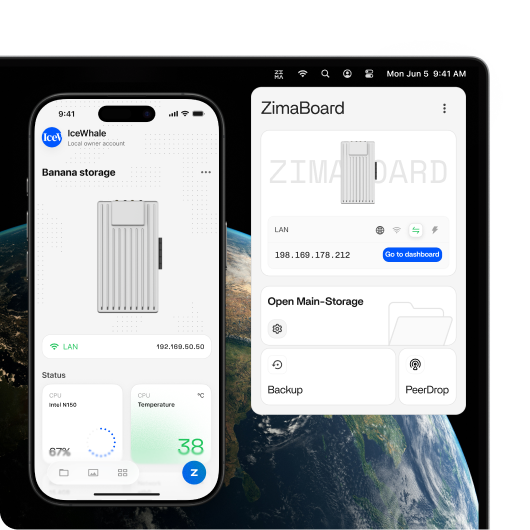
LXC vs Docker on Proxmox for App Updates and Rollbacks
Docker gives app-level version control; LXC gives guest-level rollback. The better fit follows the smallest state unit you can restore safely.
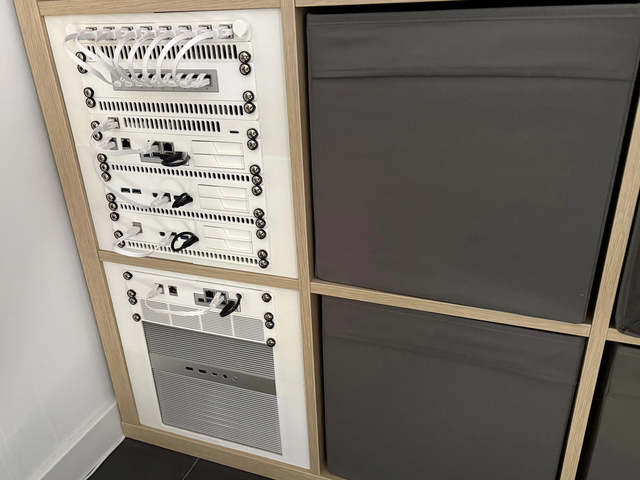
Docker vs LXC Security Boundaries for Privileged Home Services
Docker fits narrowly packaged apps; LXC fits fuller Linux services, but neither replaces a VM when shared-kernel risk is unacceptable.
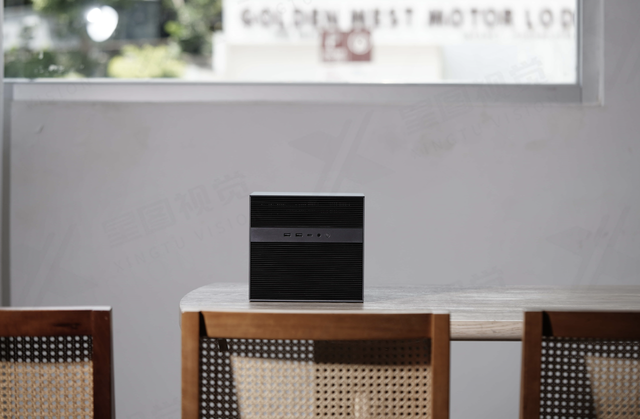
Turnkey NAS OS vs Modular Linux for a First-Time Builder
Choose turnkey NAS software for guided storage operations; choose modular Linux when learning and explicit control justify more ownership.


