
2.5GbE NAS vs Local SSD for Editing 4K H.265: Which Fits a Solo Editor?


Choose a local SSD when you need the most predictable timeline response, work with difficult HEVC variants, or cannot tolerate network troubleshooting during a deadline. Choose a 2.5GbE NAS when one editor needs centralized media, backup, and multi-device access and measured project demand stays inside the complete NAS path. Codec decoding can matter more than storage speed.
2.5GbE NAS vs Local SSD at a Glance
A local SSD connects the editor directly to the media. A 2.5GbE NAS adds file sharing, Ethernet, NAS processing, and a remote storage pool. The NAS path offers organization and availability, while the local path removes more variables from playback and scrubbing.
| Editing factor | 2.5GbE NAS | Local SSD |
|---|---|---|
| Raw link ceiling | About 312.5 MB/s before protocol and system overhead | Depends on SSD and interface, often well above 2.5GbE |
| Timeline latency | Depends on the entire network and storage path | Usually lower and more consistent |
| Library access | Available to multiple computers without recopying | Directly available only to the attached workstation |
| H.265 playback | Network must deliver media, but decoding remains a workstation task | Storage is less likely to be the bottleneck, but decoding still matters |
| Backup workflow | Centralized snapshots and backup jobs are easier to automate | Requires a separate copy or synchronization process |
| Best fit | One editor with moderate media demand and centralized storage needs | High-pressure active editing and difficult codecs |
Is 2.5GbE Fast Enough for 4K H.265?
It can be fast enough for one editor because many H.265 camera files use far less bandwidth than the raw 2.5GbE ceiling. The answer changes with stream count, bitrate, bit depth, chroma format, frame rate, audio, background transfers, protocol overhead, and whether the NAS pool can sustain the request.
Adobe’s current storage recommendations use 10GbE as the recommended network tier for 4K shared workflows. That is a conservative team-oriented target, not proof that every solo 4K H.265 clip exceeds 2.5GbE.
The relevant number is aggregate media demand during the hardest part of the timeline. Several multicam angles, high-frame-rate originals, image sequences, or simultaneous proxy generation can exceed a path that handles one ordinary stream comfortably. Measure a representative sequence rather than treating resolution as a bandwidth specification.
Why Can H.265 Stutter Even When Storage Is Fast?
H.265 saves storage and transfer bandwidth by increasing decoding complexity. A workstation may receive the file quickly and still drop frames while decoding long-GOP, 10-bit, or 4:2:2 media. In that case, moving the same file from NAS to local SSD does not remove the main bottleneck.
Adobe’s hardware-accelerated H.265 guidance shows that playback depends on supported GPU or media-engine capabilities and on the exact codec format. Driver, platform, memory, and 10-bit 4:2:2 support can change the result.
This is why local SSD tests can be misleading. If the timeline remains slow after the media is copied locally, the next step is hardware decoding, proxies, transcodes, effects, memory, or GPU diagnosis. A faster storage path should not be purchased to solve a decode problem.
Which One Feels More Responsive During Editing?
Local SSD is the safer choice for repeated seeking, thumbnail generation, waveform access, conforming, and temporary writes. The workstation does not wait for network acknowledgments or compete with NAS background activity. This advantage matters most when project response must remain predictable under deadline pressure.
A 2.5GbE NAS can still feel responsive when the project is mostly sequential media, the pool is SSD-backed or has enough HDD throughput, and only one editor is active. The ZimaSpace guide to NAS speed for 4K editing explains why format and concurrency matter more than the 4K label.
Keep Premiere Media Cache local even if the media lives on the NAS. Adobe recommends a fast SSD or NVMe cache location because peak and conformed files are accessed repeatedly. Centralizing the source media does not require centralizing every temporary file.
When Does the NAS Create More Practical Value?
The NAS wins when the editor uses several computers, needs automatic snapshots, or wants one ingest and archive location. Footage can arrive once, remain protected, and be available to a desktop, laptop, render node, or review workstation without maintaining separate master copies.
The comparison of NAS and direct storage for editing supports a hybrid workflow: keep central media and completed work on the NAS, while local SSD handles cache, difficult active media, or deadline-sensitive temporary files.
A NAS also makes backup ownership clearer, but it does not become a backup merely because the workstation no longer holds the only copy. Snapshots, another local copy, and an offsite layer are still required for projects that cannot be recreated.
Which Setup Fits a Solo Editor?
Choose a 2.5GbE NAS When
Choose the NAS when one editor works with ordinary single-stream or light multicam H.265, wants centralized ingest and backup, and can measure stable throughput above the project demand. Use wired Ethernet, a capable NAS pool, local cache, and proxies for difficult camera formats.
Choose a Local SSD When
Choose local SSD when projects use high-bitrate originals, several angles, large image sequences, heavy effects, or unsupported HEVC variants. It is also the safer deadline choice when the network, switch, or NAS storage has not been validated under the exact editing workload.
Use Both When
Keep originals and protected project folders on the NAS, then copy selected active media or proxies to local SSD. A platform such as ZimaCube 2 can serve the central layer while the workstation retains a dedicated local cache and temporary edit volume.
Editing Tests Before You Buy or Migrate
- Measure the highest combined bitrate and stream count in a real timeline.
- Confirm the workstation negotiates 2.5GbE and sustains transfers in both directions.
- Test the NAS while snapshots, backups, or indexing jobs are active.
- Enable supported H.264 and H.265 hardware decoding before blaming storage.
- Keep Media Cache on a fast local SSD and compare playback again.
- Create proxies for the hardest files and record whether the bottleneck disappears.
- Verify that the NAS project folder has an independent backup and restore path.
FAQs
Does 4K Automatically Require 10GbE?
No. Resolution alone does not define storage bandwidth. Codec, bitrate, frame rate, stream count, and workflow determine demand. Adobe recommends 10GbE for 4K shared network workflows, while some solo compressed-media projects can fit inside a tested 2.5GbE path.
Will Local SSD Fix H.265 Playback?
Only when storage delivery is the bottleneck. If the workstation lacks suitable hardware decoding or the timeline uses effects, multicam, or difficult chroma formats, local storage may remain fast while playback still stutters. Test decoding and proxies separately.
Should Project Files Stay on the NAS?
They can, especially when snapshots and multi-device access matter. Keep automatic saves and project versions protected, and avoid disconnecting the share while the application is writing. Solo editors may also keep a synchronized local working copy with a clear source-of-truth rule.
Final Verdict
Choose local SSD for the most predictable 4K H.265 editing response. Choose a 2.5GbE NAS when centralized storage, backup, and multi-device access create more value and measured media demand fits the path. The strongest solo setup often keeps protected media on NAS and latency-sensitive cache or difficult clips local.

Recommended products

Product Comparisons
More to Read
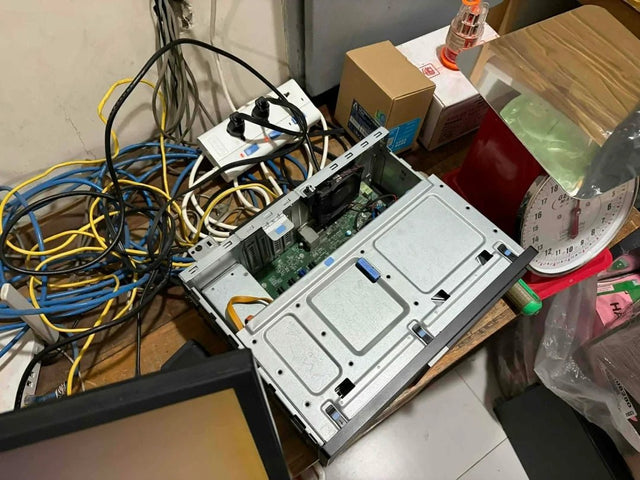
WireGuard Server vs Mesh VPN for Devices Behind CGNAT
Use mesh VPN for low-friction roaming devices; use a WireGuard relay when you want to own routing, keys, and the public endpoint.
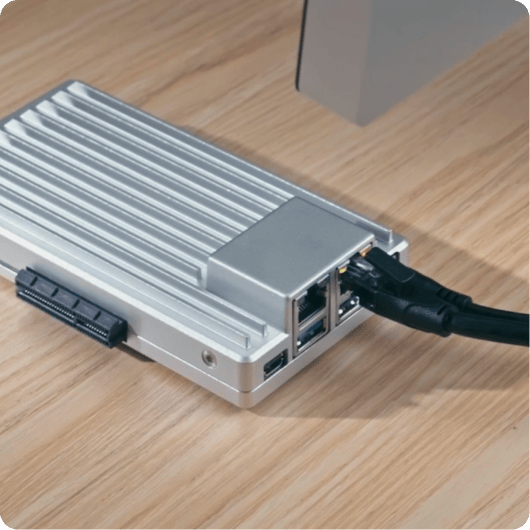
10GbE NAS on Gigabit Clients: Upgrade the Server or Endpoints First?
Upgrade the endpoint path for one slow workstation; upgrade the NAS uplink first when several gigabit clients saturate it together.
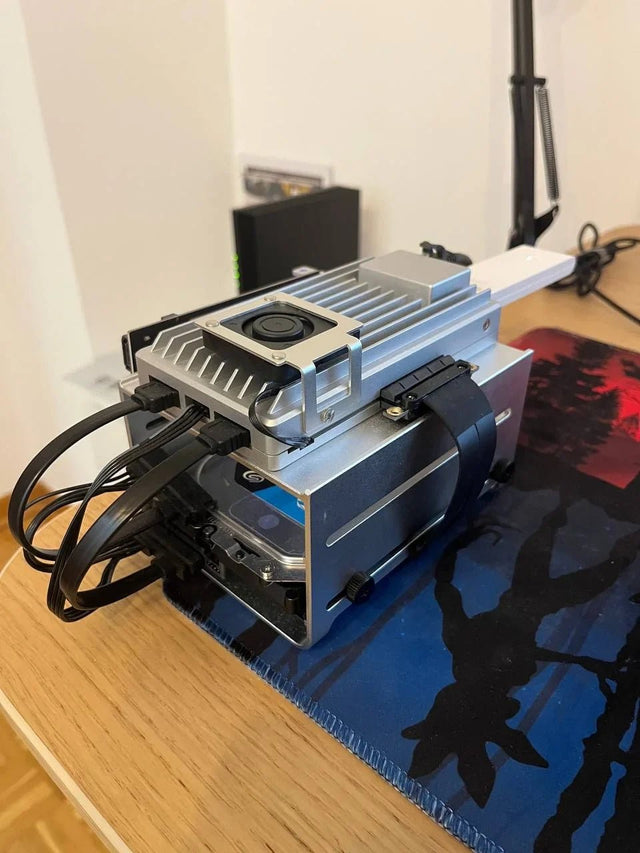
1GbE vs 2.5GbE for a Home Server: Which Workloads Cross the Line?
Keep 1GbE for light services and single streams; move to 2.5GbE when recurring transfers or combined clients sustain more than about 100 MB/s.


