
How Should a Family Server Setup Include Restore Testing When Several People Depend on It?


A family server should test complete user workflows in isolated restores, not merely confirm that backup jobs finish or files appear in a repository.
When several people depend on the server, recovery must restore ownership, permissions, databases, applications, network paths, and understandable instructions as well as bytes. The plan should identify which household services return first, how much data loss is acceptable, who validates success, and what another trusted person can do if the usual administrator is unavailable.
Define What the Household Must Recover First
Begin with people and services, not backup products. List the family workflows that depend on the server: phone-photo intake, shared documents, laptop backup, media profiles, school files, and remote relatives. For each, identify the data owner, acceptable data loss, maximum tolerable outage, and the person who can approve a successful recovery.
TechTarget’s backup-testing tutorial recommends creating a test plan because completed backup jobs do not prove that recovery will work. That test-plan-before-restore principle gives a family server a measurable starting point.
Prioritize irreplaceable data and essential household workflows. A lost media index may be inconvenient; missing medical scans, school documents, or original photos may be unacceptable. The restore plan should state which service returns first, which can operate in a degraded mode, and which can wait.
Map Each Service as a Recovery Unit
A recovery unit includes everything needed to make one service recognizable again: definitions, configuration, database, user files, credentials, permissions, certificates, and dependent storage. Restoring only a directory may preserve files while leaving the application unable to start or users unable to sign in.
NIST’s contingency-planning guidance connects recovery strategies, testing, training, and ongoing maintenance. That service-level contingency model supports mapping dependencies before a household runs a restore exercise.
| Recovery unit | Required state | Acceptance test |
|---|---|---|
| Photo service | Originals, database, accounts, albums, app definition | Two users can find and open known photos |
| Shared documents | Files, versions, owners, groups, share settings | Expected users can read and edit without overexposure |
| Laptop backup | Backup set, catalog, encryption key, recovery tool | One folder and one larger restore complete |
| Media service | Library paths, database, profiles, watch state | Playback and profile boundaries return |
Draw the startup order for each unit. Storage mounts before the application, the database returns before the web interface, and identity or DNS services return only where they are true dependencies. Hidden dependencies discovered during testing belong in the runbook.
Write Restore Scenarios and Acceptance Criteria in Advance
A useful test represents a likely household failure: one deleted folder, a failed boot drive, an empty app database, a lost phone, a corrupted shared library, or loss of the entire live storage pool. Each scenario should define the selected recovery point and what must be true at the end.
RestoreTest’s workflow explicitly separates the restore procedure from acceptance probes that confirm the restored system makes sense. That restore-plus-acceptance-criteria model prevents a family from counting a copied folder as a successful service recovery.
Use observable acceptance criteria: the file opens, the capture date remains correct, the owner retains access, an ordinary user can sign in, the application resumes scheduled work, and unrelated users remain denied. Record the expected restore time before starting so the result can be compared with the original household limit.

Restore Into an Isolated Target Before Touching the Live Service
A test should not overwrite the only working copy. Restore into a different folder, temporary application instance, spare disk, test virtual machine, or alternate server path. Use copied credentials or test accounts where possible so the exercise cannot send notifications or modify live user data.
Backblaze recommends limited-scope recovery drills that test the plan without creating a second disaster. That isolated recovery-drill approach fits a household server where experiments must not disrupt several family members.
Label the restored environment clearly and prevent backup jobs from treating it as new authoritative data. After validation, remove the temporary copy according to the test plan. Keep the findings, timing, and corrections rather than keeping every test environment indefinitely.
Validate Application State, Permissions, and User Experience
File checksums and item counts are useful but incomplete. Database-backed services may need schema, configuration, logs, secrets, indexes, and application-compatible versions. Restored permissions must still separate private users, family groups, children, guests, and administrators.
N2WS describes database recovery as a combination of data, schema, configuration, logs, and backup metadata. That multi-part application recovery inventory explains why a family photo or document service cannot be validated by opening one exported file.
Test from ordinary client devices. Ask one family member to open a known album, another to edit an allowed document, and a restricted account to attempt a denied action. A service is restored only when its user-facing behavior and boundaries return.
Measure Data Loss and Return Time Separately
Recovery point and recovery time answer different questions. The selected backup may restore quickly while losing a week of phone uploads, or a recent copy may exist but require hours of manual reconstruction. Record both the age of restored data and the elapsed time before users can complete the original workflow.
Cloudwards distinguishes synchronization and active storage from recovery-oriented backup. That sync-versus-recovery distinction helps families avoid treating a synchronized deletion as a current backup.
Compare measured results with the household’s stated limits. If photo uploads can lose one day but medical records cannot, use different schedules. If a full media-library rebuild takes days but direct file access returns in an hour, document the degraded service path and tell users what remains available.
Make Another Family Member Use the Recovery Notes
A restore plan known only to the server owner is a human single point of failure. Another trusted adult should know where the runbook, backup keys, device inventory, administrator recovery account, and emergency contacts are stored. The helper does not need routine root access.
WIRED’s guide to backing up a digital life emphasizes identifying important data and maintaining copies that can actually be reached when a device fails. That household-readable backup inventory becomes stronger when a second person can follow it without relying on undocumented memory.
Ask the second person to run one small restore from the written instructions while the administrator observes silently. Every question, missing credential, unexplained acronym, or ambiguous path becomes a required edit. Store the minimum runbook outside the server and record who is authorized to use it.
Repeat Tests After Changes and Keep a Recovery Record
Restore testing should follow major changes: a new storage layout, application migration, encryption change, account restructure, backup destination, or server replacement. A calendar test remains useful, but a six-month-old result does not validate a system that changed last week.
Lenovo’s home-server operations overview treats backups, monitoring, storage, accounts, and service management as continuing operational responsibilities. That continuous home-server operations model supports tying restore exercises to the server’s change history.
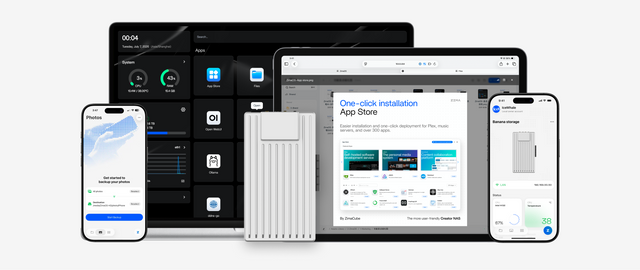
The ZimaSpace guide on building several independent family recovery copies provides the copy-design context. A ZimaBoard 2 Mini Home Server fits a compact compute-first setup with deliberate attached storage. A ZimaCube 2 AI NAS is the clearer base when several users, multi-drive capacity, longer retention, and storage-first recovery define the household system. Keep a short recovery record with date, scenario, recovery point, elapsed time, pass criteria, failures, and assigned fixes. The test is complete when every failed assumption has an owner.

Recommended products

NAS & Server Setup
More to Read

A Local RAG Setup for Research Papers, Notes, and Private Documents
Keep original documents authoritative, make indexing repeatable, require citations, and separate replaceable models from private source data.
Why Are Developers Using a Gateway Node for Private DNS, VPN, and Test Apps?
A gateway node gives private apps one controlled name and access path, while compute nodes stay unexposed and replaceable.
How to Build a Reproducible App Stack With Compose Files, Secrets, and Persistent Data Separated
Keep Compose definitions portable, secrets protected, and app data independently backed up so the stack can be rebuilt on a clean host.


