
A Compact Homelab Setup for Developers Who Need Linux Services but Work on a MacBook


Keep the MacBook as the interactive client and place persistent Linux services, storage, and scheduled jobs on one quiet, always-available node.
This compact topology suits a developer who wants native macOS tools on the laptop but needs Linux APIs, databases, runners, or containers that should survive sleep, travel, and reboots. The goal is a stable service boundary, not a miniature data center.
Define What Must Outlive the MacBook
Move only recurring services that need uptime, a stable address, Linux behavior, or scheduled execution. Databases, test APIs, Git mirrors, package caches, CI runners, and monitoring are candidates; one-off compiles and local UI work can stay on the laptop.
This boundary keeps the server small. If a job does not need persistence or shared access, running it locally avoids network dependencies and duplicate environments.
Write the required recovery time for each moved service. A disposable test API can be rebuilt; a long-lived database needs consistent backup and a tested restore.
Use One Quiet Compute Node and Separate Storage Roles
A used mini PC or compact low-power server is often enough for several Linux services. Independent TinyMiniMicro testing evaluates this class as server nodes and records power and platform trade-offs rather than assuming small means weak.
Use internal SSD storage for the host, containers, and active databases. Put irreplaceable files on protected storage and send backups to a different device or location. A USB disk can be a backup target, but it should not silently become the only copy of service state.
Keep rebuildable images and caches on a bounded volume with retention. Prevent them from filling the filesystem that holds databases or the operating system.
Create a Stable MacBook-to-Linux Path
Give the Linux node a reserved address and local DNS name. Use SSH for administration, HTTPS for web services, and a private remote-access tunnel when away from home. Do not expose databases directly to the internet.
Mount shared files only when an application truly needs filesystem access. For mixed macOS and Linux use, the SMB versus NFS guide explains why the human-facing share and machine-facing mount may use different protocols.
Test Ethernet and Wi-Fi separately. Development should remain usable over Wi-Fi, while large image pushes and backups can prefer wired Ethernet without changing service addresses.

Keep Identity and Secrets Off the Convenience Path
Create a personal account with key-based SSH access and separate service identities for runners, databases, and automation. Store application secrets in protected environment or secret files, not in Git repositories or shared folders.
Limit each service to the network and volume it needs. A preview container should not mount the backup directory, and a CI runner should not receive a general administrator key simply because both live on one node.
Record an offline recovery path for SSH keys, DNS settings, encrypted secrets, and the operating-system installer. Convenience is not recovery until another device can use it.
Validate the Laptop-Free Recovery Path
Close the MacBook lid and confirm scheduled jobs, databases, and previews keep running. Reboot the Linux node and verify service order, storage mounts, DNS, and health checks without logging in manually.
Restore one database and one configuration bundle to a temporary service. Then connect from the MacBook on the LAN and through the remote path. This proves both state recovery and client access.
Add a second node only when maintenance downtime, resource contention, or experimental risk justifies a separate role. Stop scaling when the compact lab requires clustered control planes or shared storage that create more work than the developer services save.
Final Setup Rule
The setup passes when every service has a named role, protected state, controlled access path, tested restore, and a measurable trigger for splitting or expanding the topology.

Recommended products

NAS & Server Setup
More to Read

A Local RAG Setup for Research Papers, Notes, and Private Documents
Keep original documents authoritative, make indexing repeatable, require citations, and separate replaceable models from private source data.
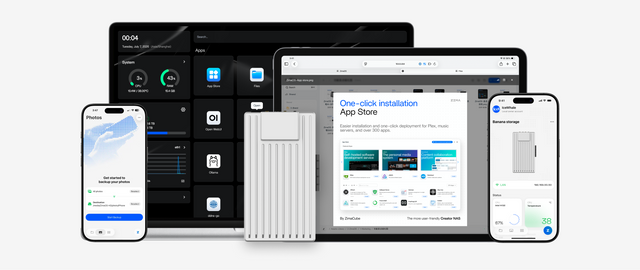
Why Are Developers Using a Gateway Node for Private DNS, VPN, and Test Apps?
A gateway node gives private apps one controlled name and access path, while compute nodes stay unexposed and replaceable.
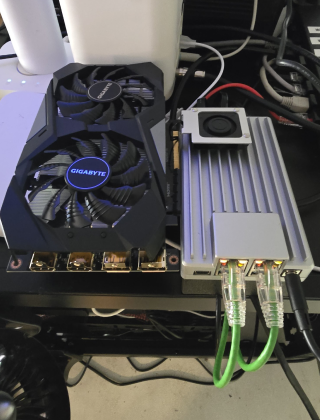
How to Build a Reproducible App Stack With Compose Files, Secrets, and Persistent Data Separated
Keep Compose definitions portable, secrets protected, and app data independently backed up so the stack can be rebuilt on a clean host.


