
Private RAG Storage Checklist Before Importing Documents


Import private documents only after raw sources, extracted text, chunks, embeddings, metadata, logs, permissions, deletion, and recovery each have a defined storage role.
Classify the Documents Before Ingestion
Inventory document owners, sensitivity, retention, legal or household restrictions, and whether content may leave the local network. Remove files that the RAG system does not need.
A security-focused RAG vector database analysis explains that embeddings, document text, and metadata create different exposure paths even when they support one search experience.
- Assign an owner and sensitivity label.
- Define allowed users or groups.
- Record retention and deletion requirements.
- Exclude secrets, tokens, and unnecessary personal data.
Separate Source, Derived, and Runtime State
Keep immutable source exports distinct from parsed text, chunks, embeddings, vector indexes, application metadata, conversation logs, and temporary caches. Each layer has a different rebuild cost.
Use stable document IDs, source versions, chunk ordinals, and embedding-model versions. Without those keys, retries create duplicates and an index can no longer be matched confidently to its source.
Treat prompt and retrieval logs as sensitive data. They can reveal query intent and document fragments even when raw source files are protected.
Choose Storage by Recovery Role
| Data role | Primary need | Recovery action |
|---|---|---|
| Raw documents | Integrity and access control | Restore exact source version |
| Extracted text and chunks | Traceability | Regenerate or restore |
| Embeddings and index | Fast retrieval | Re-index from versioned source |
| Metadata database | Identity and consistency | Application-consistent restore |
| Logs | Audit with limited retention | Restore only when required |
Production vector storage needs write-ahead logs, snapshots, compaction awareness, and restore testing. This vector database architecture overview also highlights the need to keep embeddings, metadata, and source versions synchronized.
Do not back up only the vector files if the engine requires a metadata database or WAL for consistency. Do not store the only source copy inside the ingestion workspace.

Verify Access, Deletion, and Backup
Use separate service and user identities, least-privilege collections or namespaces, encrypted transport, and storage encryption appropriate to the threat model. Keep backup credentials outside the RAG application.
Test deleting one document: suppress it from retrieval, remove or tombstone every derived chunk, update the index, and record completion. A source deletion that leaves embeddings searchable is incomplete.
Restore a small collection into an isolated instance and compare document counts, versions, retrieval results, and access rules.
Use an Import or Stop Gate
Import when every document class has an owner, the storage roles are separated, access can be revoked, deletion propagates, and source plus application state can be restored.
Delay when the team cannot say whether embeddings or logs may contain sensitive information, or when re-index time exceeds the recovery objective. The home server OS guide can help place the RAG services on an appropriate host.
Stop if the pipeline requires public object storage, shared administrator credentials, or an unversioned index for data that must remain private.
Frequently Asked Questions
Are embeddings safe to treat as anonymous data?
No. Embeddings can preserve information about source content and must follow the same access, retention, and deletion review as the documents they represent.
Can a vector index be rebuilt instead of backed up?
Yes, if exact source versions, parsing rules, chunk IDs, embedding model, and application metadata are preserved and the rebuild time meets the recovery objective.
Should prompt and retrieval logs be stored with the vector database?
Only when required. Give logs their own retention and access policy because they may expose queries, document fragments, or user identities.
Final Takeaway
Buy only when every hard requirement passes in the real room and network; otherwise wait, narrow the design, or choose a simpler platform.

Recommended products

Buying Guide
More to Read
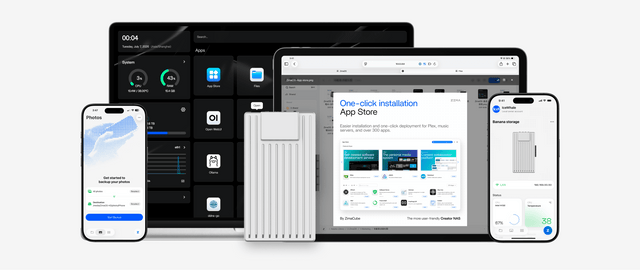
Small Office NAS Checklist Before Adding Remote Staff
A remote-work readiness checklist that protects office files without giving every employee broad NAS or network access.
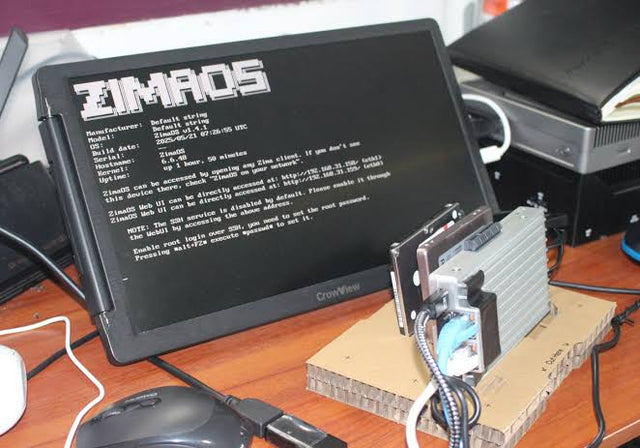
Family Photo NAS Checklist Before a Large Import
A pre-import checklist for preserving original files, dates, ownership, albums, and a recoverable family photo library.
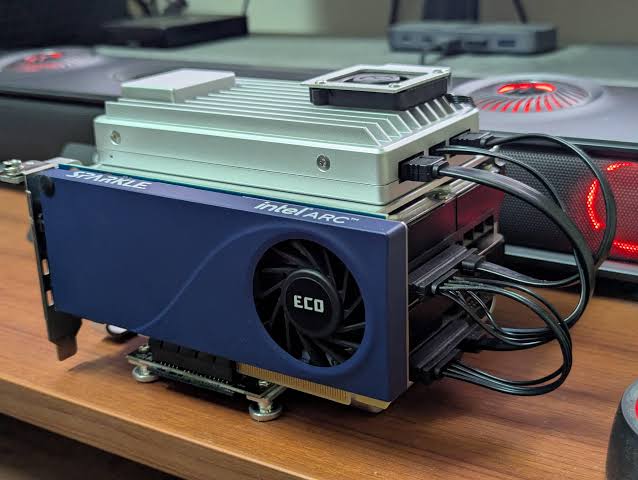
Local AI Server Checklist Before Buying a GPU
A pre-purchase checklist for avoiding a fast but incompatible, under-cooled, or VRAM-limited GPU in a home AI server.


