
lobal Media & Information Literacy Week 2026: Can You Trust What You See Online?


Global Media and Information Literacy Week 2026 is a reminder that finding information is no longer the hardest part of using the internet. The real challenge is deciding what deserves your trust. Observed from October 24 to 31, this year's UNESCO initiative follows the theme “We All Play a Part – Media and Information Literacy for the People,” emphasizing that a healthier information environment depends on everyone who searches, creates, evaluates, and shares content.
Generative AI has made this challenge more complicated. Images can be synthetic, authentic footage can be presented in a misleading context, and an AI-generated explanation can sound convincing without being well supported. The answer is not to distrust everything. It is to build a repeatable way to trace claims back to evidence, preserve their context, and distinguish what is known from what is merely plausible.
What Is Global Media and Information Literacy Week 2026?
Global Media and Information Literacy Week is an annual UNESCO initiative that promotes the skills people need to find, evaluate, use, and contribute to information responsibly. It covers more than identifying fake news. It also includes critical thinking, digital participation, information access, responsible content creation, and the ability to understand how media and technology shape what people see.
The 2026 theme, “We All Play a Part – Media and Information Literacy for the People,” makes responsibility a shared task. Educators can teach verification skills, platforms can provide better context, creators can communicate transparently, and individuals can avoid spreading claims they have not checked.
You can find the official dates, theme, and participating activities on the UNESCO Global Media and Information Literacy Week 2026 page.
For everyday internet users, the practical question is simple: when a post, image, statistic, or AI-generated answer appears convincing, how do you decide whether it is reliable enough to act on or share?
Why Is Media Literacy More Difficult in the Age of AI?
The familiar advice to “look for fake news” is no longer enough. Misleading information does not always look suspicious, and an authentic piece of content can still be used to support a false claim.
Consider four different problems:
- Fabricated content: An image, quotation, document, or video is generated or altered to depict something that did not happen.
- Misleading context: A real image is reused with the wrong date, location, event, or explanation.
- Unsupported interpretation: A post uses genuine evidence but draws a conclusion that the evidence does not establish.
- Confident AI error: An AI system produces a plausible answer, but its sources are missing, misrepresented, outdated, or insufficient to support the conclusion.
These problems require different checks. An AI-generated image detector cannot tell you whether a real photograph is being used out of context. A reliable news outlet can still publish a mistaken claim. A citation can lead to a genuine report that never actually supports the sentence attached to it.
Media literacy is not a single test for detecting false content. It is the ability to evaluate a claim, its source, its context, and the evidence connecting them.
How Can You Check Whether an Online Claim Is Reliable?
Before sharing a surprising post or relying on an AI-generated explanation, work through five questions. The goal is not to conduct a full investigation every time you browse. It is to identify when a claim needs stronger evidence before you trust it.
| Check | What to Ask | What to Do |
|---|---|---|
| Source | Who originally published this? | Find the original report, statement, dataset, or recording instead of relying only on reposts. |
| Date | When was this created or reported? | Check the publication date and whether older material is being presented as new. |
| Context | What happened before and after this excerpt? | Read the full article, watch the longer video, or inspect the original document. |
| Corroboration | Can independent sources confirm the key claim? | Look for sources with different reporting or evidence, not multiple posts repeating the same original claim. |
| Evidence | Does the evidence actually support the conclusion? | Check the original quotation, data, methodology, or visual record rather than relying on a summary. |
The last question is particularly important. Ten websites repeating the same unverified statement do not necessarily provide ten independent confirmations. They may all be drawing from one source.
For consequential decisions, trace the claim as far back as possible. If a post cites a study, look for the study itself. If an article quotes a company announcement, find the original announcement. If an AI summary names a report, open the report and check whether the cited passage supports the summary.
When the evidence remains incomplete, the responsible conclusion may be “unverified” rather than either “true” or “false.” That distinction is an important part of information literacy.
How Do You Verify AI-Generated Images and Videos?
Visual content often feels more persuasive than text because people instinctively treat photographs and videos as records of real events. But visual plausibility is not proof of authenticity, and authenticity is not proof that a caption is accurate.
A practical verification workflow starts with context, not with trying to guess whether an image looks artificial.
- Search for earlier appearances. Use reverse image search or a visual search tool to see whether the same image appeared before the claimed event.
- Find the earliest available source. A post may be recent even when the image it uses is years old.
- Check the caption independently. Verify the claimed date, location, people, and event instead of assuming they match the image.
- Inspect available metadata and provenance. Look for information about the image's origin or editing history when it is available.
- Seek independent confirmation. For a major event, look for other footage, credible reporting, or statements from relevant primary sources.
Google's About this image feature can help users investigate where an image has appeared, how other websites describe it, and what metadata may be available. Such information can provide useful context, but it does not independently prove every claim associated with an image.
Content Credentials, based on the C2PA standard, offer another way to record and verify information about a digital asset's origin and editing history. However, provenance is not the same as truth. A valid record does not establish that the content's claims are accurate, and missing credentials do not automatically mean that content is fake.
The useful question is not simply “Was this made by AI?” It is “What does the available evidence establish about this content, and what remains uncertain?”
Can You Use AI to Fact-Check Information?
AI can make research faster, but it should be treated as a research assistant rather than the final authority. It can help identify claims that need checking, summarize long documents, compare statements, and generate follow-up questions. It can also misunderstand sources, omit qualifications, or produce citations that do not support its answer.
A safer workflow separates discovery from verification.
- Ask AI to break a claim into checkable statements. A sentence such as “This new technology reduces costs by 50%” may contain separate claims about the baseline, measurement method, and conditions.
- Request primary sources. Ask for the original paper, official documentation, dataset, announcement, or transcript behind each important claim.
- Open the sources yourself. Do not assume a citation is accurate just because it appears in a polished answer.
- Check the relevant passage. Confirm that the source supports the claim, including its numbers, dates, scope, and limitations.
- Keep uncertainty visible. Record which points are verified, disputed, inferred, or still unanswered.
This matters even more when AI works with personal documents. A summary of a folder of research papers may be useful, but it can still merge statements from different documents or overlook a critical qualification. The presence of source files does not guarantee that the generated answer represents them faithfully.
For a useful AI-assisted research process, keep the source material available and make it possible to trace important statements back to the relevant document or passage.
Why Does Your Personal Information Library Matter?
Information literacy is usually discussed as a skill for evaluating what you see online. But there is another part of the problem: what happens after you find useful information?
Research often gets scattered across browser tabs, bookmarks, screenshots, downloaded PDFs, chat histories, and AI-generated summaries. Months later, you may remember the conclusion but no longer know where it came from, whether the source has changed, or which qualifications you originally recorded.
A personal information library can help preserve that evidence trail. For important research, keep a small record of:
- the original source URL and publisher,
- the date you accessed or saved it,
- the original file or a durable copy where permitted,
- the specific claim you wanted to verify,
- the supporting passage or data,
- and any uncertainty or conflicting evidence you found.
Keep original source material separate from your own notes and AI-generated summaries. If a summary changes later, you should still be able to return to the original evidence rather than treating the summary as the source of truth.
This is particularly valuable for long-running research projects, technical documentation, product comparisons, personal knowledge bases, and topics where facts change over time. A claim that was accurate last year may no longer describe the current situation.
The goal is not to save everything. It is to preserve enough context to understand why you trusted a source and to reassess that decision later.
What Can a Home Server or NAS Contribute to Information Literacy?
A home server or NAS does not determine whether information is true. It cannot replace source verification, independent reporting, or critical thinking. Its value is more practical: it can provide a stable place to organize the files, references, and research records you want to retain.
For example, a personal information workflow could use local infrastructure to:
- Organize source material: Keep research documents, saved references, notes, and supporting evidence together instead of leaving them scattered across devices.
- Build a searchable archive: Index permitted documents so you can retrieve relevant material when a new claim needs to be checked.
- Support AI-assisted research: Use an appropriately configured local AI system to search or summarize personal documents without necessarily uploading those files to an external AI service.
- Preserve project history: Keep original material and dated research notes so you can revisit earlier conclusions when information changes.
- Back up important records: Reduce the risk of losing a useful research archive when a single device fails.
These benefits depend on the actual setup. Local inference does not automatically mean every part of a workflow stays local; connected services, synchronization, telemetry, and external tools may still transmit data. Backups also need their own failure and security planning.
Most importantly, local storage does not make an unreliable source trustworthy, and local AI does not make an answer correct. Infrastructure helps you retain and work with evidence. You still have to evaluate it.
This is where information literacy and personal data management meet: the first helps you decide what deserves trust, while the second helps you retain the context needed to check that decision again.
A Practical Media Literacy Routine You Can Use Today
You do not need a complex research system to improve your daily information habits. Start with a lightweight routine and reserve deeper checks for claims that could materially affect your decisions.
- Pause before sharing. Emotional urgency, outrage, and sensational claims are reasons to slow down, not reasons to forward immediately.
- Identify the exact claim. Separate what the post directly shows from what its author says the evidence means.
- Find the original source. Trace quotations, statistics, images, and AI-generated explanations back to the material they rely on.
- Check context and corroboration. Verify dates, scope, and relevant qualifications. Look for genuinely independent evidence.
- Save the evidence if it matters. Keep the source, date, and key supporting passage for research you expect to revisit.
- Communicate uncertainty honestly. If you cannot verify a claim, do not present it as established fact.
The depth of the check should match the consequences. A questionable meme may need only a quick search before you decide not to share it. A health claim, financial decision, security warning, or major public allegation deserves stronger evidence and more careful source evaluation.
There is no single tool that can eliminate misinformation. A combination of critical thinking, source tracing, contextual checks, and responsible sharing is more dependable than relying on a detector or platform label alone.
Why “We All Play a Part” Matters Beyond One Week
UNESCO's 2026 theme recognizes that information quality is shaped by many people and systems, not only by journalists or technology companies. Every person who creates a post, publishes a tutorial, summarizes a report, or forwards a message participates in the information environment.
That responsibility becomes especially important as AI makes content easier to generate and information easier to summarize. More content does not automatically mean more understanding. Faster answers do not automatically mean better evidence.
Individuals can improve the information environment by checking sources, preserving context, correcting mistakes, and being transparent about uncertainty. Creators can distinguish facts from interpretation. Developers can design systems that make sources and limitations easier to inspect. Organizations can help people access reliable information without making verification unnecessarily difficult.
Media literacy in the AI era is not about learning to distrust everything. It is about learning how to trust responsibly. The most useful habit is to keep a clear path from a claim to its evidence—and to be willing to change your mind when that evidence changes.
FAQ: Global Media and Information Literacy Week 2026
When is Global Media and Information Literacy Week 2026?
UNESCO's Global Media and Information Literacy Week 2026 is observed from October 24 to 31. Its theme is “We All Play a Part – Media and Information Literacy for the People.”
What is the difference between media literacy and information literacy?
Media literacy focuses on understanding and evaluating media messages, formats, and production. Information literacy includes finding, assessing, using, and organizing information across different sources. They overlap in the skills needed to judge credibility, context, and evidence.
How can I tell whether an image was generated by AI?
Use available provenance information, image-search tools, metadata, and independent sources to investigate its origin and context. No single detector or metadata field can establish the truth of every image or caption, and the absence of AI credentials does not prove that an image is authentic.
Can AI reliably fact-check news and online claims?
AI can help identify claims, find possible sources, and summarize documents, but its output must be checked against the original evidence. Open cited sources, verify relevant passages, and look for independent corroboration before relying on high-impact claims.
Does storing research on a NAS make information more trustworthy?
No. A NAS or home server can help organize source documents, preserve research context, and support searchable archives or local AI workflows. It does not verify the truth of the stored material. Source quality and claim verification remain essential.

Recommended products
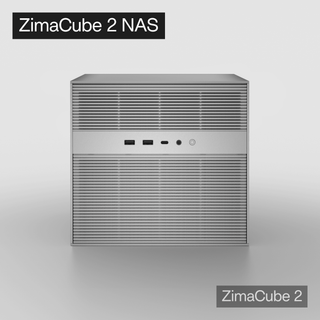
Zima Campaign Hub
More to Read
GitHub Universe 2026: What AI Coding Agents Need Beyond Better Models
GitHub Universe 2026 highlights the next challenges for AI coding agents: memory, permissions, code verification, software supply-chain security, and the infrastructure needed for reliable...
OCP Global Summit 2026: What Open Infrastructure Means for Home Servers
OCP Global Summit 2026 puts AI infrastructure in focus. Explore what its theme means for home server users, from workload planning and local AI...
Best Photo Management Software for NAS in 2026: 10 Tools Compared
Compare 10 NAS photo managers by folder handling, mobile backup, search, sharing, privacy, and maintenance to choose a library for your home server.


