
How Does a RAID Scrub Interact With Local Inference Latency?


A RAID scrub raises local inference latency when its verification reads compete with model loading, retrieval, logging, or memory pressure on shared storage paths.
A model already resident in GPU memory may decode normally during a scrub, while its first request, RAG lookup, or spill operation suddenly slows. The scrub walks allocated data, reads redundant copies or parity, verifies integrity, and may repair damage. Its impact depends less on the word RAID than on which disks, controller queues, CPU cycles, and cache pages inference still needs.
Scrubbing Converts Idle Capacity Into Verification I/O
A scrub systematically reads allocated blocks, validates checksums or parity, and reconstructs damaged data when redundancy permits. Healthy arrays still perform the read and verification work, so the operation can keep every member disk busy for hours.
OpenZFS describes scrub and resilver work as a separate scrub I/O class whose concurrency is balanced against normal reads and writes. Raising scrub activity completes verification sooner but can increase latency for foreground operations.
Rotational arrays suffer from head movement when scrub reads interleave with small random requests, while SSD arrays can saturate controller bandwidth or internal flash channels. The same nominal throughput can therefore produce very different tail latency.
Inference Feels the Scrub Only Through Shared Dependencies
Token decoding from fully resident weights and KV cache is mainly a compute and memory-bandwidth workload. Storage becomes visible at model load, memory mapping faults, retrieval, prompt logging, adapter swaps, KV offload, or any checkpoint and index access.
OpenZFS notes that scrub operations issue disk reads and that scan ordering changes how work reaches the pool. Those scan scheduling controls can evict useful cache pages or occupy queues before a latency-sensitive model or vector read arrives.
CPU checksum work and parity reconstruction can also compete with tokenization, retrieval, or CPU inference. The observable delay may appear as first-token latency, retrieval delay, or periodic stalls rather than a uniform reduction in output tokens per second.
Throttling Trades Completion Time Against Tail Latency
Limiting scrub concurrency or pausing verification during interactive hours leaves more queue capacity for inference, but extends the period during which latent errors remain undiscovered. Scheduling alone helps only when demand is predictable and the scrub can still finish within the maintenance objective.
The OpenZFS tuning guide states that increasing scrub delay may reduce the scrub's effect on dynamic workloads. The useful setting is hardware- and workload-specific because a mirror, RAID-Z group, SATA SSD, and NVMe pool expose different bottlenecks.
The failure boundary is a degraded array or active repair. Data reconstruction may deserve priority over interactive latency, and heavy throttling can prolong vulnerability; the correct response is not to conceal storage risk behind a fast chatbot.

Profile One Scrub Against the Inference Critical Path
Capture p50 and p99 time to first token, token rate, retrieval latency, model page faults, disk queue depth, read latency, throughput, CPU usage, ARC or page-cache size, and scrub progress before and during verification. This distinction remains visible during later household testing.
Use snapshot storage contention to distinguish snapshot contention from scrub contention. Repeat with resident and cold models, RAG enabled and disabled, normal and limited scrub concurrency, and a storage-only baseline. The intermediate result must remain inspectable before automation follows.
Choose a limit that protects interactive tail latency while still finishing integrity checks on schedule. If GPU-resident decoding is unaffected but retrieval stalls, isolate or prioritize the shared storage path instead of tuning the model.

Recommended products

Tech & AI HUB
More to Read
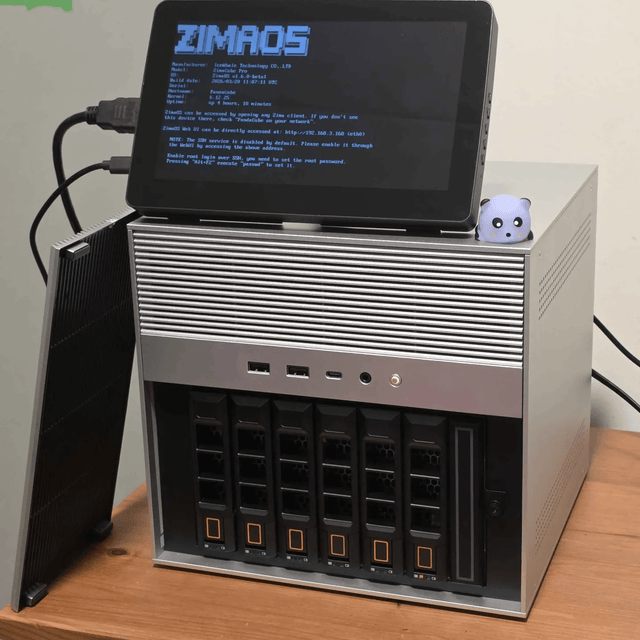
What Is Embedding Drift, and When Does a Private Search Index Need Rebuilding?
Decode model, preprocessing, corpus, and query drift; distinguish monitoring from incompatibility; and decide when a private index needs rebuilding.

What Is Tokenizer Compatibility, and Why Can It Break Model Switching?
Decode vocabulary identity, special-token semantics, chat templates, cached tokens, adapters, and compatibility checks for local model switching.
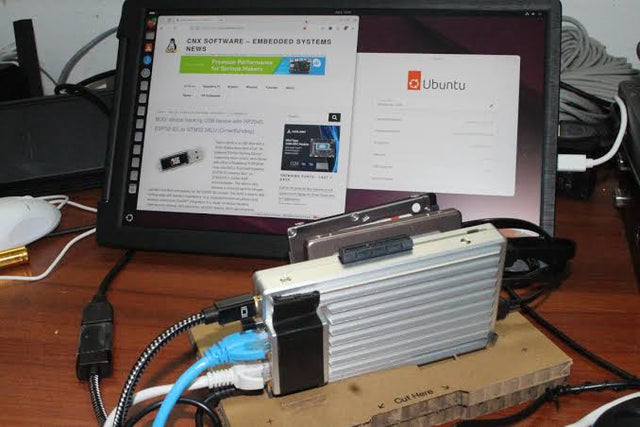
What Is Model Residency, and When Should a Local AI Service Keep Weights Loaded?
Decode weight residency, cache levels, cold starts, eviction, multiplexing, memory pressure, and when a home AI service should stay warm.


