
How to Test OCR Reading-Order Stability Across PDF Layouts


A valid ocr reading-order stability test isolates the named variable, preserves identical workloads, records tail behavior, and includes both normal and failed runs.
In a home-server workflow, ocr reading-order stability can change both interactive behavior and background resource use. The visible effect appears only after the request crosses several processing stages, so one average number can hide where the delay, quality loss, or failure began. Separating transport, compute, storage, and application state makes the relationship testable under otherwise identical conditions.
From OCR Reading-Order Stability to the Observable Result
The observable output starts with one upstream fact: layout recovery assigns text boxes to columns, tables, headers, and footnotes. That step changes what the next component receives, so the observed result cannot be assigned to the final interface or model alone. Holding the input and workload constant makes this early transformation visible.
The quantized retrieval model provides a concrete way to interpret this stage: layout recovery assigns text boxes to columns, tables, headers, and footnotes. Its practical value is separating the changed variable from later buffering, scheduling, storage, or rendering effects that can produce a similar symptom.
Once the first stage changes, small geometry changes can alter the inferred traversal graph. The consequence may appear as latency, accuracy, energy, capacity, or perceived smoothness depending on the article question, but the causal path still starts before the final output is shown.
The Hidden Shared-Resource Path
That upstream change then meets a shared resource: small geometry changes can alter the inferred traversal graph. Concurrent AI, storage, media, or automation jobs can therefore amplify an effect that looks small in a single-request benchmark. Tail behavior matters more than an idle-system average.
The chunking evaluation mechanism connects the shared-resource layer to the result: small geometry changes can alter the inferred traversal graph. Measuring this layer separately prevents throughput, cache hits, acknowledgements, or optimistic status updates from being mistaken for completed user-visible work.
The interaction continues because OCR confidence can remain high while the assembled sequence becomes wrong. This is why two home servers with the same headline hardware or network rate can behave differently when queue depth, data layout, cache state, or policy differs.
When the OCR Reading-Order Stability Relationship Breaks
A competing bottleneck can reverse the expected result. In this case, the PDF contains a reliable tagged reading order consumed by the parser. Another bottleneck can set the ceiling before a change to ocr reading-order stability becomes measurable.
The semantic chunking relationship helps distinguish the expected mechanism from a competing explanation. A controlled test must keep source data, hardware, concurrency, cache state, and software versions fixed while changing only the title variable. This dependency should remain visible in a repeatable home-server test.
The failure boundary is reached when the PDF contains a reliable tagged reading order consumed by the parser. Beyond that point, more aggressive tuning can add cost, risk, or instability without improving the outcome promised by the title.

FAQ About OCR Reading-Order Stability
What Conditions Make OCR Reading-Order Stability Feasible?
The claim is feasible when layout recovery assigns text boxes to columns, tables, headers, and footnotes, small geometry changes can alter the inferred traversal graph, and the required permissions or compatibility remain true together. A successful startup is weaker evidence than a repeatable end-to-end result after restart, failure, and recovery.
What Can Break OCR Reading-Order Stability Compatibility?
The most important compatibility boundary is that the PDF contains a reliable tagged reading order consumed by the parser. Versioned formats, drivers, credentials, timestamps, and storage semantics should be treated as explicit dependencies rather than assumptions.
How Can OCR Reading-Order Stability Be Verified?
Verify the claim with a positive case, a denied or failed case, and a restart or recovery case. Record order edit distance, table cells, dropped blocks, OCR confidence; the feature passes only when the intended result and the safety boundary are both observable.
Run a Controlled OCR Reading-Order Stability Test
Create a representative workload and record order edit distance, table cells, dropped blocks, OCR confidence before changing ocr reading-order stability. Run cold and warm trials, include realistic concurrency, and preserve the same data, versions, hardware, and user-visible success criterion across every comparison.
Use the related mechanism in ocr reading-order stability to define the expected direction before testing. Change one variable at a time, record median and tail behavior, and keep the failed or degraded case so the result includes its operational boundary.
Adopt the change only when the measured benefit persists across repeated trials and the stated boundary remains acceptable. If another stage dominates, leave ocr reading-order stability unchanged and test that competing bottleneck instead of inferring causality from correlation.

Recommended products

Tech & AI HUB
More to Read
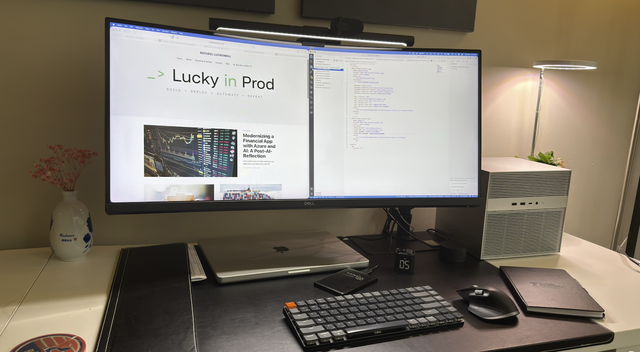
How to Test Whether Agent Permissions Cover Only Required Tool Actions
A mechanism-first explanation of whether agent permissions cover only required tool actions, its shared-resource tradeoffs, three query-fanout FAQs, and a.
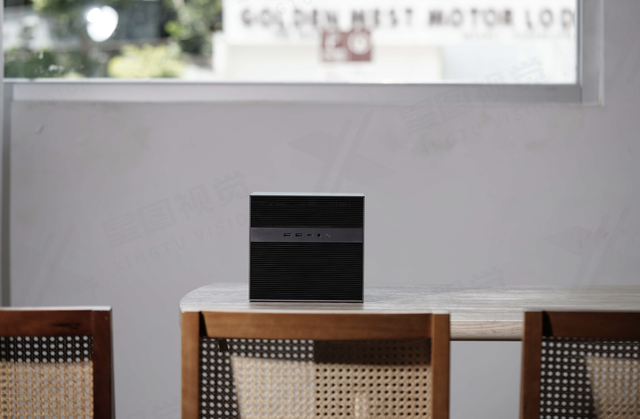
How to Measure NAS Write Amplification During Vector Index Ingest
A mechanism-first explanation of nas write amplification, its shared-resource tradeoffs, three query-fanout FAQs, and a practical verification protocol.
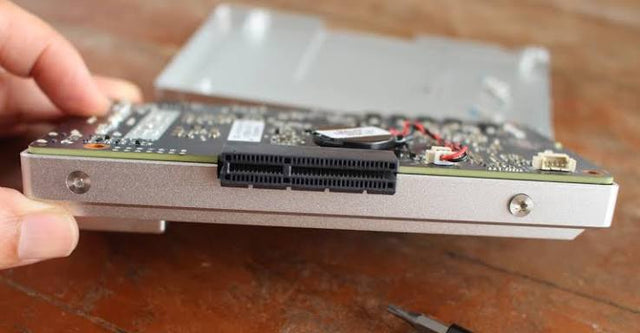
How to Test Restore-Point Consistency Across Models, Indexes, and Metadata
A mechanism-first explanation of restore-point consistency, its shared-resource tradeoffs, three query-fanout FAQs, and a practical verification protocol.


