
Best AI Models for Running Locally on Consumer Hardware


Qwen3.5-9B is the best all-around local AI model for most consumer PCs in 2026.
The better choice can still change with your workload: compact models are faster on CPUs and laptops, 8B–14B models usually offer the strongest quality-to-memory balance, and larger or mixture-of-experts models make sense when coding, reasoning, or multimodal accuracy matters more than speed.
The comparison below uses practical 4-bit deployments as its baseline, so you can match a model to the RAM or VRAM you already own before downloading tens of gigabytes of weights.
Local AI Model Comparison: The Shortlist
| Rank | Model | Best For | Approx. 4-bit Footprint | Practical Starting Hardware | Key Trade-off |
|---|---|---|---|---|---|
| 1 | Qwen3.5-9B | Best overall | 6–8 GB | 16 GB RAM or 8–12 GB VRAM | Long contexts need much more memory |
| 2 | Gemma 4 12B | Multimodal work | 9–12 GB | 24 GB RAM or 12–16 GB VRAM | Heavier than text-only models |
| 3 | gpt-oss-20b | Local reasoning | About 16 GB in MXFP4 | 16 GB unified memory or VRAM | Needs high-end consumer hardware |
| 4 | Ministral 3 14B Instruct | Agents and tool use | 9–12 GB | 24 GB RAM or 12–16 GB VRAM | Slower than smaller 8B–9B models |
| 5 | Qwen3-Coder-30B-A3B | Local coding | 18–22 GB | 32 GB RAM or 24 GB VRAM | Total weights remain large despite 3.3B active parameters |
| 6 | DeepSeek-R1-Distill-Qwen-14B | Budget reasoning | 9–11 GB | 24 GB RAM or 12–16 GB VRAM | Reasoning output can be verbose and slow |
| 7 | Qwen3-VL-8B Instruct | Images and documents | 7–10 GB including vision components | 16–24 GB RAM or 12 GB VRAM | Image resolution affects memory use |
| 8 | Phi-4 Mini Instruct | Small-device reasoning | 3–5 GB | 8–16 GB RAM or 6 GB VRAM | Less broad knowledge than larger models |
| 9 | Gemma 3n E4B | Mobile and low-resource multimodal AI | 4–7 GB | 8–16 GB unified RAM | Runtime support varies by platform |
| 10 | Llama 3.2 3B Instruct | Lightweight ecosystem compatibility | 2–4 GB | 8 GB RAM or 4–6 GB VRAM | Older and less capable than newer small models |
Memory figures are planning estimates, not guarantees. They assume a practical 4-bit build where available and a moderate context window. Runtime overhead, KV cache, vision encoders, batch size, and GPU offloading can add several gigabytes.
How We Chose the Best Models for Local Use
This is not a benchmark-only ranking. A model that wins a test but cannot fit in your machine is not the best local model for you. We prioritized five factors: useful output quality, realistic consumer-hardware fit, availability of local runtimes or quantized builds, task coverage, and licensing or access friction.
We also treated “consumer hardware” broadly: Windows and Linux PCs, Apple Silicon Macs, compact home servers, and NAS-centered homelabs. If you are choosing parts first, use our local AI server budget hardware guide to size the complete system rather than focusing on GPU memory alone.
1. Qwen3.5-9B — Best Local AI Model Overall
Qwen3.5-9B is the most balanced recommendation for a modern 16 GB computer or an 8–12 GB GPU. It is small enough to run in a practical quantized format, yet capable enough for chat, summaries, retrieval-augmented generation, multilingual work, and light coding.
The official model card lists a native 262,144-token context window, but that number should not become your default local setting. KV cache grows with context, so begin around 8K–16K and increase only when the workload justifies it. That keeps latency and memory use under control.
- Choose it if: you want one general-purpose model for daily local use.
- Skip it if: your main task is high-end code generation or audio/video understanding.
- Sweet spot: 4-bit quantization on a 12 GB GPU, or CPU/GPU hybrid inference with 16–24 GB system RAM.
2. Gemma 4 12B — Best for Local Multimodal AI
Gemma 4 12B is the stronger choice when “local AI” means more than text. Google’s model card describes native text, image, audio, and video input, up to a 256K context window, multilingual support across more than 140 languages, and an architecture intended for streamlined local execution.
That versatility adds overhead. Plan for 24 GB of system RAM or 12–16 GB of VRAM for a comfortable quantized deployment, then leave extra headroom for media inputs. It is especially useful for private photo analysis, document understanding, meeting-media workflows, and multimodal search.
- Choose it if: you need one model to understand text and media.
- Skip it if: you only need fast text chat on an 8 GB laptop.
- Sweet spot: 16 GB VRAM or 32 GB unified memory.
3. gpt-oss-20b — Best for High-Quality Reasoning on a Consumer GPU
gpt-oss-20b targets the upper end of consumer hardware. OpenAI says it can run with 16 GB of memory, while its official Ollama guide recommends at least 16 GB of VRAM or unified memory for the smaller model.
It is a strong fit for users who want deliberate reasoning, structured outputs, or local experimentation without moving to workstation-class GPUs. The practical catch is that 16 GB is a starting point, not generous headroom: long contexts, parallel requests, or non-MXFP4 formats can push memory higher.
- Choose it if: reasoning quality matters more than low latency.
- Skip it if: you have only 8 GB VRAM or rely on CPU-only inference.
- Sweet spot: a 16–24 GB GPU or an Apple Silicon system with at least 24 GB unified memory.
4. Ministral 3 14B Instruct — Best for Local Agents and Tool Use
Ministral 3 14B Instruct combines text and vision with native function calling, JSON output, multilingual support, and strong system-prompt adherence. Mistral positions the family for edge deployment and notes that the 14B model fits within 24 GB VRAM in FP8, with lower requirements after further quantization.
For a private home assistant that calls search, automation, or file tools, those reliability features can matter more than a small benchmark advantage. A 4-bit build should fit on lower-memory hardware, but 12–16 GB VRAM provides a more comfortable operating range.
- Choose it if: you are building tool-using agents or structured workflows.
- Skip it if: your priority is maximum tokens per second on an entry-level GPU.
- Sweet spot: 16 GB VRAM and a moderate context window.
5. Qwen3-Coder-30B-A3B Instruct — Best Local Coding Model
Qwen3-Coder-30B-A3B Instruct is purpose-built for agentic coding, repository-scale understanding, and function calling. Its mixture-of-experts architecture contains 30.5B total parameters but activates about 3.3B per token, helping compute efficiency without eliminating the need to store the full quantized weights.
That distinction matters for hardware planning. A 4-bit build generally belongs on a 24 GB GPU or a machine with at least 32 GB system memory. The native 256K context is attractive for large repositories, but local users should start smaller because code context can quickly consume KV-cache memory.
- Choose it if: coding is the primary workload and you have 24 GB-class graphics memory.
- Skip it if: you want a lightweight everyday assistant.
- Sweet spot: 24 GB VRAM, fast NVMe storage, and 64 GB system RAM for headroom.
6. DeepSeek-R1-Distill-Qwen-14B — Best Budget Reasoning Model
DeepSeek-R1-Distill-Qwen-14B compresses reasoning patterns learned from DeepSeek-R1 into a dense 14B checkpoint based on Qwen2.5. It remains a practical option for math, logic, and step-by-step problem solving on hardware that cannot host the full DeepSeek-R1 model.
The trade-off is output efficiency. Reasoning traces can be long, increasing time-to-answer and energy use. Use a sensible token cap and reserve it for problems that benefit from deliberate reasoning rather than routine chat.
- Choose it if: you want affordable local reasoning with widely available quantizations.
- Skip it if: you value concise, instant answers above reasoning depth.
- Sweet spot: 12–16 GB VRAM or 24–32 GB system RAM.
7. Qwen3-VL-8B Instruct — Best for Images and Document Understanding
Qwen3-VL-8B Instruct is a focused vision-language choice for screenshots, scanned pages, diagrams, charts, and visual question answering. Official GGUF builds include Q4_K_M weights and separate vision-projection files, making it easier to deploy through llama.cpp-compatible tools.
Its real memory use depends on image count and resolution, so leave more headroom than you would for an 8B text-only model. For private archives, combine the model with OCR and retrieval rather than sending every full-resolution page into one prompt. Our photo AI versus document RAG hardware comparison explains the different bottlenecks.
- Choose it if: you work with images, PDFs, screenshots, or visual records.
- Skip it if: your workload is entirely text.
- Sweet spot: 12 GB VRAM or 24 GB shared system memory.
8. Phi-4 Mini Instruct — Best for Low-Memory Reasoning
Phi-4 Mini Instruct is designed for compute-constrained and latency-sensitive environments, with emphasis on instruction following, math, and logic. Microsoft lists a 128K context window, although the same local-memory warning applies: capability does not mean you should allocate the maximum context on a small machine.
It is a smart first model for a compact PC, older laptop, or CPU-focused server. Microsoft also provides optimized ONNX versions for CPU and GPU deployment across desktop and mobile environments.
- Choose it if: you need reasoning in a small memory envelope.
- Skip it if: broad factual recall and creative writing are your top priorities.
- Sweet spot: 8–16 GB system RAM or a 6 GB GPU.
9. Gemma 3n E4B — Best for Mobile and Low-Resource Multimodal Use
Gemma 3n E4B was designed for efficient operation on low-resource devices while accepting text, image, video, and audio inputs. It is a useful option when an integrated GPU or unified-memory laptop matters more than maximum desktop performance.
Check runtime compatibility before committing to a workflow. Multimodal support may require current libraries and platform-specific backends, while model access can require accepting Google’s license terms. Once supported, its compact footprint makes it attractive for private field tools and offline media analysis.
- Choose it if: you want multimodal features on an efficient laptop or edge device.
- Skip it if: you need the simplest cross-platform setup.
- Sweet spot: 16 GB unified memory with an optimized native runtime.
10. Llama 3.2 3B Instruct — Best Lightweight Ecosystem Pick
Llama 3.2 3B Instruct is no longer the newest small model, but it remains useful because of broad runtime, tutorial, and community support. Meta designed the 1B and 3B text models for multilingual dialogue, retrieval, summarization, and on-device use.
Choose it for compatibility, not category-leading intelligence. It runs on modest systems and is easy to integrate, making it a dependable baseline for testing an application before moving to a larger model.
- Choose it if: you value mature tooling and a small download.
- Skip it if: you want the highest output quality available in 2026.
- Sweet spot: 8 GB system RAM, with optional partial GPU offload.
Which Model Fits Your Hardware?
8 GB RAM or 4–6 GB VRAM
Start with Phi-4 Mini or Llama 3.2 3B at 4-bit quantization. Keep context between 4K and 8K, run one request at a time, and expect CPU generation to be usable rather than instant. Small systems work well for classification, summaries, simple RAG, and home automations.
16 GB RAM or 8–12 GB VRAM
Qwen3.5-9B is the default recommendation. Qwen3-VL-8B also fits when visual input is required, although it needs more headroom. This tier offers the best balance for mainstream gaming PCs, MacBooks, and compact local-AI builds.
24–32 GB RAM or 16 GB VRAM
Gemma 4 12B, Ministral 3 14B, DeepSeek-R1-Distill-Qwen-14B, and gpt-oss-20b become realistic. The 16 GB GPU tier is especially useful because it avoids slow CPU-to-GPU transfers while preserving enough capacity for a moderate context.
64 GB RAM or 24 GB VRAM
Qwen3-Coder-30B-A3B is practical here, along with higher-quality quantizations of smaller models. This tier suits serious coding assistants, multiple local services, larger RAG collections, and experimentation with longer contexts.
If performance disappoints, identify the actual bottleneck before replacing the model. Our guide to local AI compute, memory, storage, and network bottlenecks helps separate slow token generation from slow model loading or retrieval.
How to Run These Models Locally
- Choose a runtime. Ollama is convenient for command-line and API use, LM Studio offers an approachable desktop interface, and llama.cpp provides extensive control over GGUF inference and hardware offloading.
- Download a quantized build. Q4_K_M is a sensible general starting point for GGUF models. Lower-bit formats save memory but can reduce quality; higher-bit formats improve fidelity but consume more RAM.
- Begin with a short context. Set 4K–8K first, observe memory and speed, then increase gradually. Advertising a 128K or 256K context does not make maximum context free.
- Offload layers to the GPU. If the full model does not fit in VRAM, partial offloading can still accelerate inference while system RAM holds the remainder.
- Test your own prompts. Evaluate accuracy, latency, tool calls, formatting, and hallucinations on the tasks you actually run. Public benchmarks cannot reproduce your documents or workflow.
For an end-to-end deployment plan, follow the ZimaSpace local AI server build guide. If data privacy is the main reason you are going local, the self-hosted LLM privacy guide covers storage, network exposure, logs, and access controls.
Where Zima Hardware Fits
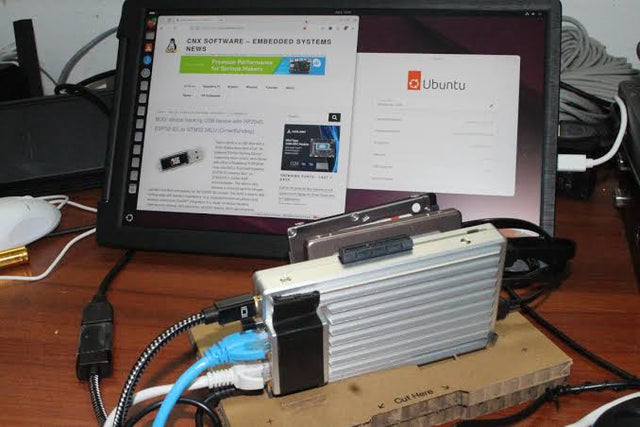
A local AI system does not have to place storage, orchestration, and inference on one box. A ZimaBoard 2 can coordinate model APIs, lightweight RAG, automations, and private data services. Its Intel N150 processor, up to 16 GB LPDDR5 memory, dual 2.5GbE, SATA, and PCIe expansion make it better suited to small CPU models or orchestration than to high-end LLM inference.
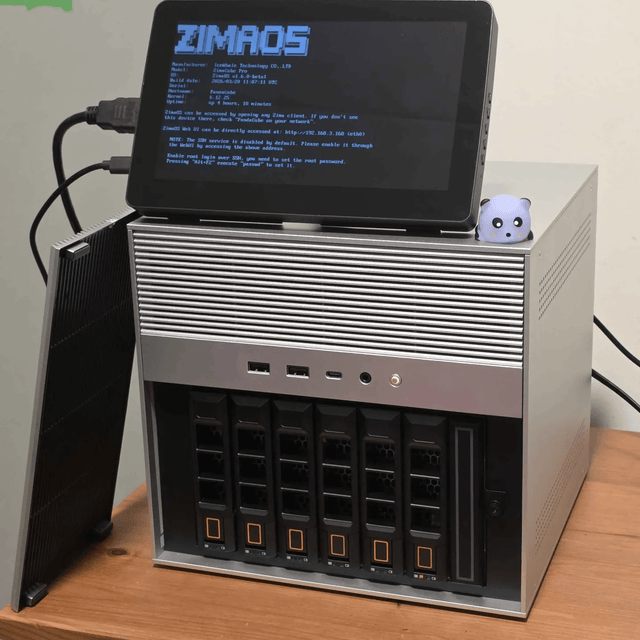
For larger datasets and expandable AI hardware, ZimaCube 2 combines multi-drive storage, SSD expansion, Thunderbolt 4, and PCIe options. It can host private model files and RAG data while a GPU-equipped system handles inference, or serve as the center of a more integrated AI homelab. This separation keeps valuable data local without forcing every service onto the most power-hungry machine.
Frequently Asked Questions
What is the best AI model to run locally in 2026?
Qwen3.5-9B is the best overall starting point for most users because it balances capability, speed, multilingual performance, and a manageable quantized footprint. Choose Gemma 4 12B for multimodal work, gpt-oss-20b for stronger reasoning, or Qwen3-Coder-30B-A3B for serious coding.
Can I run a local AI model without a GPU?
Yes. CPU inference works well with smaller 3B–4B models and can run 8B–9B models if you have enough RAM, but generation will be slower. Apple Silicon and modern integrated GPUs can use shared memory, while x86 systems often benefit from partial GPU offloading.
How much RAM do I need for a local LLM?
Eight gigabytes is enough for compact quantized models, 16 GB is the practical mainstream minimum, and 32 GB opens the door to 12B–20B models with useful headroom. For 30B-class quantized weights, 32 GB may run the model, but 64 GB is more comfortable when other services and long contexts are involved.
Does a 4-bit model lose quality?
Usually a little, but good 4-bit quantizations preserve enough quality for chat, RAG, coding assistance, and home use while cutting memory dramatically. The exact impact depends on the model and quantization method, so compare a few representative prompts before standardizing your deployment.
Is VRAM more important than system RAM?
VRAM usually determines how much of the model can run at full GPU speed. System RAM can hold weights that do not fit, but moving data between CPU and GPU reduces performance. Unified-memory systems blur that boundary, although memory bandwidth still matters.
Final Verdict
Start with the smallest model that reliably completes your real workload. For most people that means Qwen3.5-9B; move to Gemma 4 12B for multimodal input, gpt-oss-20b or DeepSeek-R1-Distill-Qwen-14B for reasoning, and Qwen3-Coder-30B-A3B for coding. Match the quantization and context length to your available memory, then scale hardware only after measuring the bottleneck.

Recommended products

Tech & AI HUB
More to Read
What Is Embedding Drift, and When Does a Private Search Index Need Rebuilding?
Decode model, preprocessing, corpus, and query drift; distinguish monitoring from incompatibility; and decide when a private index needs rebuilding.
What Is Tokenizer Compatibility, and Why Can It Break Model Switching?
Decode vocabulary identity, special-token semantics, chat templates, cached tokens, adapters, and compatibility checks for local model switching.
What Is Model Residency, and When Should a Local AI Service Keep Weights Loaded?
Decode weight residency, cache levels, cold starts, eviction, multiplexing, memory pressure, and when a home AI service should stay warm.


