
Raspberry Pi Cluster vs Mini PC for Learning Distributed Services


A Raspberry Pi cluster is the better classroom when the lesson is how independent machines join, communicate, fail, and recover. A mini PC is the better classroom when you want to reach containers, virtual machines, and application behavior quickly without spending each session maintaining several physical hosts.
The choice is not really four small processors versus one larger processor. It is physical distribution versus concentrated capacity. Both can teach orchestration, but they expose different parts of the system and create different kinds of friction.
What This Comparison Is Really Measuring
A distributed service has several layers: workload placement, service discovery, network paths, persistent data, health checks, and recovery. The control plane and worker-node model makes those relationships explicit, whether the nodes are physical computers or virtual machines.
A Pi cluster turns each node into a visible object with its own power, storage, hostname, and cable. A mini PC can model the same logical topology with virtual machines or a nested cluster, but a reboot, storage fault, or network change still begins inside one physical failure domain.
Where a Physical Raspberry Pi Cluster Teaches More
Multiple boards make node identity unavoidable. You must assign addresses, keep hostnames unique, distribute credentials, and decide which machine runs the control plane. The K3s node-join process shows how an agent registers with a server through a URL and token, which becomes a concrete lesson when each command runs on separate hardware.
Physical separation also makes failure testing honest. Pulling power from one worker removes its CPU, memory, network interface, and local storage at the same time. You can observe rescheduling, degraded replicas, and the difference between stateless recovery and data recovery without pretending that one host is several independent machines.
That visibility has a cost. Every board needs a boot device, power path, network port, cooling plan, and update routine. The cluster creates more learning surfaces, but it also creates more opportunities for a bad cable, weak power supply, inconsistent image, or forgotten package version to interrupt the lesson.
When One Mini PC Is the Better Classroom
A mini PC concentrates more memory and faster storage behind one management point. That makes it easier to run several virtual nodes, rebuild the whole lab from templates, and reserve capacity for databases, observability, or CI jobs that may overwhelm a small ARM board.
Physical distribution is not required for every cluster exercise. multi-node K3s in containers can reproduce server and agent roles on one machine, so you can practice manifests, upgrades, namespaces, and service routing before buying several nodes. The limitation is that a host outage removes the entire simulated cluster.
Architecture compatibility also matters. Container images can target several CPU platforms, but multi-platform container images must be published for the architecture you run. An x86 mini PC usually reduces the chance that a learning exercise stops because an older or niche image lacks an ARM64 build.
Failure, Resources, and Network Lessons Change by Platform
The useful question is which constraint you want to see. Kubernetes uses declared requests to place workloads and limits to control resource use; container resource requests and limits are easier to explore on a machine with enough spare RAM to create contrasting workloads. A small-node cluster makes resource scarcity more visible, but may leave less room for the application itself.
| Learning Goal | Raspberry Pi Cluster | Single Mini PC | Practical Meaning |
|---|---|---|---|
| Node joining and identity | Physical and visible | Usually virtualized | The cluster makes machine boundaries harder to ignore |
| Failure testing | Independent node loss | Guest loss inside one host | A mini PC cannot model host independence without another machine |
| Workload density | Limited per node | Higher shared headroom | The mini PC reaches heavier services sooner |
| Architecture friction | ARM64 must be supported | Commonly amd64 | Check every required image before choosing |
| Maintenance surface | Several hosts and boot devices | One physical host | The cluster teaches operations by creating more operations |
Network behavior also becomes more literal across separate boards. Latency, packet loss, and switch configuration are real external conditions rather than virtual links inside one kernel. However, adding nodes does not automatically create availability; the control plane, storage, ingress path, and application replicas must all be designed to survive the failure you trigger.
Which Learning Path Fits Your Next Six Months?
Choose the Pi cluster when you specifically want to learn node bootstrap, cluster networking, architecture-aware deployment, physical failure, and automation across several hosts. Choose the mini PC when your next goal is Docker, virtual machines, application observability, databases, or a disposable Kubernetes lab with enough capacity for realistic services.
A good progression is to begin on one capable machine, document the workloads, and add physical nodes when the next lesson requires a second failure domain. Readers still choosing among broader home-lab hardware can use the home lab hardware comparison to separate compute, storage, and expansion needs.
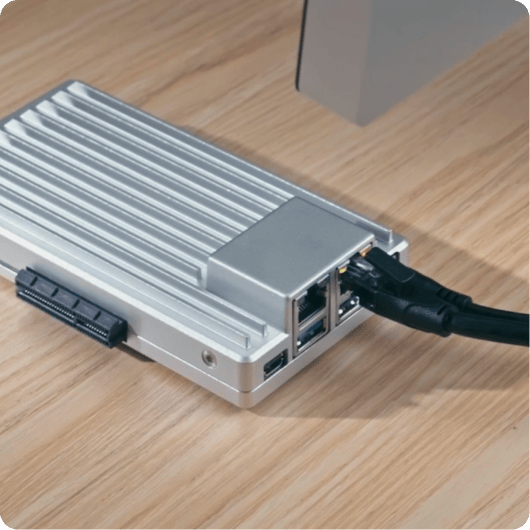
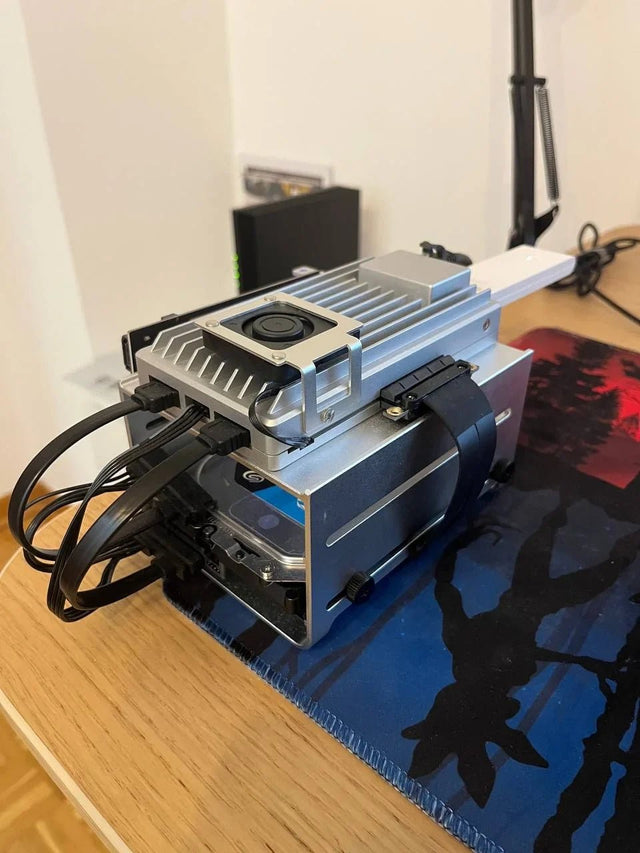
If a compact x86 node fits the mini-PC side of the decision, the ZimaBlade single-board server provides a product-specific path after the architecture choice is clear. It should be evaluated by memory, storage, network, and expansion needs rather than treated as proof that every x86 system fits every cluster.
FAQ
Can one mini PC teach Kubernetes properly?
Yes. Virtual machines or containerized nodes can teach scheduling, deployments, services, ingress, configuration, and upgrades. Add a second physical host only when host-level failure, external networking, or genuine multi-node storage becomes part of the lesson.
When does a Raspberry Pi cluster become more than a display project?
It becomes useful when you repeatedly automate provisioning, deploy replicas, remove nodes on purpose, and measure recovery. If every service remains pinned to one board, the extra machines are not yet teaching distributed operation.
What happens when the cluster uses mixed CPU architectures?
Workloads must have compatible images, and scheduling may need architecture labels or constraints. Mixed nodes can be educational, but they add a compatibility variable that beginners may prefer to introduce after the base cluster is stable.
Who benefits most from starting with physical nodes?
Learners focused on infrastructure operations, edge computing, network behavior, and failure testing gain the most. Application-first learners usually progress faster on one stronger host and add nodes later.
Final Takeaway
Choose a Raspberry Pi cluster when physical distribution is the subject; choose one mini PC when distributed software is the subject and you want more capacity with less hardware upkeep. The best learning platform is the one that exposes the next concept without making unrelated maintenance consume the lab.

Recommended products

Product Comparisons
More to Read
WireGuard Server vs Mesh VPN for Devices Behind CGNAT
Use mesh VPN for low-friction roaming devices; use a WireGuard relay when you want to own routing, keys, and the public endpoint.
10GbE NAS on Gigabit Clients: Upgrade the Server or Endpoints First?
Upgrade the endpoint path for one slow workstation; upgrade the NAS uplink first when several gigabit clients saturate it together.
1GbE vs 2.5GbE for a Home Server: Which Workloads Cross the Line?
Keep 1GbE for light services and single streams; move to 2.5GbE when recurring transfers or combined clients sustain more than about 100 MB/s.


