
Private RAG Storage vs Cloud Drive for AI Agent Memory


A cloud drive is usually the easier place to collect and share source files, while private RAG storage gives an AI agent more control over indexing, permissions, retrieval, and deletion. For many persistent agents, the practical answer is a hybrid: shared files remain readable by people, while a synchronized private index becomes the agent-facing memory layer.
The Real Difference Is File Storage vs Retrieval Memory
A cloud drive keeps documents organized, synchronized, and available to people across devices. It can become an excellent knowledge source, but storing a file does not tell an agent which passage matters, how recent it is, or whether the current user should be allowed to retrieve it.
Private RAG storage adds a retrieval pipeline around those documents. Files are parsed, divided into useful chunks, enriched with metadata, converted into searchable representations, and matched against a query before selected context reaches the model.
That pipeline introduces ongoing work. Keeping a RAG knowledge base current can involve refreshing embeddings, synchronizing sources, rebuilding indexes, and monitoring retrieval quality. The comparison is therefore not simply local storage versus online storage; it is controlled retrieval versus convenient file access.
When a Cloud Drive Is the Better Starting Point
A cloud drive fits teams that already collaborate through shared folders and need the agent to reference project notes, policies, drafts, or research. Existing sharing, version history, and cross-device access reduce setup time, especially while the expected questions and useful data are still changing.
The agent still needs an ingestion or connector layer. That layer must detect new files, recognize edits, preserve useful metadata, and remove old chunks when the original document is deleted. Without that synchronization, the agent may answer from a stale index even though the cloud file itself is current.
This approach works best when human collaboration is the priority and the corpus has manageable privacy requirements. It becomes less comfortable when the agent needs offline access, custom retrieval behavior, strict data residency, or permission rules that cannot be reproduced reliably outside the drive.
When Private RAG Storage Earns Its Complexity
Private RAG storage becomes valuable when the same controlled corpus supports repeated agent tasks. A team can define its own chunking, metadata, retention, reranking, and retrieval policies instead of adapting every workflow to the behavior of a general-purpose drive. This is especially relevant when building a private AI agent workspace around local documents.
Local placement alone does not make a RAG system secure. Sensitive content may need masking before indexing, while retrieval should enforce the requesting user's role rather than trusting folder location alone. Practical RAG data redaction and access controls belong inside the ingestion and retrieval design.
The maintenance burden also extends beyond keeping a server online. The documented self-hosted AI memory trade-offs include vector index maintenance, retrieval monitoring, failure recovery, and decisions about what memory should persist, expire, or be consolidated.
A storage-oriented system such as the ZimaCube 2 Personal Cloud NAS can provide a local foundation when the workload needs private datasets, expandable storage, and freedom to run a chosen retrieval stack. The hardware is only the foundation; backup, access control, indexing, and evaluation still determine whether the resulting memory is dependable.
Which Architecture Fits Persistent Agent Memory?
The following model separates the user-visible storage experience from the work required to make information retrievable by an agent.
| Decision Factor | Private RAG Storage | Cloud Drive | Practical Meaning |
|---|---|---|---|
| Primary role | Agent-facing retrieval memory | Human-facing file repository | One prepares context; the other organizes source files |
| Retrieval preparation | Explicit parsing, chunking, indexing, and ranking | Requires a connector or managed retrieval layer | A synchronized folder is not automatically searchable memory |
| Freshness | Controlled through the ingestion schedule | Files update easily, but the external index must follow | Fresh documents can still produce stale agent answers |
| Permissions | Must be enforced during retrieval | Sharing rules already exist, but must reach the agent | Permission synchronization matters on both sides |
| Operations | More maintenance and observability | Lower storage administration but greater connector dependence | Convenience shifts work rather than eliminating it |
| Best fit | Sensitive or highly customized persistent memory | Collaborative source files and early experiments | Choose according to the controlled layer you actually need |
This table is not a privacy guarantee. Private storage can expose data through weak retrieval permissions, while a cloud drive can meet demanding security requirements when its controls are configured and inherited correctly. Retrieval testing, deletion testing, backups, and auditability remain separate responsibilities.
A hybrid design often preserves the clearest boundary: people edit authoritative files in the cloud drive, while a private RAG service maintains a permission-aware index for the agent. Teams planning that index should also compare fast storage versus raw compute for private AI search, because ingestion and retrieval can stress different parts of the system.
FAQ
Can an AI agent use a cloud drive as memory?
Yes, but the drive normally acts as the source rather than the complete memory system. A connector must ingest the files, build searchable representations, preserve permissions, refresh changed content, and remove indexed material when its source is deleted.
What should be removed when a source document is deleted?
The deletion process may need to remove the original file, parsed text, document chunks, embeddings, metadata records, cached answers, and generated summaries. Testing this propagation is important because deleting the visible file does not necessarily remove every derived copy.
When is private RAG storage worth maintaining?
It becomes easier to justify when an agent repeatedly uses a stable private corpus, requires custom retrieval or retention rules, must operate locally, or needs tightly controlled access. Small experiments with changing requirements may benefit more from a cloud-first or managed approach.
Final Takeaway
Choose a cloud drive when shared file management and quick deployment matter most. Choose private RAG storage when persistent retrieval, local control, custom permissions, or data residency justify the operational work. If both people and agents depend on the same documents, keep one authoritative source and build a synchronized, permission-aware retrieval layer around it.

Recommended products

Product Comparisons
More to Read
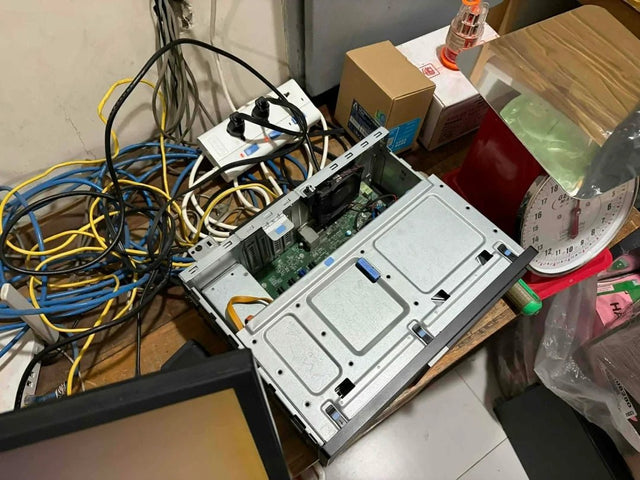
WireGuard Server vs Mesh VPN for Devices Behind CGNAT
Use mesh VPN for low-friction roaming devices; use a WireGuard relay when you want to own routing, keys, and the public endpoint.
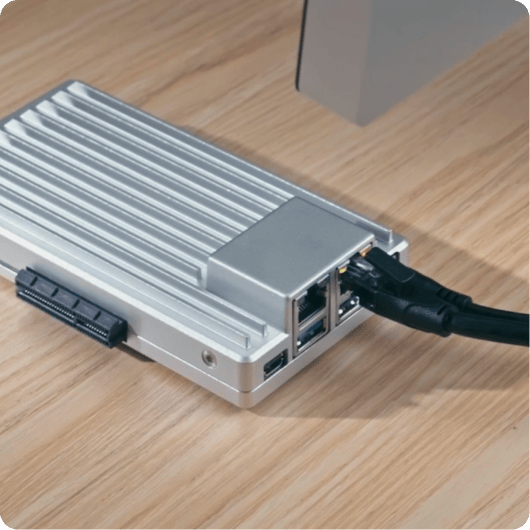
10GbE NAS on Gigabit Clients: Upgrade the Server or Endpoints First?
Upgrade the endpoint path for one slow workstation; upgrade the NAS uplink first when several gigabit clients saturate it together.
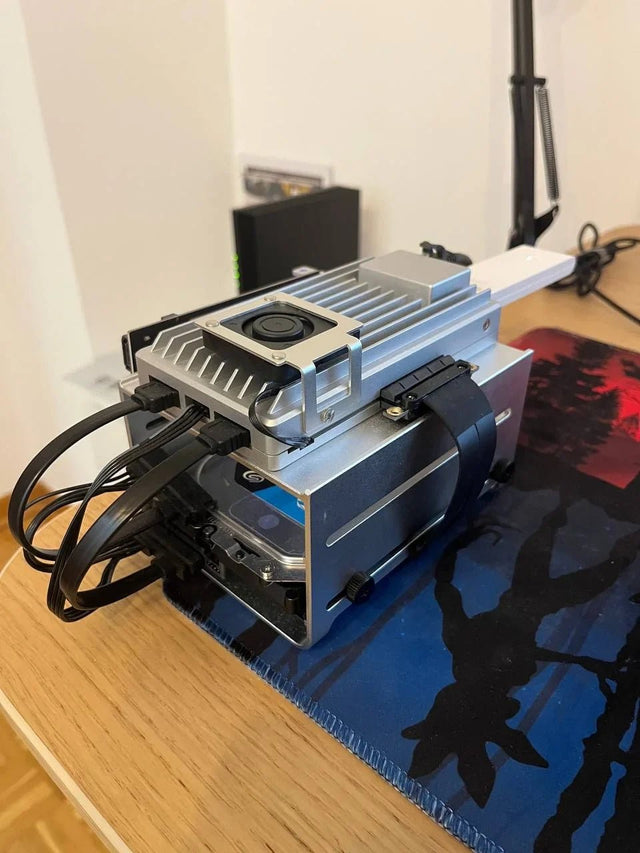
1GbE vs 2.5GbE for a Home Server: Which Workloads Cross the Line?
Keep 1GbE for light services and single streams; move to 2.5GbE when recurring transfers or combined clients sustain more than about 100 MB/s.


