
Single-Pool Home Server Failure Risk Assessment


A single storage pool can be the right home-server design, but datasets and folders do not create independent hardware failure domains. If the pool, controller, host, power supply, or filesystem becomes unavailable, every service on it can stop together.
Map what the pool makes unavailable together
List application databases, container volumes, VM disks, family files, media, downloads, snapshots, and backup repositories. Mark which items are primary data, replicas, caches, or rebuildable content.
Trace shared dependencies beyond the disks: HBA, SATA expander, USB bridge, motherboard, power supply, UPS, encryption keys, boot configuration, and administrator credentials. Separate datasets can limit permissions and growth without surviving these shared failures.
Set an acceptable recovery time for each service. Losing a media library for two days may be tolerable while losing password, photo, or home-automation data may not be.
Measure capacity and workload coupling
Estimate normal and worst-case writes from databases, downloads, camera recording, snapshots, scrubs, replication, and backup retention. One runaway log or snapshot tree can consume the free space needed by unrelated services.
Observe latency during scrub, resilver, large copy, media scan, and backup windows. A healthy pool can still miss application targets when sequential and random workloads compete for the same drives.
Use the table to score whether the simplicity benefit exceeds the shared-risk cost.
| Decision area | Assessment | Boundary |
|---|---|---|
| Pool or controller outage | All resident services stop | Require off-pool recovery |
| Capacity exhaustion | Apps and snapshots compete | Use quotas and alerts |
| Maintenance and rebuild | Shared performance impact | Schedule and test downtime |
Separate protection from the pool
Snapshots help with deletion and version rollback while the pool remains readable. Mirrors and parity help maintain availability after limited disk failures. Neither is an independent backup if every copy depends on the same pool.
Keep at least one recoverable copy on another device or location, including application-consistent database exports, configuration, encryption keys, and a list of mount paths. Test a restore without relying on the original host.
A related ZimaSpace container storage pool checklist shows when workload and recovery boundaries justify a split.
An independent 3-2-1 backup explanation describes why copies on different media and locations reduce common-mode loss.

Choose one pool, split roles, or add a second system
Keep one pool when downtime is acceptable, datasets enforce quotas and permissions, performance remains predictable, and verified backups leave the failure domain. Simplicity can improve recovery when the design is documented.
Split storage when write-heavy apps interfere with bulk data, an experimental service can fill capacity, backups must remain available during primary-pool repair, or different devices require incompatible endurance and latency characteristics.
Do not buy a second pool merely to duplicate complexity. First prove a restore, record recovery order, add alerts for health and free space, and decide which services can remain offline while the single pool is repaired.

Recommended products

Buying Guide
More to Read
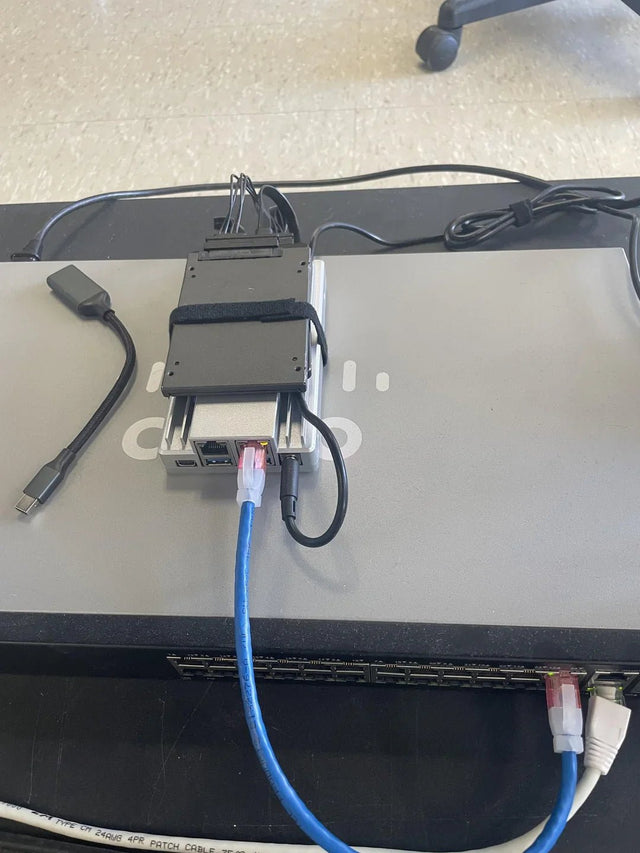
USB Storage Expansion Reliability Risk Guide
USB expansion fits backup and movable data best; primary pools demand stable power, identity, monitoring, and tested disconnect recovery.
Mixed-Capacity NAS Upgrade Risk Checklist
A mixed-capacity upgrade is safe only when the array supports the exact sequence, every rebuild is protected, and unused capacity is understood.
Used Enterprise Server Noise and Power Risk Guide
A used enterprise server is a bargain only when measured noise, idle power, parts, and placement costs fit the home for its full service...


