
From Sparcstation to ZimaBlade: A 57-Year-Old Geek’s Self-Hosting Journey


The most touching stories in a community are often not about buying the highest-end setup.
Julien is 57 years old and lives in France. His day job is handling administrative paperwork for freelancers and artisans — invoices, accounts, contracts, and all the things that creators often find painful to deal with.
As he puts it:
“I take care of the paperwork so they can focus on what they do best.”
He does not have a computer science background. But his story with technology goes all the way back to the late 1980s.
A Sun Sparcstation Changed Everything
In the late 1980s, Julien was studying art at university. During his second year, he “met” a Sun Sparcstation workstation.
“It was a real revelation.” — Julien
From that day on, he started teaching himself computer graphics and printing technologies. In the late 1990s, he joined a distribution company as a graphic designer and took part in the early development of e-commerce in France — right in the middle of the famous dot-com bubble era.
After the bubble burst, everything went back to zero. Julien rethought his career path and began doing the work he still does today: providing administrative support for freelancers.
And it was this work — along with the creators who needed his help — that sparked his interest in micro self-hosting.

The Raspberry Pi Died. Now What?
Julien had been using a Raspberry Pi 4 as a backup server, running Debian, XFS, software RAID 1, and BorgBackup. It ran 24/7 for years.
Then it died.
He took another look at the SBC, or single-board computer, market and eventually found the ZimaBlade 7700. He bought the NAS Kit version.
“Price, specs, power consumption — everything clicked.”
The Build: Less Than an Hour, With One Small Twist
Julien’s setup plan was clear, and it also reflected his own preferences:
- Operating system: Debian 13, installed on an external NVMe SSD and used as the boot drive. “I know it well, and its stability makes it the safest choice.”
- File system: XFS, with two hard drives configured as a mirrored storage setup.
- Backup software: BorgBackup. “For a backup server, simple and straightforward is enough.”
- Backup strategy: All other servers — Nextcloud, Paperless, AFFiNE, Dolibarr, Gitea, and more — regularly push their data to this ZimaBlade. Bob, yes, he gave it a name, only needs to run quietly 24/7.
The only small twist appeared during assembly. Julien did not plan to use the NVMe SSD on the PCIe adapter, since the system drive was already external. But he had not expected that he would still need a support bracket for the PCIe adapter.
So he opened OpenSCAD, designed a bracket himself, and 3D printed it.
“Apart from that tiny bit of poor planning, the whole build took less than an hour. Even someone with no prior experience could easily reproduce it by following the steps.”
He also shared the purchase links for the PCIe cable and adapter, along with the OpenSCAD source file, free to use and modify.


Why This Is an Interesting Case
Julien’s setup is unconventional in several ways:
| Common Choice | Julien’s Choice |
| Use the pre-installed ZimaOS | Install Debian 13 |
| Use ext4 or Btrfs | Use XFS |
| Use rsync or an off-the-shelf backup solution | Use BorgBackup |
| Use internal storage as the system drive | Boot from an external NVMe SSD |
But every choice has a reason. He did not choose these tools because they were “cool,” but because they were familiar, trusted, and proven through years of production use.
That is exactly the magic of the open-source community: the same ZimaBlade can lead to completely different, yet equally valid, setups depending on who is using it.
Next Step: More Zima Devices Are on the Way
Julien is very happy with the purchase. He is already considering migrating several other servers he manages:
- The same ZimaBlade setup could serve backup needs for both himself and his clients.
- ZimaBoard 2 may be a fit for servers that need more performance, though the price is slightly higher and still requires careful cost-benefit calculation.
“This has definitely been a positive experience. Compared with the Raspberry Pi 4, this machine beats it in every dimension. I even feel like this setup is a bit overkill — but since ARM boards have become so expensive, I’m quite glad I found ZimaBlade.”

One Sentence
Julien’s final message to the community was simple:
“One step at a time... Just go for it!”
Join the Community to Unlock More Useful Information
Welcome to the IceWhale Discord community. We will be releasing more detailed setup tutorials, user case studies, and product updates to help you easily navigate the digital world and find the perfect hardware platform for every passion.

Recommended products
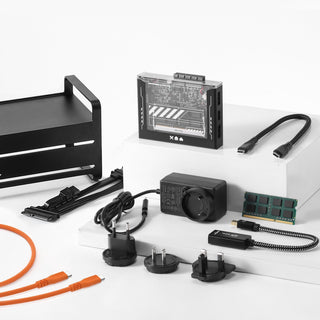

Zima Campaign Hub
More to Read
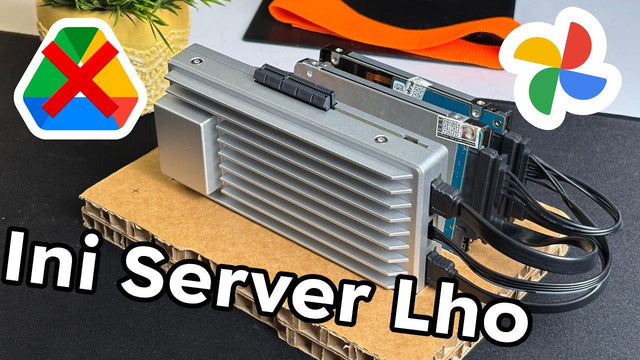
How Rez Tech Builds His Own Personal Cloud With ZimaBoard 2
Rez Tech builds a personal cloud with ZimaBoard 2, two local drives, RAID 1, and ZimaOS, then tests file access, 4K HDR media, and...

Silicon Steak Shrinks His Homelab With ZimaBoard 2
Silicon Steak explores whether ZimaBoard 2 can replace a much larger homelab machine, testing storage, media playback, Minecraft, Pi-hole, self-hosted apps, and ZimaOS management.
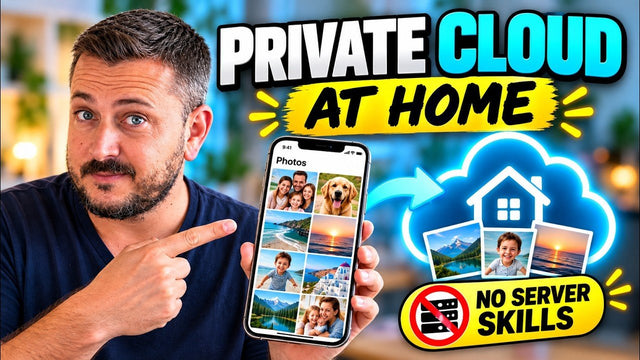
How Smart Life Builds a Private Cloud with ZimaBoard 2
Smart Life turns ZimaBoard 2 into a home destination for phone photos and videos, showing the hardware build, ZimaOS storage setup, phone connection, and...


