
Cloud AI API Pricing vs Local AI: What Does Your Workload Really Cost?


A cloud API can cost less than owning an inference system for light or irregular work. Local AI becomes financially interesting when a suitable machine handles enough repeatable work to justify its hardware and operating costs. The comparison needs actual model calls, billed tokens, useful output quality and the full local budget. An electricity-only estimate leaves out much of the ownership cost.
Start with the ZimaSpace AI API cost calculator. It compares official text-token rates from eight providers, then puts hardware amortization, electricity and upkeep into the same monthly scenario. Use your own logs and measurements; the worked example below shows why the answer can change with the endpoint you choose.
Start With Model Calls and Billable Tokens
An end-user request may trigger several model calls. An agent can plan, call a tool, read its result, retry and generate a final answer. Each step can add input and output tokens. A budget based only on the final visible response will miss that work.
Measure a representative task from start to accepted result. Include system instructions, conversation history, retrieved documents and billed reasoning output. Use the provider’s usage records rather than a word-count estimate. Tokenizers differ, so the same text need not produce the same billable count on every model.
| What to measure | Why it changes the budget |
|---|---|
| Calls per completed task | Agent loops and retries increase usage |
| Input tokens per call | History and retrieval can dominate the prompt |
| Billed output tokens | Chargeable reasoning may extend beyond the displayed answer |
| Cache reads and writes | They are distinct billing categories with different rates |
| Accepted results | A cheaper call that needs extra retries can cost more per useful result |
What Does the Same Token Budget Cost Across Providers?
Consider 30,000 model calls per month, each with 2,000 input and 500 billed output tokens. That is 60 million input tokens and 15 million output tokens. This example has no cache hits, cache writes, free credits or additional tool fees. Rates were checked on October 30, 2026.
The table uses standard direct-provider quotes where indicated. The DeepSeek example uses peak pricing; the Qwen example uses US deployment-scope list rates. Gemini 3.8 Flash is at its published introductory rate through December 31, 2026. These models vary in capability, tokenization, latency and features; the table compares a numerical token budget.
| Provider / example model | Input / 1M tokens | Output / 1M tokens | Modeled monthly API cost |
|---|---|---|---|
| OpenAI — GPT-6.1 Sol | $2 | $10 | US$270.00 |
| Anthropic — Claude Sonnet 5.5 | $2 | $10 | US$270.00 |
| Google — Gemini 3.8 Flash | $0.75 | $3.75 | US$101.25 |
| DeepSeek — DeepSeek V4.1 Flash 1017 | $0.3 | $1.2 | US$36.00 |
| Kimi — Kimi K3.1 Pro | $2 | $10 | US$270.00 |
| xAI — Grok 4.7 | $2 | $6 | US$210.00 |
| Mistral — Mistral Small 4 | $0.15 | $0.6 | US$18.00 |
| Alibaba Cloud — Qwen3.7 Plus · US | $0.4 | $1.6 | US$48.00 |
For example, GPT-6.1 Sol is 60 × US$2 plus 15 × US$10, or US$270 for this token scenario. Mistral Small 4 is US$18 using its quoted US$0.15 input and US$0.60 output rates. That spread is why a local budget must be compared with the actual endpoint and task requirements, rather than a generic “cloud AI” price.
What Belongs in the Local AI Monthly Cost?
Use the complete inference system: the host, required accelerator, memory, storage and relevant peripherals. Then estimate its useful life, a realistic resale value, whole-system electricity and running costs. If you buy a data-storage device and a separate GPU host, both belong in the appropriate budget.
Here is an illustrative system budget, not a product quote or an inference benchmark:
| Local assumption | Monthly calculation |
|---|---|
| Hardware US$1,500; expected resale US$300; useful life 36 months | (1,500 − 300) ÷ 36 = US$33.33 |
| 120 W active for 4 h/day, 15 W idle for 20 h/day, 30 days | 23.4 kWh/month |
| Electricity at US$0.20/kWh | 23.4 × 0.20 = US$4.68 |
| Other running costs | US$10.00 allowance |
| Maintenance labor | US$0 in this example; add your time if relevant |
| Total monthly ownership budget | US$48.01 |

At these assumptions, the local budget is above the US$18 Mistral and US$36 DeepSeek examples, close to the US$48 Qwen example, and below the US$270 examples. That still does not establish that this hypothetical machine can deliver the same useful results. Memory fit, generation speed, concurrency and acceptable quality must be tested separately.
Why Caching and Long Context Change the Result
A cache-read discount is not a discount on every input token. Repeated prefixes must qualify and remain available. Initial cache writes can have their own rate, and some providers charge for stored cached tokens over time. Enter reads and writes as separate shares of input tokens in the tool; add unmodeled storage or service fees explicitly.
Long-context tiers also depend on individual prompts. Current GPT-6.1 Sol pricing changes above 272K input tokens for the full request. Claude Haiku 5.5 has a different boundary above 100K, while the listed Grok models change tiers at 200K input tokens, including the boundary itself. A single blended per-million figure would obscure those conditions.
The calculator applies loaded request-level tiers and announced future Gemini price changes. It does not fetch a live quote. Check the linked official source for region premiums, batch options, cache eligibility and any newer changes. Include search, file storage, tool execution and other charged services when they are part of the workload.
When Cloud APIs Make Financial Sense
- Usage is light or bursty. Paying for actual calls can be easier to justify than keeping a machine available between occasional jobs.
- The workload needs a particular hosted model. Test its quality and task-completion rate before substituting a smaller local model.
- Demand changes quickly. A usage-based endpoint avoids buying hardware for a capacity requirement you have not yet measured.
A useful metric is cost per accepted task. Divide the complete workflow bill by the number of outputs that meet your acceptance criteria, including retries and review time. Keep a separate view of latency and reliability; a low token price does not capture either.
When a Local AI Budget Deserves a Closer Look
- There is steady, repeatable work. Benchmark the actual local model on those tasks and record tokens per second, task completion and wall power.
- The intended model fits the machine. Weights, runtime overhead, context memory and concurrent sessions all consume memory.
- Local control has practical value. Offline operation, a predictable data path or keeping selected files local can matter alongside the budget.
For existing hardware, distinguish incremental cash cost from total ownership cost. Setting the hardware outlay to zero can help model an incremental use of a machine already on hand. For a long-term ownership plan, keep an allowance for replacement or depreciation and for administration. Our local Kimi hardware and memory discussion is a useful next step when sizing model requirements. A model being available as weights does not mean a compact NAS can run the full model at useful speed.
Payback Needs Operating Costs and a Stable Workload
Simple payback divides net hardware cost by monthly API spend minus local operating costs. In the US$270 API example, the illustrative system has US$14.68 monthly operating cost before amortization. US$1,200 divided by US$255.32 is about 4.7 months.
That result assumes the local system can complete the work acceptably, the modeled demand continues and the operating inputs stay unchanged. If local operating cost meets or exceeds the API bill, there is no positive hardware payback at that usage. The comparison is a planning calculation, not a forecast of inference capacity or guaranteed savings.
Use a Hybrid Setup When the Workloads Are Different
Some local tasks may be small and frequent, while occasional difficult tasks still benefit from a hosted endpoint. Model a hybrid budget by retaining the local ownership cost and adding the API calls that remain. Recalculate after measuring the actual routing and retry behavior.
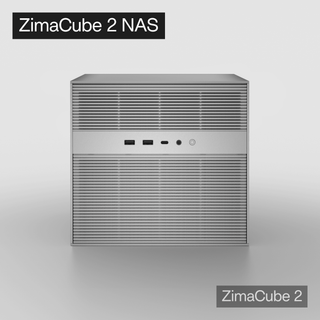
ZimaCube 2 can serve as the data home for model files, retrieval documents, experiment records and backups in a local AI workflow. Size inference compute separately against the model and workload. A storage platform’s role and the cost of a complete inference system should be explicit before a purchase. Chris’s mixed x86 and ARM homelab illustrates how dependable backup duties and ongoing AI experiments can occupy different parts of a lab.
FAQ
Is a local AI server always cheaper than an API?
No. A low-cost endpoint can be cheaper at light or moderate usage. Compare a local model that meets your needs with the particular API you would otherwise use, using the same completed-task criteria.
Does the calculator include cache-write charges?
It models cache writes as a separate input-token share where a verified rate is loaded. If a write rate is missing, that scenario needs a quote. Cache storage, tools and other services belong in the additional monthly fees field.
Are the local hardware and power inputs measured benchmarks?
No. They are editable example assumptions. Use quotes for the complete machine and wall-power measurements from the actual model and workload.
Can I use a cloud chat subscription as the API price?
A subscription is a different product. Use the billable endpoint rates and usage categories relevant to your API account.
Does the same token count mean the same output quality?
No. Tokenization and capabilities differ. Use the fixed-token estimate to explore budgets, then evaluate real tasks and cost per accepted result.
Where should I start before buying hardware?
Take a representative sample of completed tasks, collect billable call and token usage, test a suitable local model if available, and compare both scenarios in the AI API and local AI cost calculator.
Conclusion
The useful comparison is a particular API workflow against a local system that can actually do the work. Count all model calls, use the right token categories, and include hardware, power and upkeep. Then check the result against accepted-task quality and measured capacity.
Use the calculator to compare your own API and local AI budgets, replace the example inputs with real measurements and revisit the decision as the workload changes.

Recommended products
Tech & AI HUB
More to Read
The Secret-Zero Problem: Why a Home AI Agent Still Needs an Initial Trust Root
A mechanism-first explanation of the secret-zero problem, its shared-resource tradeoffs, three query-fanout FAQs, and a practical verification protocol.
Workload Identity Federation: How Local Services Avoid Shared API Keys
A mechanism-first explanation of workload identity federation, its shared-resource tradeoffs, three query-fanout FAQs, and a practical verification protocol.
Restore-Point Catalogs: How Dependency Manifests Rebuild a Private AI Stack
A mechanism-first explanation of restore-point catalogs, its shared-resource tradeoffs, three query-fanout FAQs, and a practical verification protocol.


