
Storage-First NAS vs Compute-First Home Server: Which Is Easier to Recover After a Bad Update?


A storage-first NAS is usually easier for a beginner to recover after a bad update because fewer moving parts have to become consistent before files are available again. A compute-first home server can be equally recoverable, but only when the hypervisor, VMs, application state, and protected data have separate restore paths.
The practical decision is not “Which platform has more rollback features?” It is “How much of the system must I restore to recover one failed layer?” If an OS update can be reversed without rebuilding the data pool, storage-first has the simpler failure boundary. If one broken VM can be restored without touching the host or other guests, compute-first has a strong recovery boundary of its own.
Compare the Recovery Unit Before You Compare Features
| Recovery question | Storage-first NAS | Compute-first home server |
|---|---|---|
| Bad system update | Prefer rollback that leaves the data pool untouched | Host rollback may affect every VM if the hypervisor is the failed layer |
| One broken app | Depends on how tightly apps are coupled to the NAS platform | Strong when the app lives in a separately backed-up VM or container |
| Dead boot device | Best when system config and pool import are documented separately | Best when hypervisor config and guest backups live off-host |
| Main beginner advantage | Smaller, more stable storage role | Replaceable workload units |
Storage-first wins this comparison when the minimum recovery unit is “repair the system layer, reconnect the existing pool, restore configuration, verify shares.” Compute-first wins when the minimum recovery unit is “restore only the affected VM or container while the host and storage remain healthy.”
Do not assume either architecture is automatically simple. A NAS filled with VMs, databases, media apps, AI services, and the only backup target can have a wider blast radius than a small Proxmox host with two cleanly separated guests.
Storage-First Is Strongest When the Data Pool Does Not Move With the OS
The storage-first advantage comes from role separation. The operating system and its boot environment can fail while the main storage pool remains a separate recovery object. The administrator should be able to return to a working system version, import or reconnect the existing pool, restore saved configuration if needed, and verify access without copying the primary data around.
A February 2026 TrueNAS case documented an update from 25.10.1 to 25.10.2 that failed to import the boot pool. The user could still boot the previous environment, and the recovery advice was to return to that working environment and remove the failed one. That failed-update rollback case is version-specific, but it demonstrates the recovery property that matters here: a bad system update does not necessarily require rebuilding the storage data itself.
This advantage disappears when applications and irreplaceable data are tightly coupled to the same mutable system state. A storage-first box stops being easy to recover if every important service also depends on undocumented local databases, custom scripts, and configuration that exists only on the boot device.
Compute-First Is Strongest When a Failed Workload Can Be Restored Alone
A compute-first home server earns its flexibility when VMs and containers are treated as replaceable recovery units. A broken application update should not require reinstalling the hypervisor, touching unrelated guests, or restoring the whole storage estate. The failed workload should have its own backup, configuration, and validation path.
A July 2026 Proxmox restore guide walks through restoring a full VM or LXC container from a vzdump backup after events such as a botched update or a guest that no longer boots. Its VM and LXC restore workflow is directly relevant to this comparison because it demonstrates the isolation benefit of a compute-first design: one failed guest can be restored as a unit instead of rebuilding the entire host.
The compute-first advantage weakens when backups live only on the same host, passthrough devices are undocumented, or several applications share one unmanaged data directory. Virtualization creates boundaries only when recovery respects those boundaries.

The Winner Flips When Rollback Scope and Data Scope Become Coupled
A bad update is easiest to recover when software rollback and data recovery are not the same operation. If reverting the system version also requires rolling back user files, databases, VM disks, and unrelated services, the failure boundary is too wide. If the software layer can be replaced while authoritative data stays in place, the architecture is easier to reason about.
This is why “more rollback features” is not automatically better. A boot environment can restore the operating system without proving that every application database is compatible with the older release. A VM backup can restore one guest without proving that its external NAS mount or database is healthy. Recovery still has to reconnect the dependencies that live outside the rollback unit.
The decision therefore depends on coupling. Storage-first is easier when the data pool survives independently of the system software. Compute-first is easier when applications survive independently as restorable guests. The worse design is the one where one failed update forces both software rollback and uncertain data reconstruction.
Choose the Architecture With the Shorter Tested Recovery Path
Before buying, write two short recovery drills. For a storage-first NAS: fail the system update, boot or reinstall the system layer, restore configuration, reconnect the pool, and verify shares. For a compute-first server: break one test VM, restore it from an off-host backup, reconnect its storage and network identity, and verify the application without disturbing another guest.
The existing ZimaSpace comparison of the broader beginner build decision covers which role should define the first machine. This narrower test adds the ownership question that appears later: which architecture can you actually repair after an update goes wrong?
Choose storage-first when protected files are the main asset and you want the smallest day-to-day change surface around them. Choose compute-first when experimentation is the point and every important VM or container has an independent restore path. If you cannot complete either recovery drill on paper without guessing, simplify the design before adding more services.

Recommended products

Product Comparisons
More to Read
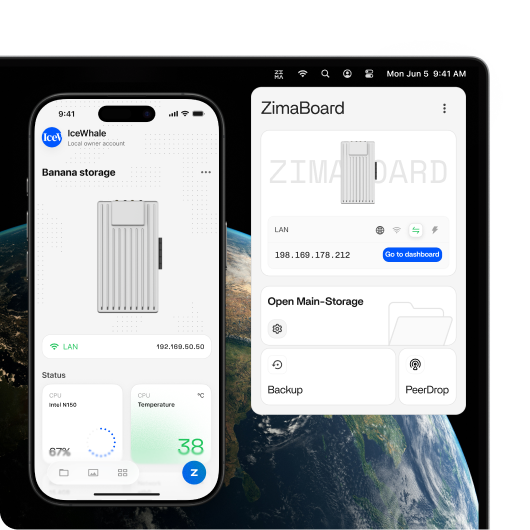
LXC vs Docker on Proxmox for App Updates and Rollbacks
Docker gives app-level version control; LXC gives guest-level rollback. The better fit follows the smallest state unit you can restore safely.
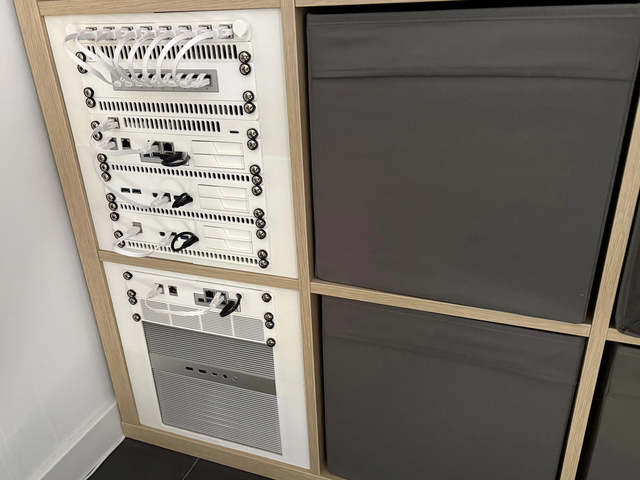
Docker vs LXC Security Boundaries for Privileged Home Services
Docker fits narrowly packaged apps; LXC fits fuller Linux services, but neither replaces a VM when shared-kernel risk is unacceptable.
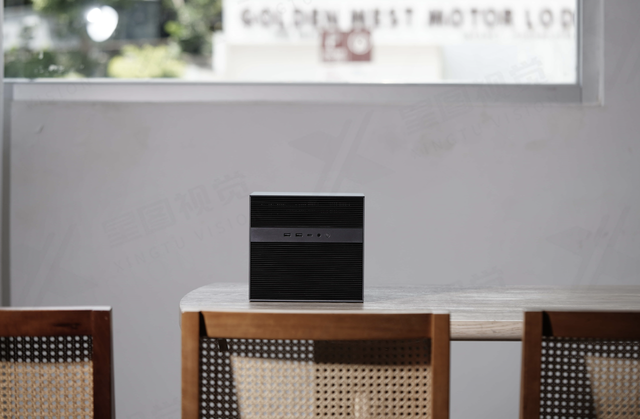
Turnkey NAS OS vs Modular Linux for a First-Time Builder
Choose turnkey NAS software for guided storage operations; choose modular Linux when learning and explicit control justify more ownership.


