
Can a Low-Power Mini Server Functionally Replace a Desktop for Jellyfin?


A low-power mini server can replace a desktop for Jellyfin when it performs the same required functions, not when its benchmark score looks similar. The real comparison is playback and transcoding capability, sustained thermals, storage topology, expansion, networking, power, and recovery.
This is different from deciding whether to reuse an old PC. Assume both machines are valid purchase options and ask whether the compact system can remove the desktop without introducing a new bottleneck or an awkward external-storage dependency.
The Mini Server Wins When a Modern Media Engine Does the Heavy Work
Many compact Intel systems pair modest general-purpose CPU cores with a Quick Sync media engine that can handle multiple hardware-accelerated video conversions efficiently.
Jellyfin's hardware-acceleration guide explains that supported Intel, NVIDIA, AMD, Apple, and selected ARM media engines can offload video decode and encode from general CPU cores. If the hardest normal transcode stays on that engine, a low-power CPU can be enough.
The desktop retains an advantage when frequent software-only subtitle rendering, unsupported codecs, plugins, VMs, or other CPU-heavy work must overlap with Jellyfin.
The Desktop Wins When Internal Expansion Is Part of the Requirement
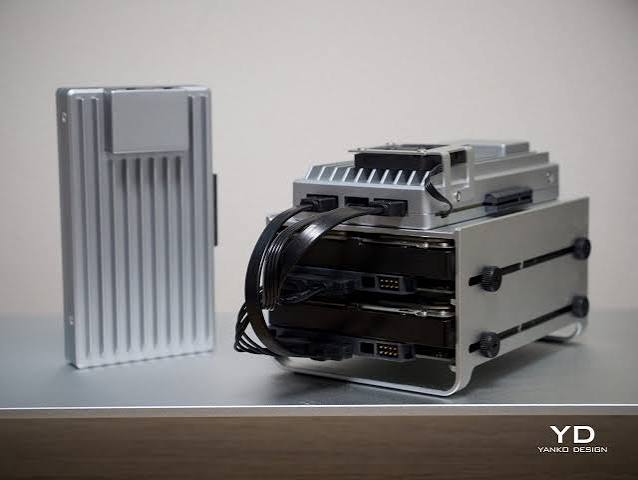
A desktop can offer multiple 3.5-inch bays, several PCIe slots, a full-height GPU, HBA, 10GbE NIC, and replaceable cooling. A mini server may provide only one or two NVMe slots and depend on USB, network storage, or an external enclosure for media capacity.
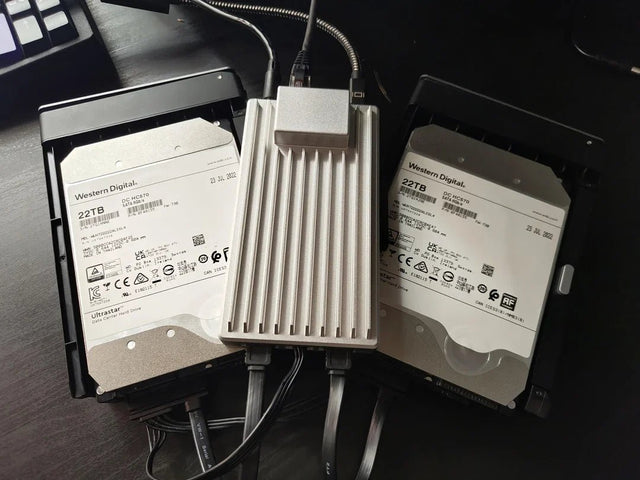
That is not automatically a weakness. A compact compute node paired with a NAS can be cleaner when storage already has its own redundancy and backup. It is a poor replacement when the goal is one chassis containing eight drives and multiple add-in cards.
The ZimaSpace guide to hardware-accelerated media streaming helps separate compute-node capability from storage-chassis capability.
Sustained Thermals Matter More Than a Short Benchmark
Mini systems have less heatsink mass and smaller fans. A short transcode test can pass while a long library analysis, several conversions, or a hot room pushes the processor into a lower sustained power state.
One measured N100/N305-class mini system from ServeTheHome maintained its intended clocks under a sustained stress test while using relatively modest power, illustrating that compact hardware can sustain useful load when its cooling design is adequate. That is evidence for the class, not a guarantee for every fanless mini PC.
Run the actual Jellyfin workload for long enough to reach thermal steady state before replacing the desktop.

Networking Can Favor Either Form Factor
Some mini servers now include 2.5GbE or 10GbE interfaces, while an older desktop may have only Gigabit unless a NIC is added. The desktop usually has more expansion flexibility; the mini server may include faster networking out of the box.
Choose the link from the storage topology. A compute node pulling media from NAS and writing backups can benefit from faster Ethernet even when the Jellyfin client streams themselves are modest.
Compare Recovery and Replacement, Not Just Electricity
A compact system can lower idle power and occupy less space, but a desktop may be easier to repair from standard parts. Mini-PC motherboards, power supplies, and proprietary cooling can turn one board failure into a full-system replacement.
Keep Jellyfin app data backed up independently of either machine. If the mini server is a compute node with external media storage, replacing the host can be fast when mounts, container configuration, and backup restore are documented.
Use a Functional Replacement Gate
| Requirement | Mini server passes when | Desktop advantage |
|---|---|---|
| Playback/transcode | Hardest normal mix stays real time | More CPU/GPU upgrade options |
| Storage | NAS/DAS or limited internal bays fit plan | More internal drives |
| Expansion | Needed NIC/accelerator already included | PCIe flexibility |
| Thermals | Sustained workload remains stable | Larger cooling envelope |
| Recovery | Host can be replaced from documented state | Standard replaceable parts |
Choose the mini server when it passes every functional gate and its lower power, size, or noise matters. Keep the desktop when internal expansion and repairability are part of the workload rather than optional extras.

Recommended products

Product Comparisons
More to Read
Can Home Assistant Replace openHAB for Whole-Home Device Control?
Home Assistant can replace openHAB only when every essential device and automation passes a parallel migration and rollback test.
Mini PC vs Single-Board Server vs NAS for Home Assistant
Pick an SBC for a small efficient appliance, a mini PC for flexible headroom, or a NAS only when shared-host operations are already mature.
How to Choose Between a Dedicated Home Assistant Server and a Shared App Host
Choose dedicated hosting for simpler failure isolation; choose a shared host when isolation, maintenance windows, and recovery are proven.


