
How Much Storage Does a Growing Home Assistant Setup Need?


Size Home Assistant storage from measured post-retention growth, then add known projects, backup workspace, and a free-space reserve for one realistic ownership window. Do not buy from entity count alone: noisy sensors, long Recorder retention, debug logs, local media, add-ons, and on-device backup generations can make two similar installations grow at very different rates.
Measure Growth After Retention Has Stabilized
Record used space for the active Home Assistant data, database, logs, add-ons, media, and local backups on the same day each week. Wait until the intended Recorder retention window has rolled over, because early growth can include history that will later be purged.
A detailed database-growth case explains how retained entities and statistics change the footprint over time. Its retention-driven database growth provides a practical reason to measure after policy changes rather than extrapolate from one busy day.
Use the median monthly increase from a representative interval and list one-time imports separately. If the measured total falls after purge or repack, do not turn that temporary reduction into a negative growth forecast; use the stable floor and the next complete cycle.
Separate Active State From Bulk and Rebuildable Data
Configuration, registries, authentication data, and the active Recorder database are small compared with media but change frequently and matter during recovery. Logs, downloads, camera clips, local backups, add-on databases, and cache can follow different growth and retention rules.
The storage-overhead role map shows why source data is only part of the footprint and helps keep generated artifacts from being mistaken for irreplaceable state.
Place active configuration and database state on reliable low-latency storage. Move bulk media or backup archives only when the path, ownership, restore procedure, and failure behavior are known; a larger slow volume is not automatically a safer system disk.
Calculate Capacity for One Ownership Window
Use a transparent formula: usable target equals current stable usage, plus measured monthly growth multiplied by the months until the next planned expansion, plus known imports, plus the largest expected update or restore workspace, plus the chosen operating reserve.
A Recorder guide shows how chatty entities and indexes can dominate database size, making entity-level Recorder growth a configuration input to the formula rather than a reason to buy unlimited storage.
Calculate in usable filesystem capacity, not the drive label. Choose an ownership window short enough that growth can be remeasured; a two- or three-year plan with a defined expansion method is more defensible than buying for an unknowable lifetime installation.

Budget Backup Capacity Outside the Active Volume
Backups can briefly duplicate databases, add-ons, media, and compressed archives while they are created. Retaining several generations multiplies that footprint, and an interrupted job may leave partial files until cleanup.
A discussion of intentionally long Recorder retention illustrates how long-retention database size can overwhelm assumptions designed around ordinary history windows.
Keep at least one recovery copy outside the active disk and preferably outside the host. Production headroom and backup retention are separate capacity obligations; reducing one to fund the other changes either availability or recoverability.
Set an Expansion Trigger Before Space Becomes Critical
Forecast the date when free space reaches your operational reserve. Subtract the lead time required to buy hardware, create a verified backup, copy data, validate the new path, observe normal operation, and preserve rollback.
- Recalculate after retention or entity-scope changes.
- Alert on both free bytes and growth rate.
- Include the largest local backup or restore workspace.
- Verify the new volume with a restore before retiring the old one.
Expand when projected exhaustion enters that lead-time window. Hold when current capacity covers the chosen ownership period and recovery workspace; storage sitting idle beyond a named future event is optional flexibility, not a measured requirement.
Final Takeaway
Buy usable capacity equal to stable current use plus measured growth through one ownership window, known projects, workspace, and reserve. Fund off-host backup capacity separately and expand before the migration lead-time window closes.

Recommended products

Buying Guide
More to Read
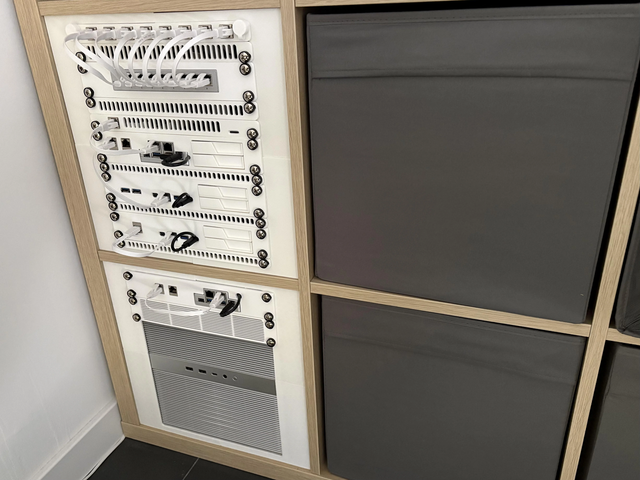
When Is an SSD App Pool Worth Paying More For With Home Assistant?
SSD is worth paying for when active Home Assistant state is latency- or write-bound; bulk backups and archives can usually stay on cheaper storage.
A Pre-Purchase Reliability Checklist for a Home Assistant Home Server
A reliable Home Assistant server limits failure domains and gives you a proven way to restore service when storage, power, or hardware fails.
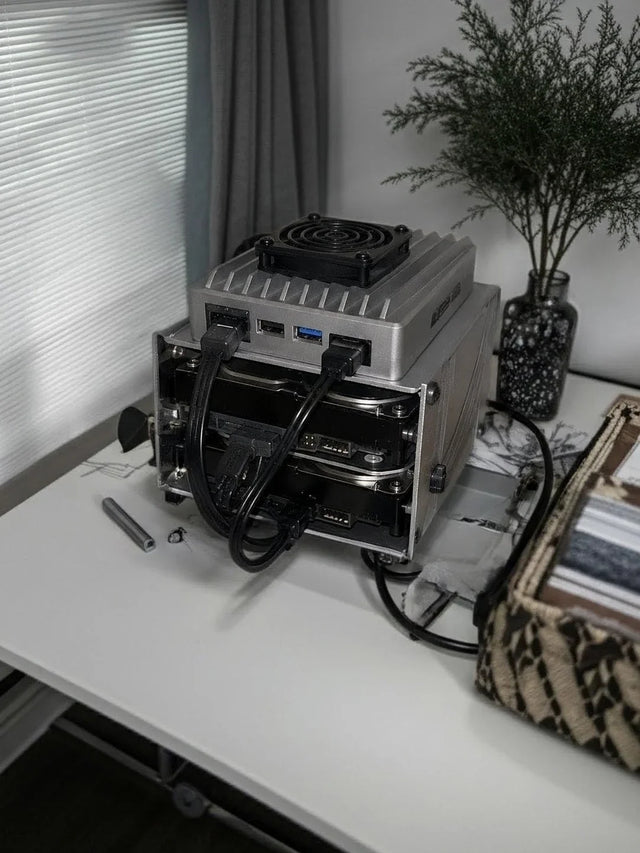
Which Compatibility Checks Matter Before Buying Hardware for Home Assistant?
Use compatibility as a pass-or-fail gate first, then size CPU and RAM for the workloads that will actually share the Home Assistant server.


